Updated August 2026
Not everyone who wants solar power is hooking up a full rooftop system to the grid. Some people just need power for an RV, a cabin, a job site, or a weekend camping trip. This guide walks you through off-grid and DIY solar inverter setups in plain, simple words — no engineering degree needed.
Key Takeaways
- An off-grid solar inverter works completely independent of the power company, unlike home systems tied to the grid.
- Most DIY setups need three basic parts: solar panels, a battery, and an inverter.
- A portable power inverter is the easiest starting point if you just need power on the go, with no permanent wiring.
- Solar panel kits with battery and inverter are the simplest way to start, since everything is matched and ready to connect.
- Always check your total power needs (in watts) before picking an inverter size — an inverter that’s too small will shut off under load.
What Is an Off-Grid Solar Inverter?
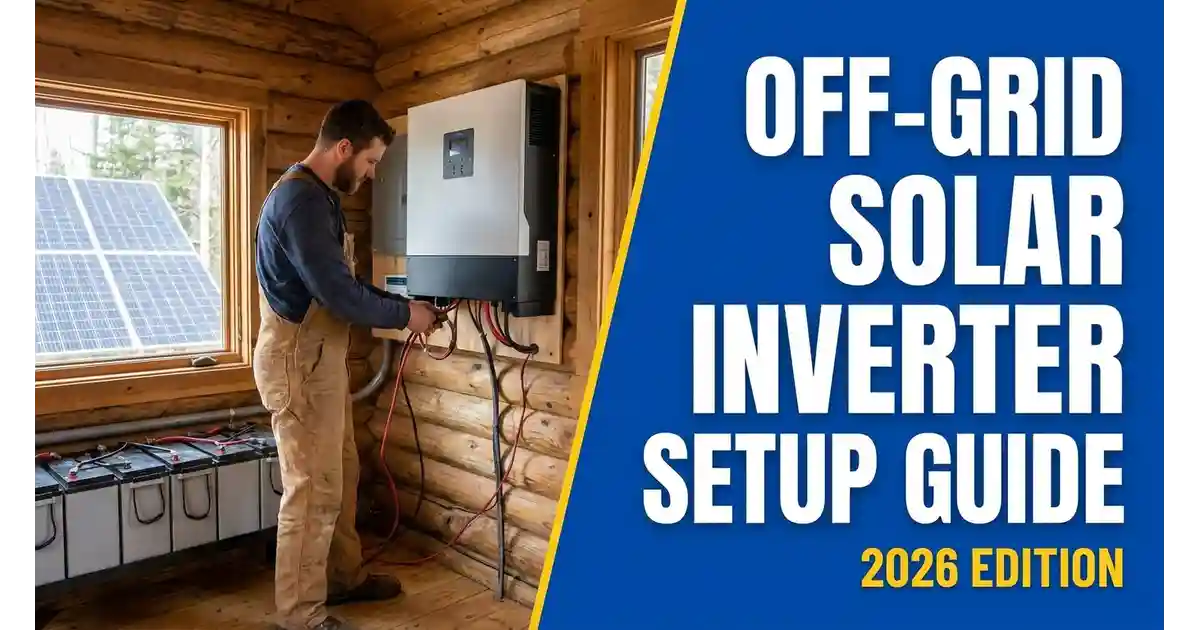
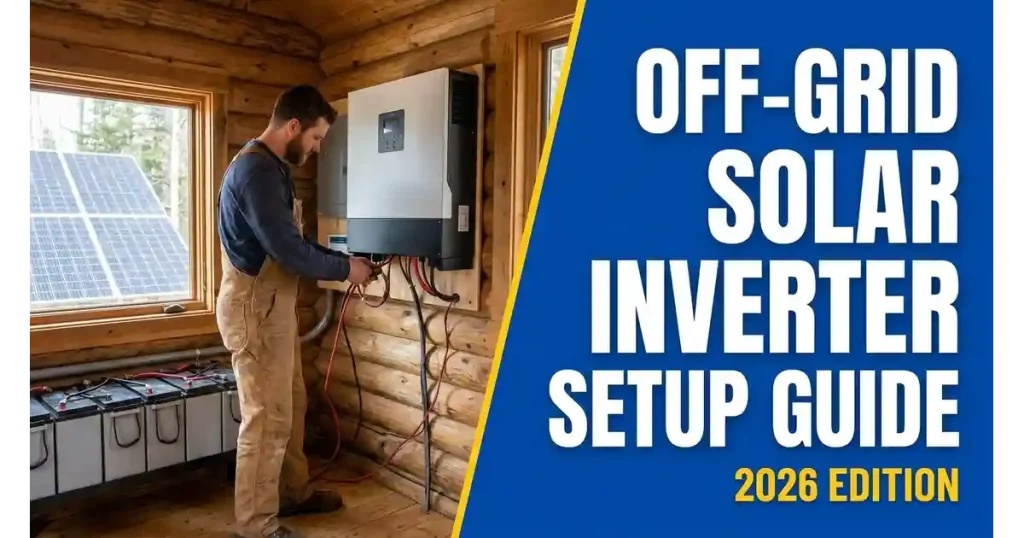
An off-grid solar inverter — also written as off grid solar inverter — converts the DC power from your solar panels into AC power, just like a home inverter — but it works entirely on its own, without any connection to the public power grid. This makes it the go-to choice for RVs, cabins, tiny homes, and remote job sites where there’s no utility hookup at all.
Off-grid inverters usually work together with a battery bank, since there’s no grid to draw from when the sun isn’t shining. The battery stores extra power during the day, and the inverter pulls from it at night or during cloudy weather.
Off-Grid vs. Grid-Tied: What’s the Difference?
A grid-tied inverter sends extra power back to the utility company and can draw power from the grid when needed. An off-grid solar inverter can’t do either of those things — it relies completely on your battery bank. That means sizing your battery and panels correctly matters even more for off-grid setups.
The Basic Parts of a DIY Solar Setup
Before wiring anything, it helps to know what you’re actually connecting. A simple DIY system has three main parts:
- Solar panels — collect sunlight and produce DC power.
- Battery — stores power for use when the sun isn’t out.
- Inverter — converts stored DC power into AC power your devices can use.
Some setups also include a charge controller, which protects the battery from getting overcharged by the panels.
12V Solar Panel Wiring Diagram With Inverter
If you’re building your own system, a 12v solar panel wiring diagram with inverter is one of the most useful tools you can have. Here’s the basic wiring order for a simple 12-volt off-grid setup:
- Solar panel → connects to → Charge controller
- Charge controller → connects to → Battery
- Battery → connects to → Inverter
- Inverter → powers → Your AC devices (outlets, appliances)
This basic layout works for most small off-grid systems, whether you’re powering a shed, an RV, or a cabin. Always follow your specific equipment’s manual, since wire gauge and fuse sizing can vary by system size.
Solar Panel Kit With Battery and Inverter
If wiring your own system from scratch sounds overwhelming, a solar panel kit with battery and inverter is the simpler route. These kits come with matched components — the panel, battery, and inverter are already sized to work together, so you skip most of the guesswork.
- Best for: Beginners, small cabins, sheds, or backup power setups.
- What to check: Total watt output, battery capacity (measured in amp-hours), and inverter size (measured in watts).
RV Solar Panel Kit With Battery and Inverter
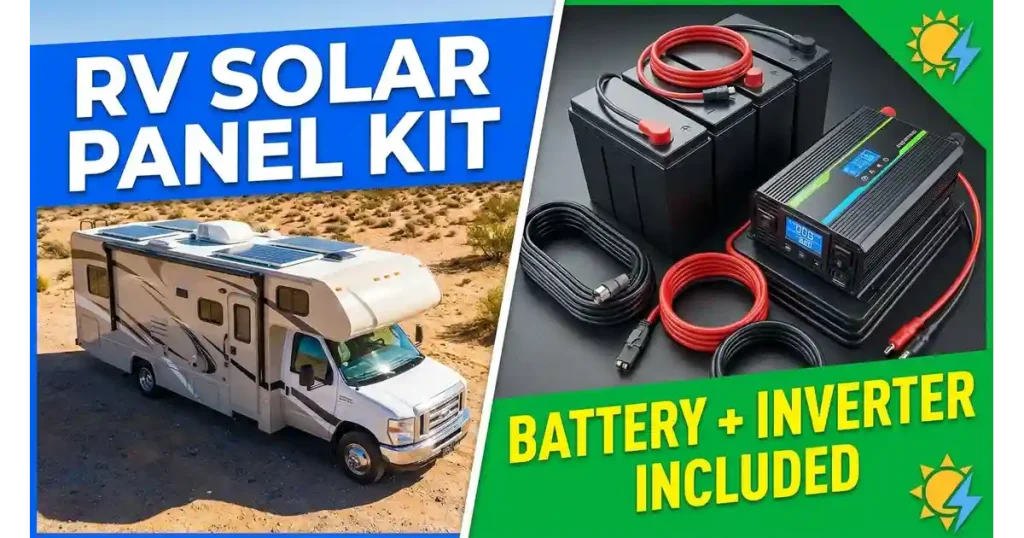
An RV solar panel kit with battery and inverter is built specifically for life on the road. These kits are designed to fit RV roofs and power systems, often including mounting brackets made for curved or flat RV surfaces.
- Best for: Full-time RVers, weekend campers, and van-life setups.
- What’s different from a home kit: RV kits are usually smaller, lighter, and designed to handle the vibration and movement of driving.
Pairing an RV kit with the right size battery bank lets you run lights, a fridge, and small electronics without needing a campground hookup.
Portable Power Inverter Options
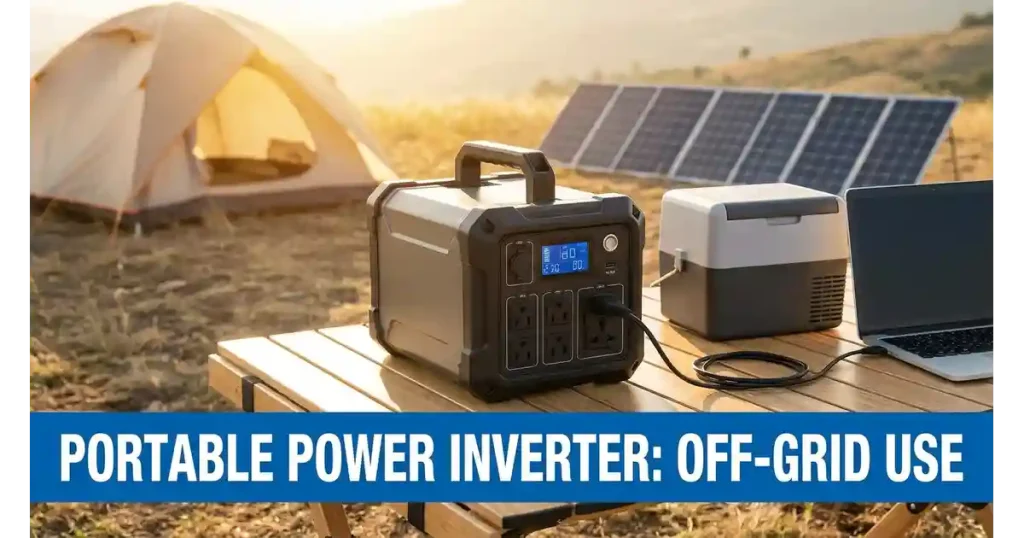
Sometimes you don’t need a permanent setup at all — you just need power for a weekend trip or as backup during an outage. A portable power inverter plugs into a battery (often your car battery or a portable power station) and gives you standard AC outlets to plug devices into.
Power Inverter Portable Use Cases
A power inverter portable unit is useful for:
- Camping trips
- Job sites without power access
- Emergency backup during outages
- Charging laptops, phones, and small tools in a vehicle
Portable Inverter Sizing
A basic portable inverter is usually rated between 150 and 3,000 watts. Smaller units handle phones and laptops, while larger ones can run power tools or small appliances. Always check that the inverter’s wattage rating is higher than the total wattage of everything you plan to plug in at once.
All-in-One Solar Inverter Chargers
Some newer products combine several functions into a single unit. A litime 48v 5kw split phase all-in-one solar inverter charger is one example of this type of equipment — it combines a solar charge controller, battery charger, and inverter into one box, instead of requiring separate components.
- Why people choose all-in-one units: Less wiring, simpler installation, and fewer parts that can fail or need replacing separately.
- What to check before buying: Make sure the voltage (like 48V) matches your battery bank, and confirm the wattage rating (5kW, for example) covers your total power needs.
How to Size Your Off-Grid Solar Inverter
Getting the size right matters more off-grid than it does with a grid-tied system, since there’s no backup grid power to fall back on. Follow these steps:
- List your devices. Write down every device you plan to run and its wattage.
- Add up total watts. This tells you the minimum inverter size you need.
- Add a safety buffer. Choose an inverter rated at least 20% higher than your total, to handle startup surges from motors and compressors.
- Match your battery bank. Make sure your battery can supply enough power to run your inverter for as long as you need.
Frequently Asked Questions
What is an off-grid solar inverter? An off-grid solar inverter converts DC power from solar panels into AC power without any connection to the public power grid, relying on a battery bank instead.
Do I need a charge controller with my inverter? In most DIY setups, yes. A charge controller sits between your solar panels and battery to prevent overcharging, protecting your battery’s lifespan.
What size portable power inverter do I need? It depends on what you’re running. Add up the wattage of everything you’ll plug in at once, then choose a portable inverter rated higher than that total.
Can I use a regular solar panel kit for my RV? You can, but an RV solar panel kit with battery and inverter is usually a better fit, since it’s designed for RV mounting surfaces and space constraints.
What does an all-in-one solar inverter charger do? An all-in-one unit, like a 48V 5kW split-phase model, combines a charge controller, battery charger, and inverter into a single device, simplifying wiring and installation.
Bottom Line
Off-grid and DIY solar inverter setups don’t have to be complicated. Whether you’re wiring a simple 12V system from scratch, buying a matched solar panel kit with battery and inverter, or just grabbing a portable power inverter for weekend trips, the same basic rule applies: match your inverter size to your real power needs, and don’t skip the battery sizing step.
Planning an RV setup? Check our full RV solar panels guide. Need something lighter for weekend trips? See our portable solar panels guide. Want to learn about home inverter types first? Read our complete solar inverter guide.
About the Author
Munir Ahmed Solar Industry Researcher & Pricing Analyst, Solar Panels Cost USA
Munir Ahmed has spent years researching solar equipment, installation pricing, and system design across the U.S. solar market, including off-grid and DIY setups. He writes in-depth, easy-to-understand guides to help homeowners, RVers, and off-grid builders make confident, well-informed decisions about their solar power systems.