Solar Basics Guide · Updated for 2026
How Do Solar Panels Work? A Complete 2026 Guide
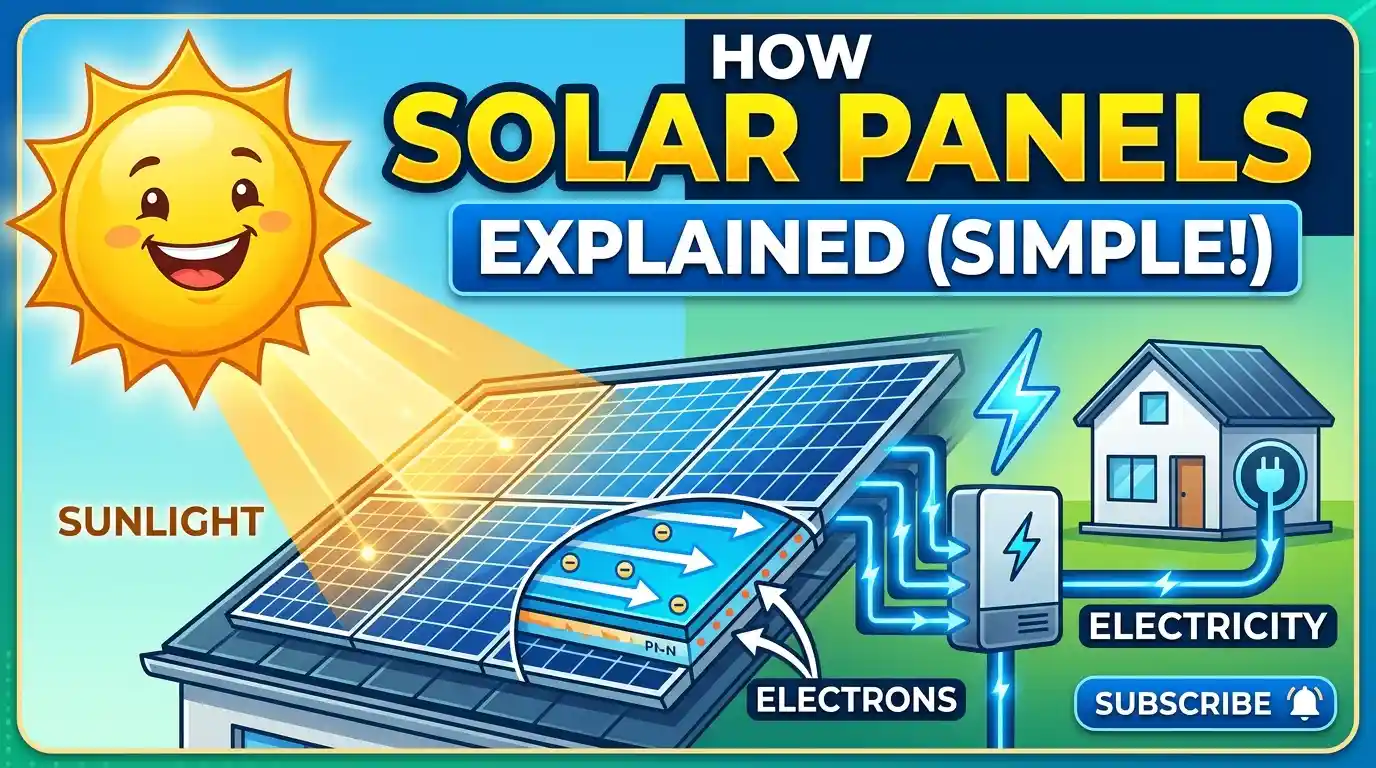
Solar panels work by catching sunlight and turning it into electricity. Inside each panel are small squares called solar cells. When sunlight hits these cells, it knocks electrons loose and makes them move, which creates electric current. An inverter then changes that current into the kind of power your home can use. Most home solar panels turn about 19% to 23% of sunlight into power, last 25 to 30 years, and cost about $2.50 to $3.50 per watt installed in 2026.
Solar power sounds complicated, but once you break it down, it’s really just a few simple steps happening over and over, all day long. The sunlight that hits the Earth in about 90 minutes carries enough energy to power the entire planet for a year — solar panels are simply a way of catching a small slice of that energy. This guide walks through exactly how solar panels work, from the moment sunlight hits the glass to the moment it powers your TV, plus real 2026 costs, panel types, and the myths other guides skip.
Solar panels work by using the photovoltaic effect: sunlight knocks electrons loose inside silicon cells, and a built-in electric field pushes those electrons into a usable current, which an inverter then converts into standard home electricity.
What’s in this guide
- What is a solar panel?
- How do solar panels work, step by step?
- The science: the photovoltaic effect explained
- Photovoltaic panels vs. solar thermal panels
- Types of solar panels: monocrystalline, polycrystalline, thin-film
- How solar panels make AC power: string vs. microinverters
- What’s inside a solar panel? (layer by layer)
- How do solar panels work with your electric bill?
- Grid-tied vs. grid-tied with battery vs. off-grid
- How do solar panels work at night, on cloudy days, and in winter?
- How to calculate annual energy production
- How do solar panels work on a house? Sizing & mounting
- Photovoltaic panel specifications
- Real costs and honest trade-offs in 2026
- Common solar myths, busted
- Frequently asked questions
1. What Is a Solar Panel?
A solar panel is a flat panel, usually made of glass and metal, that catches sunlight and turns it into electricity. Most home solar panels are about 3.5 feet by 6 feet in size. Think of it like a filter for sunlight: light goes in one side, electricity comes out the other side, ready to flow into wires. Before getting into how do solar panels work at the cell level, it helps to picture the panel itself as a wired-together grid of much smaller parts.
Inside every panel are the building blocks called solar cells. “Photovoltaic” is just a fancy word for “light into electricity” — you’ll often hear people talk about photovoltaic panels and solar panels as if they’re two different things, but they’re the same thing. Almost every solar panel on a home roof today is a photovoltaic (PV) panel.
Each solar cell is made mostly of silicon, the same material used in computer chips, and produces only 1 to 2 watts on its own. That’s why panels wire many cells together — usually 60 to 72 cells per panel — to make useful amounts of electricity. For a deeper look at how cell type changes output, our monocrystalline solar panels guide covers the most common cell technology in detail.
2. How Do Solar Panels Work? Step by Step
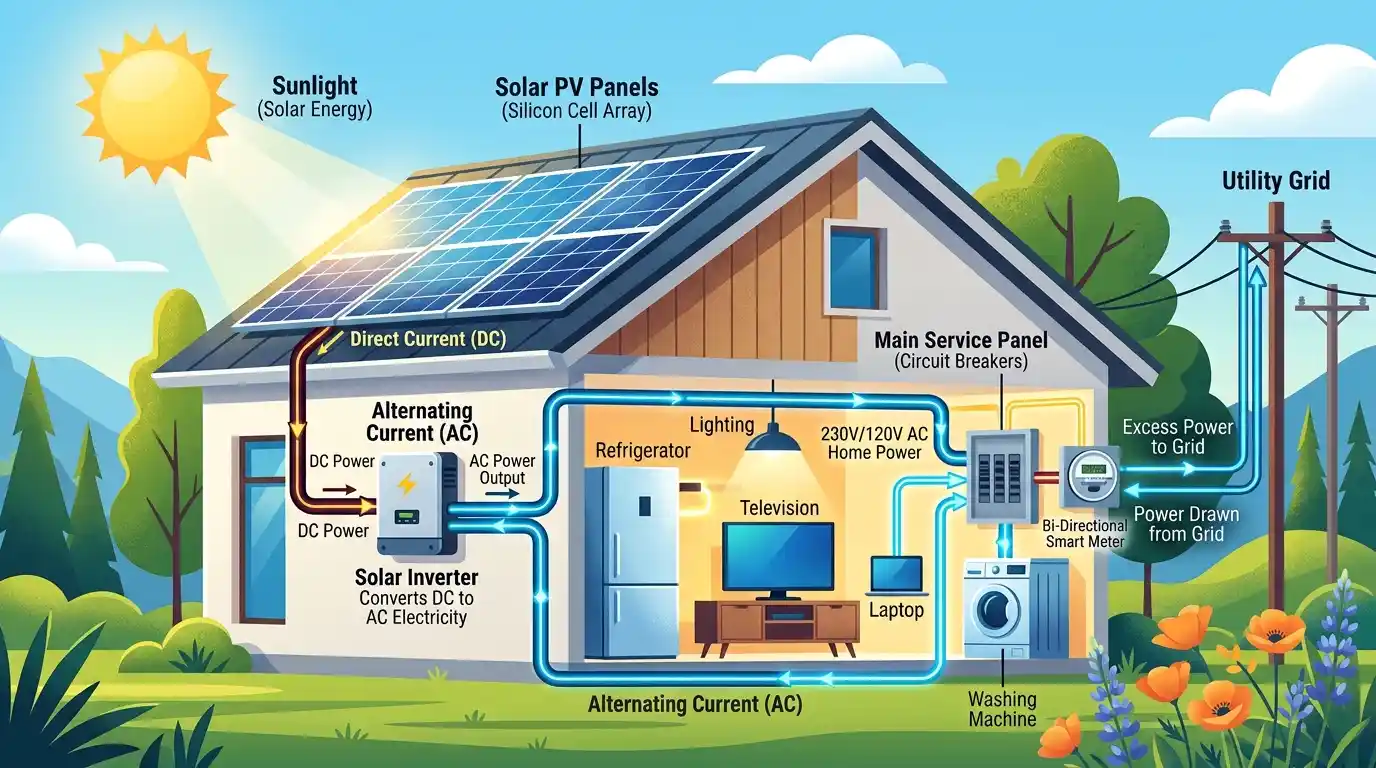
Here is the plain-terms version of how solar panels work, step by step:
- Sunlight hits the panel. Photons (tiny packets of light) land on the silicon cells.
- Electrons get knocked loose. The silicon is built with two layers that have a slight electrical difference. When light hits, it knocks electrons out of their spots.
- The loose electrons start moving. This movement of electrons is an electric current. At this stage, the power is direct current (DC) — the same kind of power in a flashlight battery.
- The current flows into wires. Metal strips on the cells collect the current and send it out of the panel.
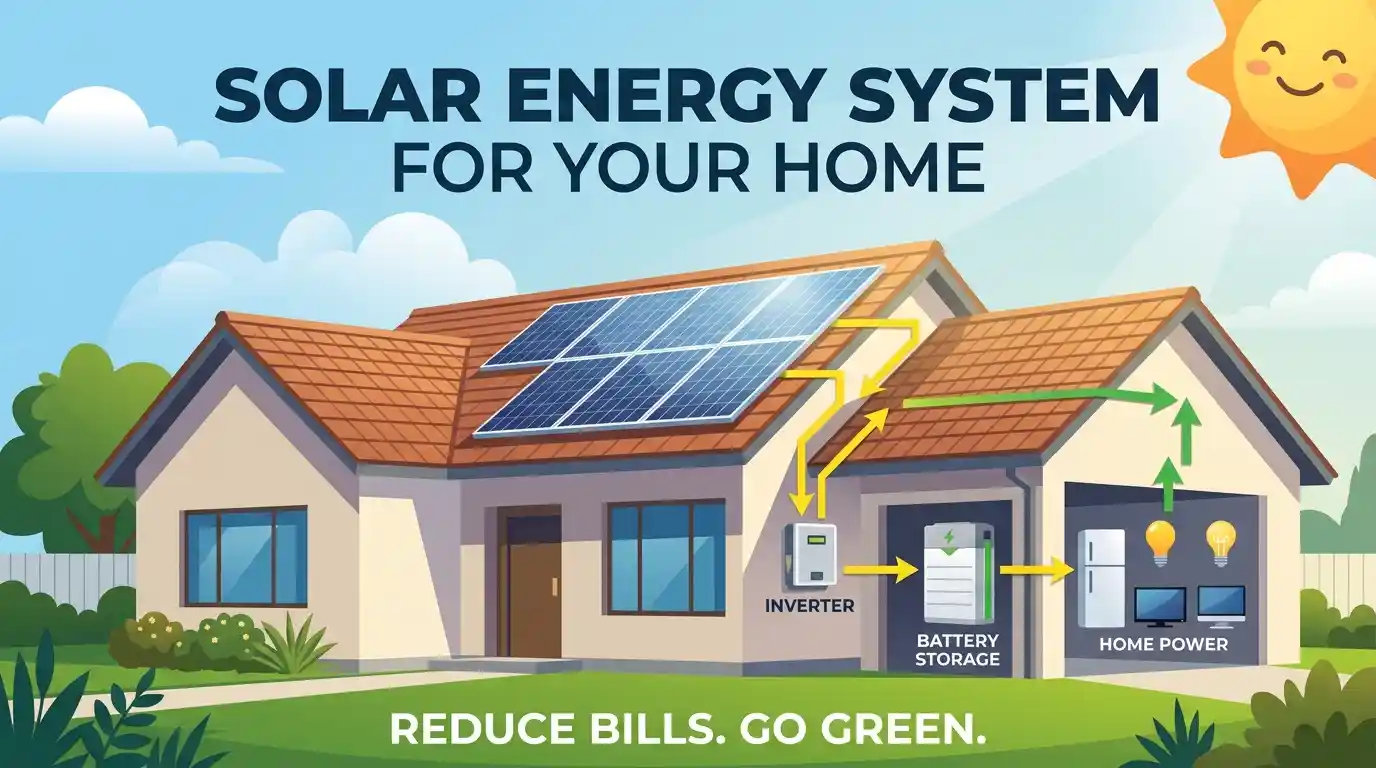
- An inverter changes the power. Your home runs on alternating current (AC), not DC. An inverter converts the power so your outlets can use it.
- The power feeds your home. It flows into your electrical panel and powers your lights, fridge, and everything else.
- Extra power goes to the grid or a battery. If your panels make more than you’re using, the extra gets sent to the utility grid for bill credits, or stored in a battery.
That’s really it. No moving parts, no burning fuel — just sunlight bumping electrons around inside silicon.
3. The Science: The Photovoltaic Effect Explained
Solar energy is converted into electricity through the photovoltaic effect: sunlight knocks electrons loose inside silicon, and a built-in electric field pushes them into a usable current.
A solar cell has two layers of treated silicon:
- N-type layer: This layer has extra electrons.
- P-type layer: This layer is missing electrons. Scientists call the missing spots “holes.”
The two layers touch in the middle. This spot forms an electric field, like a one-way gate. Sunlight hits the cell, photons give their energy to electrons, and the electrons break free. The electric field pushes them in one direction, which creates current. Thin metal strips on the front and back of the cell collect that current and carry it out of the panel.

This whole process was first discovered in 1839 by French physicist Edmond Becquerel, making the photovoltaic effect one of the oldest known pieces of electrical science — it just took until the mid-1900s for silicon technology to make it practical for everyday use. Today, this same basic trick powers everything from rooftop panels to the solar arrays on the International Space Station.
4. Photovoltaic Panels vs. Solar Thermal Panels
Not all “solar panels” do the same job. This is where a lot of guides skip an important point: solar thermal panels and photovoltaic panels are two very different products.
| Feature | Photovoltaic (PV) Panels | Solar Thermal Panels |
|---|---|---|
| What they make | Electricity | Heat (usually for hot water) |
| How they work | Light knocks electrons loose in silicon cells | Sunlight heats a liquid inside tubes |
| Efficiency | About 19%–23% | About 60%–70% (at heating water) |
| Common use | Powering a whole house | Heating water tanks or pools |
| Roof space needed | More, for a full home system | Less, since it’s just for hot water |
| Cost | Higher upfront | Usually lower upfront |
Thermal panels are actually better at grabbing heat energy — around 70% efficient. But they only make hot water, not electricity. If you want to run your lights, appliances, and electronics, you need photovoltaic panels. That’s why PV panels are what almost everyone means when they say “solar panels” for a house.
5. Types of Solar Panels: Monocrystalline, Polycrystalline, Thin-Film
Most home solar panels use silicon, but the type of silicon matters a lot:
| Panel Type | Efficiency (2026) | Yearly Power Loss | Typical Lifespan | Best For |
|---|---|---|---|---|
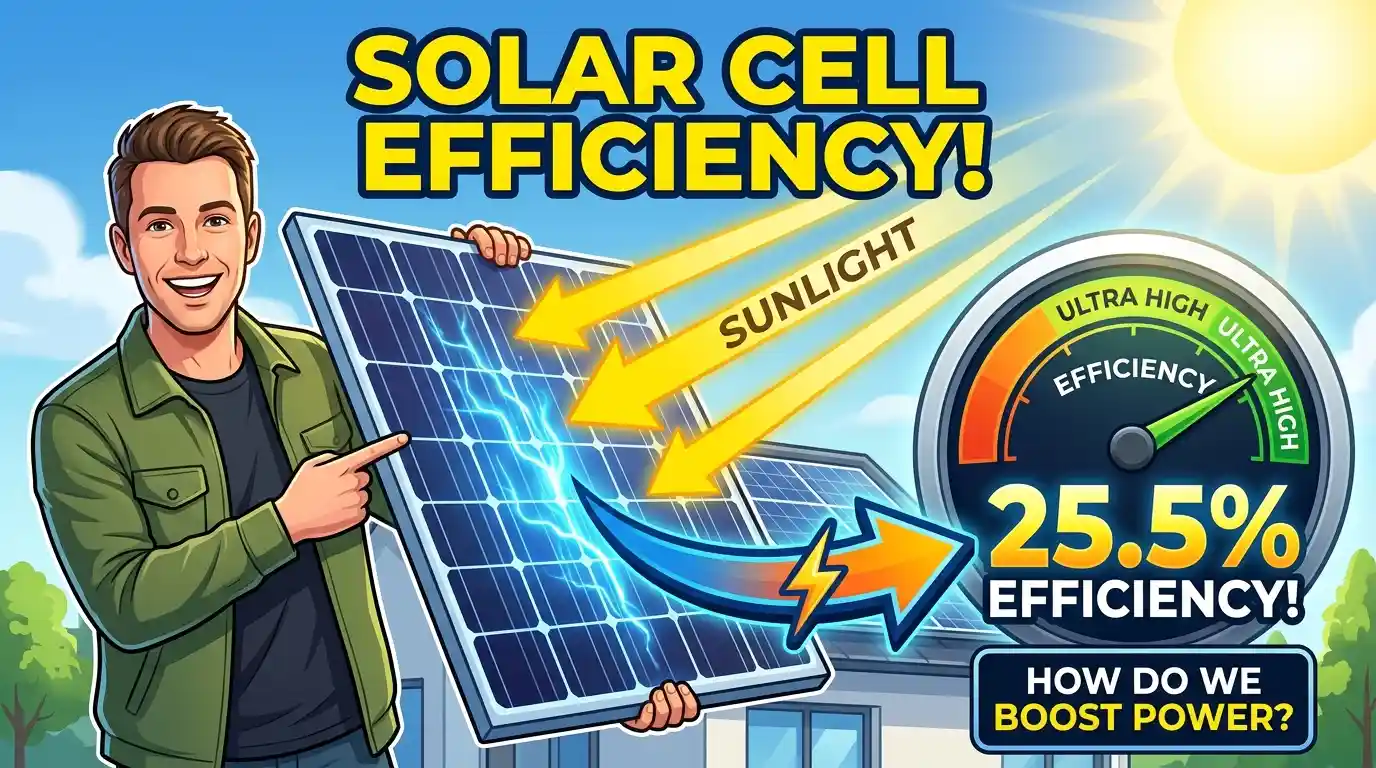
| Monocrystalline | 20%–26% (up to 25.8% for newer N-type TOPCon cells) | 0.3%–0.5% per year | 25–30 years | Homeowners with limited roof space who want top output |
| Polycrystalline | 15%–18% | 0.7%–0.8% per year | 25–30 years | Budget buyers with plenty of roof space |
| Thin-film | 10%–18% | Varies by material | Shorter than crystalline panels | Curved surfaces, RVs, and portable setups |
The honest trade-off: monocrystalline panels cost more per watt but make more power per square foot and fade slower over time. Polycrystalline panels cost less upfront but need more roof space and fade a bit faster. There is no single “best” panel — the right choice depends on your roof size and your budget. See our full types of solar panels guide for a deeper comparison of every format, including thin-film and bifacial.
6. How Solar Panels Make AC Power: String vs. Microinverters
Solar cells only make DC power, but your home’s outlets, wiring, and appliances all run on AC power. The inverter is the translator that bridges the two.
- String inverter: One central box, usually mounted near your electrical panel, converts power from a whole string of panels at once. It’s cheaper, but if one panel is shaded, it can drag down the whole string’s output.
- Microinverters: A tiny inverter sits on the back of each panel, so every panel converts its own power. This costs more but means one shaded or dirty panel won’t hurt the others.
Without an inverter, solar power is basically useless to a normal home. It’s one of the most important — and most overlooked — parts of the whole system.
7. What’s Inside a Solar Panel? (Layer by Layer)
Picturing a solar panel diagram? Here is the layout from top to bottom:
| Layer | What It Does |
|---|---|
| Glass cover | Protects the cells and lets sunlight pass through |
| Anti-reflective coating | Stops sunlight from bouncing away, so more gets absorbed |
| Solar cells (N-type and P-type silicon) | Where the photovoltaic effect happens |
| Metal wiring | Collects and carries the current out of the panel |
| Back sheet | A weatherproof layer that protects the underside |
| Aluminum frame | Holds the whole panel together and mounts it to your roof |
A full solar panel diagram usually shows the panel connected by wires to an inverter. From the inverter, a line runs to the home’s electrical panel, and a final line runs to the utility meter, with an arrow showing extra power flowing back to the grid.
8. How Do Solar Panels Work With Your Electric Bill? (Net Metering)
Solar panels work with your electric bill through net metering: extra daytime power you send to the grid earns bill credits, which offset the grid power you pull at night or on cloudy days.
Most homes stay connected to the power grid even after installing solar. This connection lets you use grid power when your panels aren’t making enough, and lets you send extra power back to the grid when you’re making more than you need. Here’s how it plays out over a year:
- Sunny days, summer months: Your panels often make more power than your home uses. The extra flows back to the grid, and your utility gives you a bill credit.
- Cloudy days, winter months, and nighttime: Your panels make less than you need. You pull power from the grid, using up credits you built earlier.
- At the end of the billing period: Your utility looks at the “net” — what you sent in minus what you pulled out — and bills you or credits you for the difference.
That’s why a well-sized solar system can wipe out most or all of a home’s electric bill, even though the sun isn’t shining 24 hours a day. Net metering rules are different in every state, so check your local utility’s policy before you install. Our solar panel cost per watt guide also breaks down how net metering changes your real payback period by state.
9. Grid-Tied vs. Grid-Tied with Battery vs. Off-Grid
| Setup | How It Works | Best For | Downside |
|---|---|---|---|
| Grid-tied, no battery | Extra power goes to the grid for bill credits | Homeowners with strong net metering in their state | No backup power during outages |
| Grid-tied with battery | Extra power charges a home battery first, then the grid | Homeowners with weaker net metering, or anyone wanting backup power | Batteries add a large upfront cost |
| Off-grid | All power comes from panels and batteries, no utility connection | Remote properties with no grid access | Requires a much bigger, more expensive system |
Net metering rules change from state to state. Some states still pay full retail credit for extra power; others pay lower rates now. Check your state’s current net metering rules first — they change the math a lot.
10. How Do Solar Panels Work at Night, on Cloudy Days, and in Winter?
Solar panels don’t produce power at night without a battery. On cloudy days and in winter, they keep working, just at a lower output — less light means less power, not zero power.
At night: panels need light to make electricity, so they don’t produce power after dark. If you want power at night without pulling from the grid, you need a home battery, like a Tesla Powerwall, to store daytime power for later use.
On cloudy days: panels keep working, just at a lower output. Clouds block some sunlight but not all of it. Rain even helps a little, since it washes dust off the panels.
In winter: panels still generate power, but usually less of it. Shorter days and lower sun angles cut into production, and most homes see 40% to 60% lower output in December and January compared to June and July. Cold temperatures don’t hurt panels — they actually run a bit more efficiently in cold weather than in extreme heat, since heat adds electrical resistance.
| Condition | Typical Output vs. a Clear Sunny Day |
|---|---|
| Clear sunny day | 100% (baseline) |
| Partly cloudy | 50%–90% |
| Overcast / heavy clouds | 10%–25% |
| Light snow dusting | Near 0%, but melts fast on angled panels |
| Heavy snow covering panels | Near 0% until it clears (usually 1–2 days) |
| Nighttime | 0% (without battery storage) |
| Winter (seasonal average) | 40%–60% lower than summer |
Snow is less of a problem than people expect. Panels sit at an angle and have smooth glass, so snow usually slides off within a day or two, especially since the dark panel surface absorbs a little heat and speeds up melting.
11. How to Calculate Annual Energy Production From Solar Panels
Here is the basic formula installers use to size a system to match your home’s yearly electricity use:
Annual kWh production = System size (kW) × Peak sun hours per day × 365 × Efficiency factor
- System size (kW): The total rated power of your solar array. A 20-panel system with 400-watt panels equals an 8 kW system, the same panel size covered in our 400 watt solar panel guide.
- Peak sun hours per day: The average hours of strong, direct sunlight your area gets. This changes by state.
- Efficiency factor: A number that accounts for real-world losses from heat, dust, and wiring, usually between 0.75 and 0.85.
Example: An 8 kW system in a spot with 5 peak sun hours a day, using a 0.8 efficiency factor: 8 × 5 × 365 × 0.8 = 11,680 kWh per year.
| Region | Average Peak Sun Hours/Day | What It Means |
|---|---|---|
| Southwest (Arizona, Nevada) | 6–7 hours | Highest solar output per panel in the country |
| Southeast (Florida, Georgia) | 5–5.5 hours | Strong output, with some cloud and storm days |
| Midwest (Ohio, Illinois) | 4–4.5 hours | Moderate output; more panels needed for the same power |
| Northeast (New York, Massachusetts) | 3.5–4.5 hours | Lower output, but higher electricity rates often make up for it |
| Pacific Northwest (Washington, Oregon) | 3.5–4 hours | Lowest output; still worthwhile due to high grid rates |
12. How Do Solar Panels Work on a House? Sizing, Mounting & Maintenance
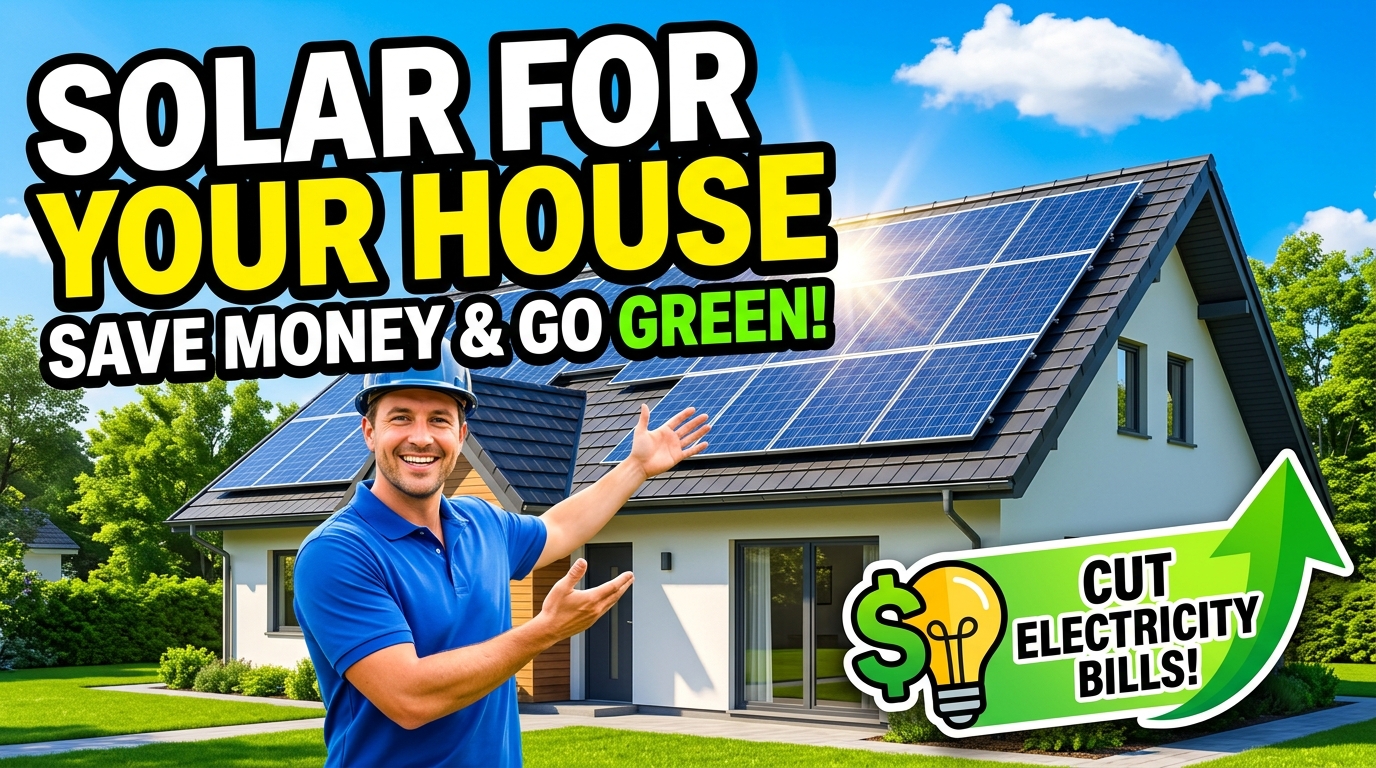
On a house, solar panels work as a wired-together system: an installer sizes the panel count to your electric bill, mounts them on roof racking facing the sun, and connects them through an inverter to your home’s electrical panel.
Sizing: An installer looks at your yearly electric bill (in kWh) and works backward to figure out how many panels you need. A typical U.S. home uses about 10,500 kWh a year, which usually calls for a 6.5 kW to 8 kW system — around 16 to 20 standard 400-watt panels.
Roof placement: South-facing roofs (in the Northern Hemisphere) usually get the most sun. East- and west-facing roofs still work, just with somewhat lower output. A roof pitch of 15 to 40 degrees is ideal.
Maintenance: Solar panels have no moving parts, so they need very little upkeep. Rain and gravity handle most of the cleaning. Most homeowners just need a visual check once or twice a year for cracks or loose connections, occasional cleaning if they live somewhere dusty or near a lot of trees, and a professional inspection every 3 to 5 years, especially checking the inverter, since inverters usually wear out before the panels do. If your output ever looks off, our guide on how to know if your solar panels are working walks through the warning signs to check first.
13. Photovoltaic Panel Specifications
If you’re comparing panels, here are the specs that actually matter:
| Spec | What It Means | Typical 2026 Range |
|---|---|---|
| Wattage | How much power one panel makes under test conditions | 400W–440W (up to 470W for premium panels) |
| Efficiency | How much sunlight becomes electricity | 19%–23% |
| Degradation rate | How much power is lost each year | 0.3%–0.8% per year |
| Product warranty | Covers defects in materials | 20–25 years (up to 30 for premium brands) |
| Performance warranty | Guarantees a minimum output over time | 80%–90% of original output by year 25 |
| Panel size | Standard home panel dimensions | About 3.4 ft x 5.9 ft (varies by brand) |
| Weight | Per panel | 40–50 lbs |
| Temperature tolerance | Panels are tested down to extreme cold | Functional to about -40°F |
A quick way to compare panels without getting lost in marketing language: look at wattage, efficiency percentage, and the length of the performance warranty. Those three numbers tell you almost everything you need to know.
14. Real Costs and Honest Trade-Offs in 2026
Solar panels are a big upfront expense, and the federal tax credit for homeowners who buy their system (Section 25D) expired at the end of 2025. So 2026 buyers who pay cash or take a loan do not get that 30% credit anymore. Homes that go with a lease or power purchase agreement can still benefit indirectly, since the leasing company can claim a related business credit. Our 2026 solar panel cost per watt guide covers this change and full state-by-state pricing in more depth.
| System Size | Estimated Cost (Before Incentives) | Estimated Payback Period* |
|---|---|---|
| 5 kW | $13,000–$17,500 | 10–14 years |
| 7 kW | $18,500–$24,500 | 10–13 years |
| 10 kW | $25,000–$33,500 | 9–13 years |
| 12 kW | $29,000–$40,000 | 9–13 years |
*Payback period varies a lot by state electricity rates and local incentives. States with high electric rates and net metering, like California and Massachusetts, tend to pay back faster.
Honest trade-offs to know before you buy:
- The panel itself is cheap; labor is not. Panels are usually only 12%–20% of total system cost. Labor, permits, and business overhead make up most of the price.
- Battery backup is a big add-on. Adding a home battery, like a Powerwall, typically adds $8,500 to $13,500 to your project.
- Your roof matters more than your panels. A steep, complex, or aging roof can add thousands in “adders” for special mounting or a roof replacement.
- Inverters usually need replacing before panels do. Budget for one inverter replacement somewhere in your system’s 25–30 year life.
- Shading is a bigger deal than most sales pitches admit. Even partial shade on part of your roof, from one tree, can meaningfully cut your output if you use a string inverter setup.
15. Common Solar Myths, Busted
Myth 1: “Solar panels don’t work unless it’s sunny.” Not true. Panels work in cloud cover, in winter, in rain, and even in snow once it clears. They just work less well in those conditions, which is very different from not working at all.
Myth 2: “Solar panels stop working completely after their warranty ends.” A 25-year warranty is a guarantee of minimum performance, not an expiration date. Most panels keep producing usable electricity for 30 to 40 years, just at a slightly lower output.
Myth 3: “Higher efficiency always means better savings.” Efficiency only measures how much sunlight a panel turns into electricity per square foot — it doesn’t tell the full story. A 22%-efficient panel that costs a lot more per watt may not save you more money than an 18%-efficient panel if your roof has plenty of open space. What actually drives your savings is your roof size, your local electricity rate, your state’s net metering policy, total system cost, and how much shade your roof gets. Efficiency matters most when roof space is tight; if your roof is large and open, a cheaper, lower-efficiency panel often makes more sense.
16. Frequently Asked Questions
How does a solar panel produce electricity?
Sunlight hits the silicon cells inside the panel and knocks electrons loose. The cell’s built-in electric field pushes those electrons in one direction, creating usable electric current.
Is a solar panel the same as a photovoltaic panel?
Yes. When people ask “what is a solar panel” for a house, they almost always mean a photovoltaic (PV) panel — the kind that makes electricity, not the kind that heats water.
How do solar panels work with your electric bill?
Through net metering: extra power your panels send to the grid earns bill credits, which you draw down at night or during low-sun periods. A properly sized system can offset most or all of a typical home’s yearly electricity use.
How long do solar panels actually last?
Most panels carry a 25 to 30-year performance warranty and often keep producing useful power for 30 to 40 years, just at a slowly declining output — typically 85% to 87% of original power remaining at year 25.
Do I need a battery to use solar power at night?
Yes, if you want to avoid the grid entirely. Without a battery, your home draws grid power at night and uses net metering credits to offset the cost.
Do solar panels work during a power outage?
Only if paired with a battery. Grid-tied systems without a battery shut off during outages for safety reasons, even if the sun is shining.
Are solar panels worth it if I live somewhere cloudy or snowy?
Usually, yes. Panels still generate meaningful power on cloudy days, and cold weather doesn’t hurt performance the way many people assume. States like New York, Massachusetts, and New Jersey remain strong solar markets despite colder, cloudier winters.
Bottom Line
A solar panel is a simple idea with a clever trick behind it. Sunlight hits silicon, knocking electrons loose. An inverter turns that raw DC power into the AC power your home uses. From there, net metering, battery storage, and your local sun hours decide how much you save. That’s the full answer to how do solar panels work, from a single cell to a full house system — it just works a little less well when the light is weaker.
The real decision isn’t whether solar panels work — they do. It’s whether the upfront cost, your roof’s condition, and your state’s incentives add up to a good investment for your specific home.