Monocrystalline (Mono-Si) Solar Panels: The Complete 2026 Buying Guide
What monocrystalline solar panels are, how they’re made, what they cost, how they compare to every other panel type, and which brands are actually worth your money.
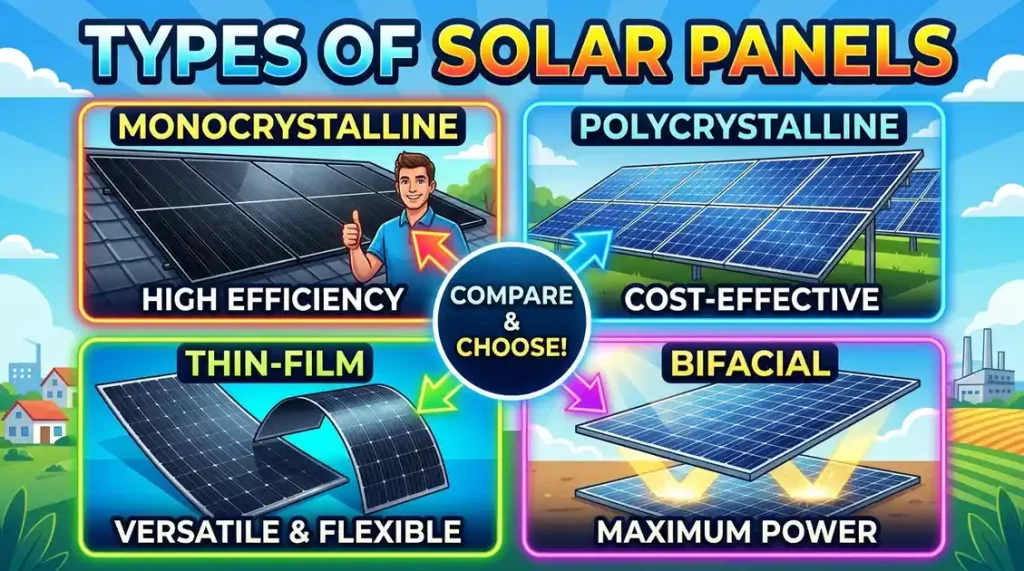
Picking solar panels used to be simple: you picked mono or poly, and that was that. Now you also have bifacial designs, tier rankings, N-type cells, and new technology entering the mix every year. This guide breaks down monocrystalline (mono-si) solar panels in plain terms, so you know exactly what you’re paying for and how they stack up against every other option on the market. If you want the fuller technology lineup first, our types of solar panels guide compares monocrystalline against every other format side by side.
Are Monocrystalline Solar Panels Better?
Yes, for most homeowners. Monocrystalline solar panels are usually more efficient and need less roof space than polycrystalline panels. They also have long lifespans and strong performance in hot conditions. The main trade-off is that they can cost more upfront.
Monocrystalline Solar Panels: Quick Answer
Monocrystalline solar panels are the most common choice for U.S. homes because they offer high efficiency, long service life, and strong power output in limited roof space. Modern mono-Si panels commonly use N-type TOPCon, HJT, or back-contact cell technology. For most homeowners, the best panel is not simply the one with the highest efficiency. Compare the exact model, price per watt, warranty, temperature coefficient, degradation rate, and installer support.
What Are Monocrystalline Solar Panels?
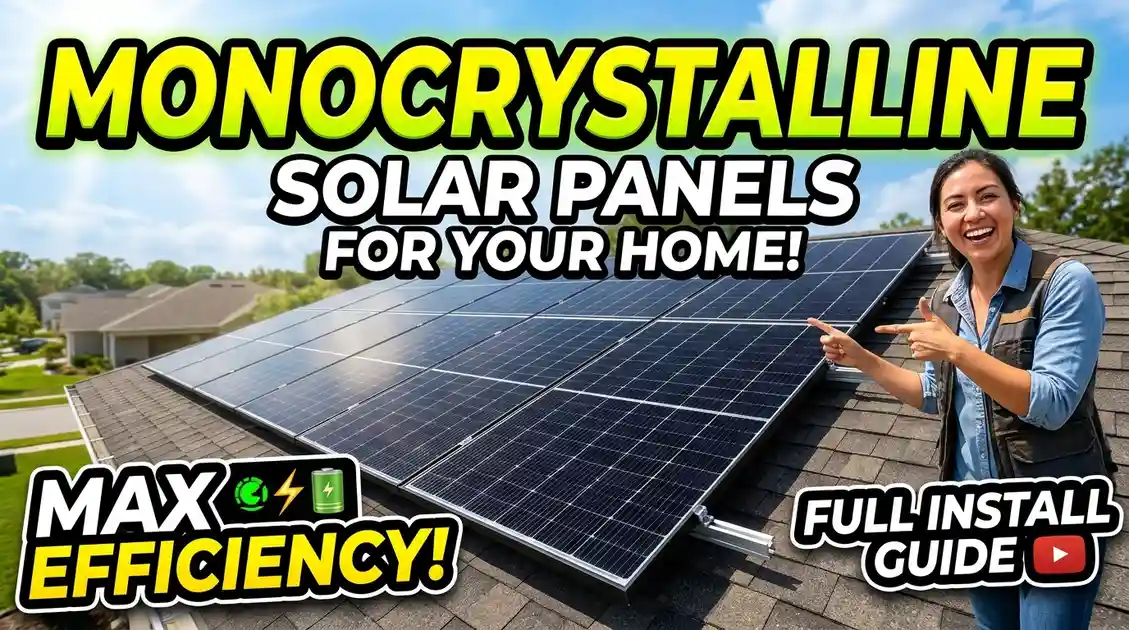
Mono-Si is short for “monocrystalline silicon.” Monocrystalline solar panels are made from one single, pure crystal of silicon. That crystal is sliced into thin wafers, and each wafer becomes a solar cell.
Because the crystal is one solid piece, electricity flows through it smoothly. Think of it like water moving through a straight pipe instead of a pipe full of bends and joints. That smooth flow is why monocrystalline solar panels are the most efficient common type of panel for a home.
What Are Mono-Si Solar Panels Good At?
- High efficiency: they turn more sunlight into electricity per square foot than other panel types.
- Long lifespan: most last 25 to 30+ years.
- Better heat performance compared with polycrystalline panels.
- A sleek, all-black look that many homeowners prefer.
You can spot a monocrystalline panel by its color. The cells are a deep black, and the corners are usually slightly rounded. That rounded corner is left over from how the silicon crystal is grown and sliced.
How Efficient Are Monocrystalline Solar Panels?
Modern monocrystalline solar panels typically have 20% to 24% efficiency, meaning they convert about 20% to 24% of the sunlight that reaches the panel into electricity. Premium models can reach higher efficiency. Higher efficiency is especially useful when roof space is limited.
What Does Mono-Si Mean?
Mono-Si means monocrystalline silicon. It refers to solar cells made from a single silicon crystal rather than multiple silicon fragments. You may see the terms mono-Si solar panels, mono solar panels, monocrystalline silicon panels, and monocrystalline solar panels used to describe the same basic panel technology.
Monocrystalline Solar Cell vs. Monocrystalline Solar Panel
A monocrystalline solar cell is the individual silicon cell that converts sunlight into electricity, while a monocrystalline solar panel contains many connected cells.
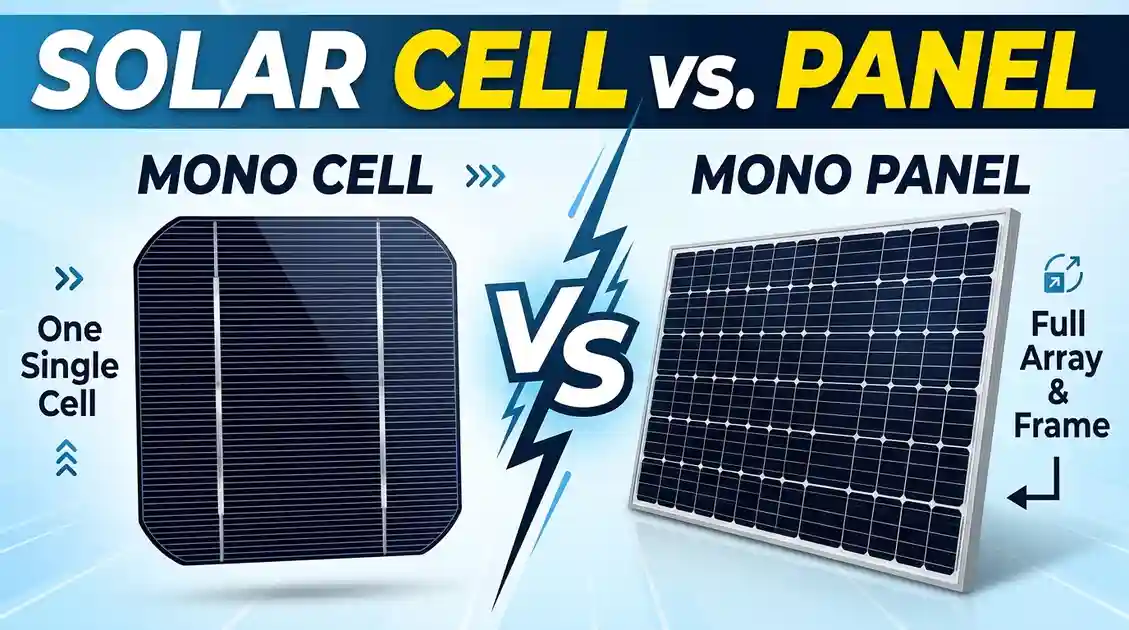
These two terms get mixed up often. A monocrystalline solar cell is one single wafer, the smallest unit that actually converts sunlight into electricity. A finished mono crystalline silicon solar panel is dozens of those cells (typically 60 to 108) wired together, laminated under glass, and framed into one unit you can mount on a roof. When you buy “a panel,” you’re buying an assembled group of individual monocrystalline solar cells, not a single cell.
What Is a Monocrystalline Solar Cell?
A monocrystalline solar cell is the individual electricity-producing unit inside a monocrystalline solar panel. It is made from a single silicon crystal wafer. Multiple cells are connected together to create the larger solar panel used in a residential or commercial solar system.
What a Mono Crystalline Silicon Solar Panel Actually Contains
A mono crystalline silicon solar panel is a finished, ready-to-install product — not a single crystal or a bare cell. It’s built by wiring together dozens of monocrystalline cells, then sealing them between tempered glass and a protective backing sheet inside an aluminum frame. This finished assembly is what gets mounted on your roof and connected to your inverter. In short, a solar cell monocrystalline in design is simply the individual building block — the finished panel is the assembled product.
How Are Monocrystalline Silicon Solar Panels Made?
Monocrystalline solar panels start as raw silicon that is melted down and grown into one pure crystal, then sliced into wafers and built into finished cells. For a broader look at how any solar panel converts sunlight into usable power once it’s installed, see our how solar panels work guide.
- Purifying silicon: raw silicon (from sand or quartz) is purified until it’s almost completely pure.
- Growing the crystal: a small seed crystal is dipped into the melted silicon and slowly pulled upward while spinning. This is called the Czochralski process, and it forms a single cylindrical crystal called an ingot, a process detailed in the Department of Energy’s solar manufacturing overview.
- Slicing into wafers: the ingot is cut into very thin wafers with a wire saw. Because the ingot is round, the corners of each wafer get trimmed, which is why mono cells have that rounded-corner look.
- Building the cell: each wafer is treated so it can conduct electricity, then printed with thin metal lines that collect the current.
- Assembling the panel: the finished cells are wired together, laminated between glass and a backing sheet, and framed.
This process takes more time, energy, and precision than making polycrystalline panels, which is the main reason monocrystalline panels cost more per watt to produce.
Why Are Monocrystalline Panels More Expensive to Make?
Monocrystalline panels cost more to manufacture because the silicon must be purified and grown into a single crystal before it is sliced into wafers. The process requires more energy, equipment, and precision than producing older polycrystalline cells. However, modern manufacturing has reduced the cost difference, which is one reason monocrystalline panels now dominate residential solar.
Is Monocrystalline Silicon Good for Solar Panels?
Yes. Monocrystalline silicon is the gold standard for home solar in 2026.
Are Monocrystalline Solar Panels Worth It?
For most U.S. homeowners, yes. Monocrystalline panels are a good choice when you want high efficiency, long service life, and more electricity from limited roof space. They cost more than some lower-efficiency options, but the extra efficiency can be valuable when roof space is limited.
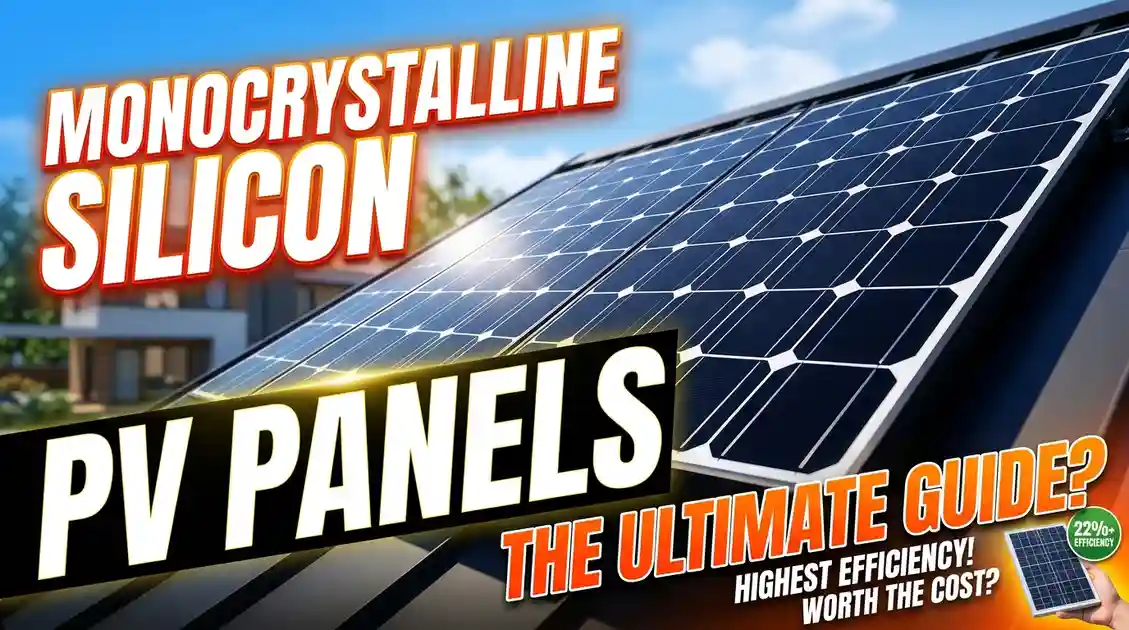
- It’s efficient. Mono-Si panels typically convert 20% to 24% of sunlight into usable electricity, a range consistent with the Department of Energy’s PV Cells 101 primer. Some premium models push past 24%.
- It’s proven. This has been the leading residential panel technology for over a decade, so there’s a long track record of how it performs over time.
- It handles heat better. Panels lose some power as they heat up. Mono-Si loses less power in hot weather than polycrystalline, which matters a lot in states like Arizona, Texas, and Florida.
- It degrades slowly. A quality mono-Si panel typically loses well under 0.5% of its power each year, so it still performs well two or three decades later.
- It works well in low light, which helps on cloudy days and in the early morning and evening.
The one downside is price. Monocrystalline silicon costs more to produce than the silicon used in polycrystalline panels, since growing one pure crystal takes more energy and precision than melting silicon fragments together.
Monocrystalline PV Panels: Certification and Testing
Monocrystalline PV panels should meet recognized safety and performance testing standards before installation. Look for IEC 61215 (design qualification and type approval) and UL 61730 (electrical safety) certification on the datasheet; these confirm the panel has been tested for real-world durability, not just lab efficiency. A panel without these certifications, even from a well-known brand, is a red flag worth asking your installer about directly.
Who Benefits Most From Monocrystalline Solar Panels?
| Homeowner situation | Why mono-Si can be a good fit |
|---|---|
| Limited roof space | Higher efficiency can produce more power from each square foot |
| High electricity use | More panel output can help fit a larger system on the available roof |
| Long-term ownership | Quality panels can produce electricity for 25–30 years or longer |
| Hot climate | Modern panels with a good temperature coefficient can limit heat-related output losses |
| Small or complex roof | Higher-efficiency panels can make better use of usable roof sections |
Monocrystalline Solar Panel Efficiency
Monocrystalline solar panels are known for high efficiency because their cells are made from a single silicon crystal. Modern residential panels commonly reach about 20% to 24% efficiency, while some premium models can go higher.
Higher efficiency means a panel can produce more electricity from the same amount of roof space. This matters most for homes with small or partly shaded roofs where available space is limited.
| Panel type | Typical efficiency | Best use |
|---|---|---|
| Standard monocrystalline | 20%–22% | Most home solar systems |
| N-type TOPCon | 22%–25% | High-output residential systems |
| HJT | 22%–24% | Hot climates and high-efficiency systems |
| IBC / back-contact | Up to about 25% | Premium systems with limited roof space |
Efficiency is only one part of a solar panel’s value. Price, warranty, degradation rate, temperature coefficient, roof space, and installer quality also matter when comparing panels.
Monocrystalline Solar Panel 400W: What You Get
A monocrystalline solar panel 400W is one of the most common panel sizes sold for U.S. homes today. Our dedicated 400 watt solar panel guide covers this exact size in far more depth, including output, RV use, and kit options.
| Spec | Typical value |
|---|---|
| Efficiency | 20% – 22.5% |
| Dimensions | About 6.5 ft x 3.3 ft (66 in x 40 in) |
| Weight | 40 – 50 lbs |
| Cell count | 108 or 120 half-cut cells |
| Price per watt | $0.85 – $1.30 |
| Price per panel | $340 – $520 |
| Warranty | 25 years (product + performance) |
How Much Electricity Does a 400W Monocrystalline Solar Panel Produce?
A 400W monocrystalline solar panel can produce about 400 watts of DC power under standard test conditions. Its actual daily energy production depends on sunlight, location, orientation, shading, temperature, and system losses. A 400W panel receiving about 5 peak sun hours would theoretically produce around 2 kWh of energy before normal system losses.
For a real home system, production is usually lower than the simple wattage × sunlight calculation because heat, inverter losses, wiring, dirt, shading, and other conditions affect output.
How Many 400W Monocrystalline Solar Panels Do You Need?
| System size | 400W panels needed |
|---|---|
| 4 kW | 10 panels |
| 6 kW | 15 panels |
| 8 kW | 20 panels |
| 10 kW | 25 panels |
| 12 kW | 30 panels |
These are simple nameplate calculations. Your installer may use a different panel count after accounting for roof space, system design, inverter capacity, shading, and the exact panel wattage available.
For a typical home needing an 8 kW system, you’d need about 20 panels at 400 watts each. That system would cost roughly $6,800 to $10,400 for the panels alone, before labor, permits, and other equipment.
How Much Does a 400W Monocrystalline Solar Panel Cost?
A 400W monocrystalline solar panel typically costs about $340–$520 based on the price range shown above. The final price depends on brand, efficiency, warranty, technology and whether you buy one panel or in bulk.
Monocrystalline Solar Panel Price and Cost in 2026
Monocrystalline solar panel prices depend on whether you’re buying a full installed system or shopping for individual panels. Our full solar panel cost per watt guide breaks down installed pricing by state, or run your own numbers with our solar panel calculator.
Installed cost (full system)
Homeowners typically pay around $2.60 per watt on average before incentives, once labor, permits, inverters, and racking are included. An 8 kW system often lands between $18,000 and $24,000 before any tax credit.
Panel-only cost
Individual monocrystalline panels can cost roughly $0.85–$1.30 per watt, with the total price depending on the panel’s wattage, brand, efficiency and warranty.
Budget monocrystalline panels sit at the low end of that range. Premium brands with higher efficiency, longer warranties, and stronger reputations (like Qcells, REC, Panasonic, and Maxeon) sit at the high end. If you’re comparing quotes, always ask for the price per watt, not just the total, since system sizes vary between installers. When people compare “mono-Si solar panels cost,” they’re usually comparing these two numbers, panel-only price and full installed price, so make sure you know which one an installer’s quote is showing you. If you’re still deciding whether the investment pencils out for your home, our guide on whether solar panels are worth it walks through typical payback periods and savings.
Important: panel-only price is not the same as total solar installation cost. Your final system price also includes the inverter, racking, electrical work, permits, labor, and other equipment.
Monocrystalline Solar Panels: Pros and Cons
Most complaints in monocrystalline solar panel reviews are about installers, not the panels themselves.
Pros
- Highest efficiency of any common residential panel type
- Best choice when roof space is limited
- Performs better in hot climates than polycrystalline
- Long warranties (often 25 years) from established brands
- Sleek, all-black appearance
Cons
- Higher upfront cost per watt than polycrystalline
- Manufacturing uses more energy, since growing a single crystal takes more processing
- Gains over newer polycrystalline in shaded conditions are small
- Premium technology (TOPCon or HJT) costs even more, though it performs better
Who Should Buy Monocrystalline Solar Panels?
Monocrystalline panels are a strong choice for homeowners with limited roof space, high electricity use, or a preference for higher-efficiency panels. They are also a practical choice when you plan to keep your solar system for 25 years or more.
In owner reviews, the most common complaint isn’t about the panels themselves. It’s about installation quality and how quickly an installer responds to warranty claims. The panel technology matters less than who put it on your roof and who stands behind the paperwork.
Monocrystalline Solar Panels: Are They Right for You?
| If you care most about… | Monocrystalline panels |
|---|---|
| High efficiency | Excellent fit |
| Limited roof space | Excellent fit |
| Lowest panel-only price | Not always the cheapest |
| Long-term residential use | Excellent fit |
| Maximum output per square foot | Excellent fit |
PERC vs. TOPCon vs. HJT vs. IBC: Which Cell Technology?
Nearly every monocrystalline panel sold today uses one of four cell technologies: PERC, TOPCon, HJT, or IBC (back-contact). Each one is a different way of building the cell to squeeze out more efficiency.
| Technology | Typical efficiency | Notes |
|---|---|---|
| PERC (P-type) | 20% – 22% | The older industry standard. Reliable and affordable, but being phased out at the top efficiency tiers. |
| TOPCon (N-type) | 22% – 25% | Now the mainstream premium choice. More stable silicon that resists degradation better than PERC. |
| HJT (N-type) | 22% – 24% | Best heat performance of the mainstream options; costs 10–15% more than TOPCon. |
| IBC / back-contact | up to 25% | Highest efficiency available, with cell wiring hidden on the back for a cleaner look; carries the biggest price premium. |
For most homeowners in 2026, N-type monocrystalline panels using TOPCon or HJT cells are the practical choice. They’ve replaced older P-type PERC as the dominant technology, offering better efficiency and lower degradation. Back-contact (IBC) panels offer the highest efficiency but at a real price premium that mostly pays off on small roofs where every extra watt per square foot counts.
Which Monocrystalline Technology Is Best?
For most homeowners in 2026, N-type TOPCon is the best balance of efficiency, cost and availability. HJT can be attractive in hot climates because of its strong temperature performance, while IBC is better suited to buyers willing to pay more for maximum efficiency and limited roof space.
TOPCon vs HJT vs IBC: Which Is Best for a Home?
| Technology | Best for |
|---|---|
| TOPCon | Most homeowners who want a strong balance of efficiency, price, and availability |
| HJT | Homeowners who place extra value on temperature performance |
| IBC / Back-contact | Maximum efficiency and limited roof space |
| PERC | Older or lower-cost panel options |
N-Type vs. P-Type Monocrystalline Solar Panels
Monocrystalline panels are built using either P-type or N-type silicon, and this distinction affects efficiency, degradation, and cost more than most buyers realize.
- P-type silicon: the older, less expensive standard, used in PERC panels. It’s reliable but degrades faster and typically tops out around 20–22% efficiency.
- N-type silicon: used in TOPCon, HJT, and IBC panels. It resists degradation better, typically reaches higher efficiency (22–25%), and performs better in real-world conditions like partial shade and low light.
- Degradation: N-type panels commonly degrade slower than P-type, which is one reason manufacturers back them with stronger performance warranties.
- Cost: N-type panels cost more to produce, so they typically sell at a premium over comparable P-type panels.
- Best applications: N-type monocrystalline panels are increasingly the default for premium residential systems, while P-type PERC panels still show up in budget-focused installations.
In practice, most new monocrystalline panels sold in 2026 already use N-type silicon, so this distinction matters most when comparing an older or budget panel against a current-generation model.
Temperature Coefficient and Degradation, Explained Simply
The temperature coefficient tells you how much power a panel loses as it heats up, and the degradation rate tells you how much power it loses every year as it ages.
- Temperature coefficient: solar panels make less power as they get hot. A panel with a temperature coefficient of -0.30%/°C loses 0.30% of its output for every degree Celsius above 25°C. Premium HJT panels can reach about -0.24%/°C, which matters most in hot states like Arizona and Texas.
- Degradation rate: this is separate from heat loss. It’s the slow, permanent power loss a panel experiences every year simply from aging. Independent research on real-world systems shows modern monocrystalline panels degrade at roughly 0.4% per year on average, which is better than what most standard 25-year warranties assume.
Does Heat Reduce Monocrystalline Solar Panel Output?
Yes. Like all photovoltaic panels, monocrystalline panels produce less power as their cell temperature rises above the standard test condition of 25°C. This is why the temperature coefficient matters when comparing panels for hot climates.
When comparing two otherwise similar panels, a less-negative temperature coefficient can be an advantage in very hot weather. However, temperature coefficient should be considered alongside efficiency, warranty, degradation, price, and the actual installation conditions.
In practice, a home solar system’s real-world lifespan is often limited more by the inverter and other equipment than by the panels themselves, since the panels alone can keep producing usable power for 30-plus years. If you ever suspect your system is underperforming these numbers, our guide to checking if your solar panels are working covers the warning signs to look for.
Popular Monocrystalline Solar Panel Brands in 2026
Popular monocrystalline brands available in the U.S. include Maxeon, Qcells, REC, Aiko Solar, Jinko Solar, LONGi, Trina Solar, and Silfab.
Maxeon / SunPower
Industry-leading efficiency with back-contact cell design and some of the longest warranties on the market.
Qcells
Widely available Tier 1 brand with strong mid-to-premium efficiency and U.S. manufacturing presence.
REC Alpha Pure
HJT technology with a strong temperature coefficient, a solid pick for hot climates.
Jinko, LONGi, Trina
Large global manufacturers offering strong value with TOPCon technology at competitive prices.
Beyond these, some homeowners specifically shop by vehicle-brand recognition; our Tesla solar panels guide covers how that lineup compares on efficiency and price. Mid-range panels from Tier 1 manufacturers often give the best return on investment for a typical home, rather than the absolute highest-efficiency model. Balance price, performance, warranty terms, and installer familiarity with the brand before deciding.
Which Monocrystalline Solar Panel Brand Is Best?
There is no single best brand for every homeowner. Maxeon and REC are strong choices for premium efficiency and warranties, while Qcells, Jinko, LONGi and Trina can offer a better balance of price and performance. Compare the exact panel model, efficiency, warranty and installer support rather than choosing by brand name alone.
Maxeon, Qcells, REC, Jinko, LONGi, Trina, or Silfab?
The best monocrystalline solar panel brand depends on the exact model and your installation. Premium brands can offer higher efficiency or longer warranty terms, while value-focused manufacturers can provide strong output at a lower price. Compare the actual panel model rather than choosing a manufacturer based only on brand reputation.
Polycrystalline vs. Monocrystalline Solar Panels: Full Comparison
The Difference Between Monocrystalline and Polycrystalline Solar Panels, at a Glance
In 2026, the efficiency and price gap between monocrystalline and polycrystalline panels has nearly closed, and monocrystalline now dominates the residential market.
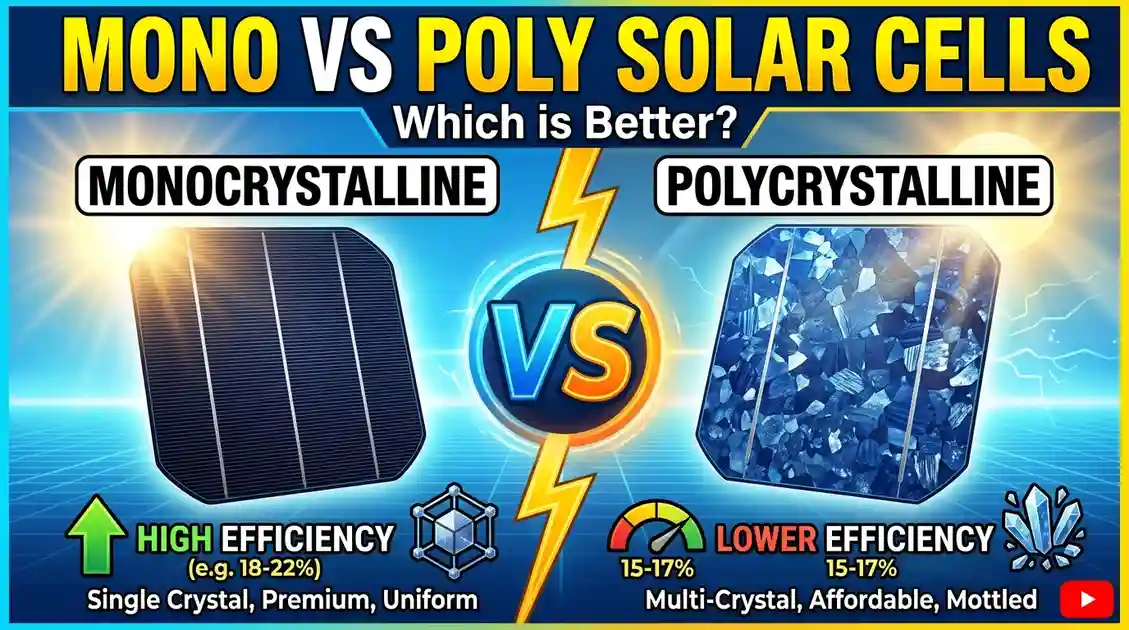
| Factor | Monocrystalline (Mono-Si) | Polycrystalline |
|---|---|---|
| Efficiency | 20% – 24% | 15% – 17% |
| Price per watt (2026) | $0.85 – $1.30 | $0.65 – $1.00 |
| Appearance | Solid black, rounded corners | Blue, speckled, square corners |
| Roof space needed (per kW) | Less | More (20–30% more panels for same output) |
| Heat performance | Better | Slightly worse |
| Lifespan | 25 – 30+ years | 20 – 25 years |
| Market share (2026) | Over 85% of new panels | Under 5% of new panels |
Polycrystalline solar panel production has shrunk fast. Most major manufacturers have shifted almost entirely to monocrystalline lines. Polycrystalline panels still show up in large, price-sensitive ground-mount projects, but for a home rooftop, they’re becoming hard to find.
The bottom line: the price gap that used to make polycrystalline the “budget” choice has shrunk to about $0.05 to $0.20 per watt. On a typical 10 kW system, that’s often a few hundred dollars, not enough to offset the extra roof space and lower output you’d get with poly. For most homeowners in 2026, monocrystalline is simply the more practical buy.
Which Is Better: Monocrystalline or Polycrystalline?
For most homeowners, monocrystalline is the better choice. It offers higher efficiency and needs less roof space, while the price difference has become smaller. Polycrystalline can still make sense for some budget-focused projects where roof space is not a major concern.
Why Are Monocrystalline Panels More Popular Than Polycrystalline?
Monocrystalline panels have become more popular because modern manufacturing provides higher efficiency and more power per square foot, while the historical price advantage of polycrystalline panels has become much smaller. For residential roofs where space matters, mono-Si is usually the easier choice.
Amorphous vs. Monocrystalline Solar Panels
Amorphous panels, also called thin-film panels, are a completely different technology from monocrystalline panels. Instead of individual silicon cells, a thin layer of silicon is spread across a surface like glass or metal.
| Factor | Amorphous (thin-film) | Monocrystalline |
|---|---|---|
| Efficiency | 6% – 13% | 20% – 24% |
| Weight | Very light, flexible | Heavier, rigid |
| Cost per watt | Lowest | Higher |
| Space needed | Roughly double for same power | Least space needed |
| Best use case | RVs, boats, small electronics | Home rooftops |
| Lifespan | Shorter | Longer |
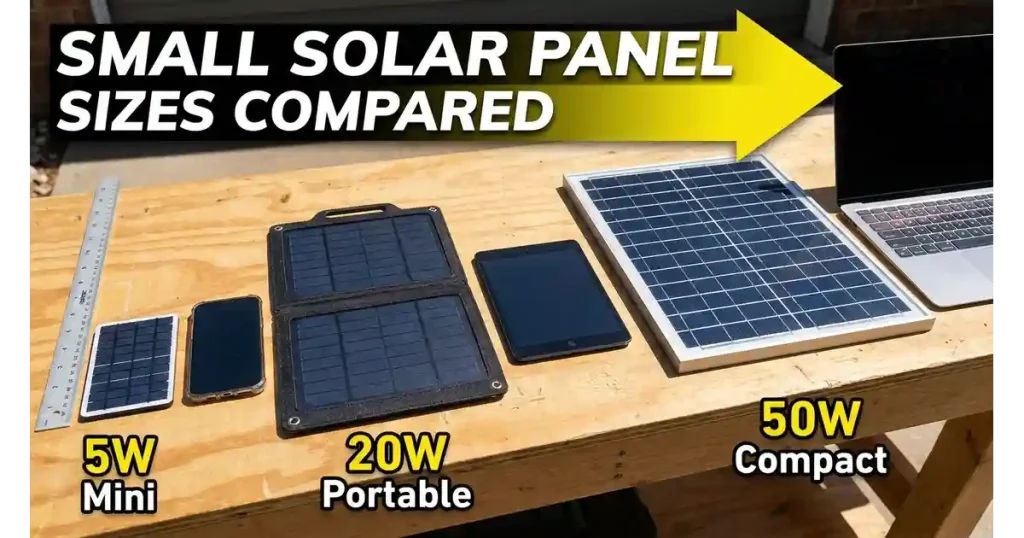
Amorphous panels aren’t a serious rival to monocrystalline for powering a house; they simply don’t produce enough electricity per square foot. But they do have a place: because they’re light, flexible, and cheap, they’re popular for RV roofs, boats, and small off-grid gadgets — see our solar panel kit guide for typical small off-grid setups, or our small solar panels guide for options under 200W — where weight and flexibility matter more than squeezing out every watt.
What Are Bifacial Solar Panels?
Bifacial solar panels have solar cells on both the front and the back. The front captures direct sunlight, just like a normal panel. The back captures light that bounces off the ground, a roof, snow, or gravel underneath it.
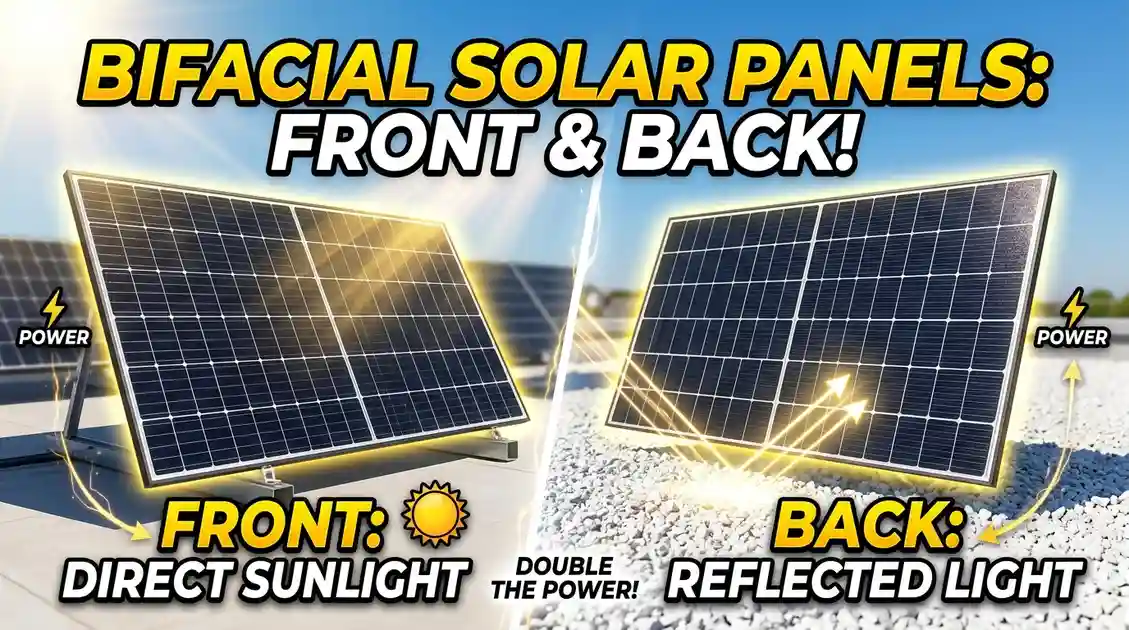
This means bifacial solar panels can produce more electricity than a standard one-sided panel, sometimes 5% to 30% more, depending on how they’re installed. But that extra power depends heavily on setup:
- They need a light-colored or reflective surface underneath (white roofing, light gravel, snow) to get a real boost.
- They need space between the panel and the roof or ground so light can bounce onto the back.
- Flat against a dark asphalt shingle roof, the rear side does almost nothing.
Bifacial panels are excellent for ground mounts, carports, and commercial rooftops with light-colored membranes. On a typical home with a dark shingle roof mounted flush, the bonus is often small.
Disadvantages of Bifacial Solar Panels
Bifacial panels get a lot of hype, so it’s worth being honest about the downsides before paying extra for one.
- Higher upfront cost: bifacial panels typically run $0.50 to $0.70 more per watt than standard monofacial panels.
- Special mounting needed: to get real benefit, they need elevated or tilted racking, which adds labor and material cost.
- Little gain on dark, flush-mounted roofs: if your roof is dark asphalt shingle and the panel sits flush against it, the back side barely produces anything.
- Heavier: most bifacial panels use glass on both sides, adding weight your roof structure needs to support.
- More fragile in shipping and handling: glass on both sides means more risk of cracking during transport or installation.
- Both sides need occasional cleaning: dust and grime on the back side reduce the very benefit you paid extra for.
- Extra electrical planning: bifacial panels can produce up to 25% more current than their rated front-side output, so wiring and safety devices sometimes need to be sized larger.
If your roof is a standard dark, flush-mounted asphalt shingle roof, a bifacial panel is unlikely to be worth the extra cost. If you’re doing a ground mount, carport, or flat commercial roof with a light-colored membrane, the math looks a lot better. Bifacial panels are also popular for RVs, though gains there are usually smaller than marketing suggests on a flush-mounted roof; see our RV solar panels guide for RV-specific sizing.
What Are Tier 1 Solar Panels?
Tier 1 is not a quality rating. It’s a financial ranking created by Bloomberg New Energy Finance (BNEF) to help banks decide which solar manufacturers are safe to lend money to for big projects.
To make the Tier 1 list, a manufacturer has to show it has supplied its own-brand panels to several large, bank-financed projects.
What Tier 1 actually tells you
- The manufacturer is large, financially stable, and likely to still be in business decades from now
- The company has a track record with major lenders
- Your 25-year warranty has a better chance of actually being honored
What Tier 1 does NOT tell you
- It doesn’t measure the panel’s efficiency
- It doesn’t measure durability or climate performance
- It doesn’t guarantee the exact panel model is the best option available
Should you pay more for Tier 1? For most homeowners, yes, since a 25-year warranty is only worth something if the company backing it survives that long. But it shouldn’t be your only factor. Always check the specific panel’s efficiency, warranty terms, and independent test data too, not just the manufacturer’s tier.
Does Tier 1 Mean a Solar Panel Is Better?
No. Tier 1 does not mean a solar panel has the highest efficiency, best durability, or best warranty. It is primarily a manufacturer bankability classification. Use Tier 1 status as one screening factor, then compare the exact panel model, efficiency, degradation rate, warranty, temperature coefficient, and price.
Environmental Impact and Recycling
Making monocrystalline panels uses more energy than making polycrystalline panels, but a panel repays that energy debt many times over during its 25-to-30-year working life.
At the end of their life, most of a solar panel’s glass, aluminum frame, and wiring can be recycled through growing solar recycling programs, though the silicon cells themselves are harder to recover and recycling infrastructure is still expanding across the U.S. Ask your installer whether they offer or know of a take-back or recycling program for old panels. Keeping panels clean and well-maintained during their working life also helps protect that long-term output; see our solar panel maintenance guide for the basics.
The Biggest Myth in This Whole Topic
Here’s the misconception that trips up more buyers than anything else: “the most efficient panel is always the best choice.” It isn’t. Efficiency only matters as much as your roof space is limited. If you have plenty of roof area, a slightly less efficient panel that costs less per watt can actually save you money for the same total output. Chasing the highest efficiency number only pays off when space is tight, your roof faces a less-than-ideal direction, or you specifically want to fit the most power onto a small area.
Likewise, “Tier 1” does not mean “best panel,” and “bifacial” does not automatically mean “more power.” Both only deliver their advertised benefit under the right conditions. Read the actual spec sheet and ask about installation details before assuming a label means better performance for your home.
How to Choose: A Simple Framework
| If your roof is… | Consider… |
|---|---|
| Small or oddly shaped | Monocrystalline (mono-Si), for the highest output per square foot |
| Large with plenty of space | Polycrystalline can still work, if you can find a supplier, since the price gap is now small |
| A light-colored flat commercial roof, carport, or ground mount | Bifacial, since it can actually use the reflected light |
| A dark asphalt shingle roof, flush-mounted | Standard monofacial mono-Si; bifacial won’t add much here |
| An RV or boat | Amorphous (thin-film) for lightweight setups, or a flush bifacial panel if the price is close to monofacial |
| A big commercial or bank-financed project | Confirm the manufacturer is on the current Tier 1 list |
What Should You Look for When Buying Monocrystalline Solar Panels?
- Panel efficiency: Higher efficiency can help when roof space is limited.
- Wattage: Compare the panel’s rated power with the size of your planned system.
- Temperature coefficient: Check how much output the panel loses as temperatures rise.
- Degradation rate: A lower annual degradation rate can preserve more output over decades.
- Product warranty: Check what is actually covered and for how long.
- Performance warranty: Look at the guaranteed output at the end of the warranty period.
- Exact model: Do not choose based only on the manufacturer’s name.
- Installer support: A good warranty is less useful if getting service is difficult.
- Price per watt: Compare quotes using the same metric rather than total system price alone.
Glossary of Solar Panel Terms
- Mono-Si
- Short for monocrystalline silicon, made from one single, pure crystal.
- Ingot
- The cylindrical block of pure crystal silicon that gets sliced into wafers.
- Wafer
- A thin slice of silicon that becomes one solar cell.
- Temperature coefficient
- How much power a panel loses for every degree above 25°C.
- Degradation rate
- How much power a panel permanently loses each year as it ages.
- N-type / P-type
- Two ways of treating silicon so it conducts electricity; N-type generally resists degradation better.
- Tier 1
- A financial stability ranking for manufacturers, not a measure of panel quality.
- Bifacial
- A panel design that captures light on both the front and back sides.
- PERC
- Passivated Emitter and Rear Cell technology used to improve the performance of a silicon solar cell.
- TOPCon
- Tunnel Oxide Passivated Contact, an N-type solar cell technology designed for high efficiency and lower degradation.
- HJT
- Heterojunction technology, which combines different silicon layers to improve cell performance and temperature behavior.
- IBC
- Interdigitated Back Contact, a back-contact cell design that places electrical contacts on the rear of the cell.
- Monofacial
- A solar panel that is designed to generate electricity primarily from light reaching its front side.
Frequently Asked Questions
What are monocrystalline solar panels?
Monocrystalline solar panels are solar panels built from a single, pure silicon crystal instead of multiple fused fragments. This single-crystal structure lets electricity flow more freely, giving the panel higher efficiency than polycrystalline or thin-film alternatives.
How efficient are monocrystalline solar panels?
Modern monocrystalline solar panels typically reach 20% to 24% efficiency, with some premium N-type or back-contact models pushing past 24%. Higher efficiency is especially useful when roof space is limited.
Are mono solar panels any good?
Yes. Monocrystalline solar panels are the most efficient common panel type, typically reaching 20% to 24% efficiency. They also tend to hold up better in heat and last longer than polycrystalline panels, which is why they now make up the large majority of new home solar installs.
Is monocrystalline silicon good for solar panels?
Yes. Monocrystalline silicon is currently the top choice for most residential solar because it produces more electricity per square foot, handles hot weather better, and comes with strong 25-year warranties from established manufacturers.
What are mono solar panels?
Mono solar panels, or monocrystalline solar panels, are solar panels built from a single, pure silicon crystal instead of multiple fused fragments. This single-crystal structure lets electricity flow more freely, giving the panel higher efficiency than polycrystalline or thin-film alternatives.
What are the disadvantages of monocrystalline solar panels?
The main disadvantage is cost. Monocrystalline panels cost more per watt to manufacture than polycrystalline panels, since growing a single silicon crystal takes more energy and precision. They also use more energy to produce per panel, though they generate more total energy over their lifetime to offset that.
How long do monocrystalline solar panels last?
Most monocrystalline panels are built to last 25 to 30-plus years, with modern panels degrading at roughly 0.4% per year on average, according to independent research on real-world systems.
What is the difference between PERC, TOPCon, and HJT panels?
PERC is the older, more affordable standard, typically 20–22% efficient. TOPCon and HJT are newer N-type technologies that push efficiency to 22–25% and degrade more slowly, and have become the mainstream premium choice in 2026.
Is a Tier 1 solar panel always the best option?
No. Tier 1 is a financial stability ranking for the manufacturer, not a measure of the panel’s efficiency or durability. It’s a useful starting filter, but always check the specific panel’s spec sheet too.
How Much Do Monocrystalline Solar Panels Cost?
Individual monocrystalline panels commonly cost about $0.85–$1.30 per watt, although the final price varies by wattage, brand, efficiency and warranty. A complete installed solar system costs more because it also includes the inverter, mounting, electrical work, permits and labor.
Are Monocrystalline Solar Panels Better Than Polycrystalline?
For most homes, yes. Monocrystalline panels generally offer higher efficiency and need less roof space. Polycrystalline panels can still be useful for some budget-focused installations where roof space is not limited.
What Is the Most Efficient Monocrystalline Solar Panel Technology?
IBC and other back-contact designs can reach the highest efficiency levels, while TOPCon and HJT offer strong efficiency with broader availability. The best choice depends on price, roof space, climate and the exact panel model.
Are Monocrystalline Solar Panels Good for Hot Climates?
Yes. Monocrystalline panels perform well in hot climates, although all solar panels lose some power as temperature rises. Check the panel’s temperature coefficient when comparing models for very hot locations.
What Does Mono-Si Mean in Solar Panels?
Mono-Si means monocrystalline silicon. It describes solar cells made from a single silicon crystal rather than multiple silicon fragments. Mono-Si panels are widely used in residential solar because of their high efficiency and long service life.
What Is a Monocrystalline Solar Cell?
A monocrystalline solar cell is an individual solar cell made from a single silicon crystal wafer. Multiple cells are connected together to form a complete monocrystalline solar panel.
How Much Power Does a 400W Monocrystalline Solar Panel Produce?
A 400W monocrystalline panel has a rated output of 400 watts under standard test conditions. Actual energy production varies with sunlight, temperature, shading, orientation, and system losses.
Are Monocrystalline Solar Panels Worth the Extra Cost?
For most homeowners, yes, especially when roof space is limited. Monocrystalline panels provide high efficiency and long-term output, although you should compare the total system price and the exact panel model before buying.
What Is the Difference Between Mono-Si and Polycrystalline Solar Panels?
Mono-Si panels are made from single-crystal silicon and generally offer higher efficiency, while polycrystalline panels use multiple silicon crystals. Monocrystalline panels are now much more common in residential solar.
Are N-Type Monocrystalline Solar Panels Better?
N-type monocrystalline panels can offer high efficiency and lower degradation than older P-type designs. TOPCon and HJT are two common N-type technologies used in modern solar panels.
What Is the Best Monocrystalline Solar Panel for a Small Roof?
For a small roof, look for a high-efficiency monocrystalline panel with a strong warranty and a suitable temperature coefficient. The highest-efficiency panel is not automatically the best value, so compare price per watt and the exact model specifications.
For most U.S. homeowners in 2026, monocrystalline solar panels are the practical default. They cost slightly more per watt than polycrystalline, but polycrystalline is disappearing from the residential market anyway, and the price gap has nearly closed. Bifacial panels can be worth the extra cost on ground mounts, carports, or light-colored commercial roofs, but they rarely deliver their full advertised boost on a standard dark, flush-mounted home roof. And when you see the term “Tier 1” on a spec sheet, remember it’s a signal about the manufacturer’s financial stability, not a guarantee that the panel is the best one for your roof. Get quotes from a couple of licensed installers, or browse our directory of solar installers near you, ask for the exact panel model and its independent warranty terms, and match the technology to your actual roof, not the marketing headline.