Home Solar Panels: The Complete 2026 Guide to Cost, Sizing, and Real Savings
Electric bills keep climbing. Power outages happen more often. That’s why a home solar panel system is one of the most popular home upgrades in the United States right now — and this guide covers real 2026 numbers, not marketing fluff.
- Lifespan: Panels last 25–30 years. Inverters usually need one replacement before then.
- What it is: Panels turn sunlight into electricity for your house.
- Typical cost: $2.50–$3.50 per watt installed in 2026. An 8 kW system runs about $20,000–$28,000 before discounts.
- How many panels: Most homes need 15–22 panels.
- Federal tax credit: Ended December 31, 2025 for buyers. Still active for leases and PPAs.
- Home value: Owned solar systems sell for about 4.1% more, based on a 2026 Zillow report.
- Power outages: A home solar panel alone will not keep your lights on in a blackout. You need a battery too.
What Is a Home Solar Panel System?
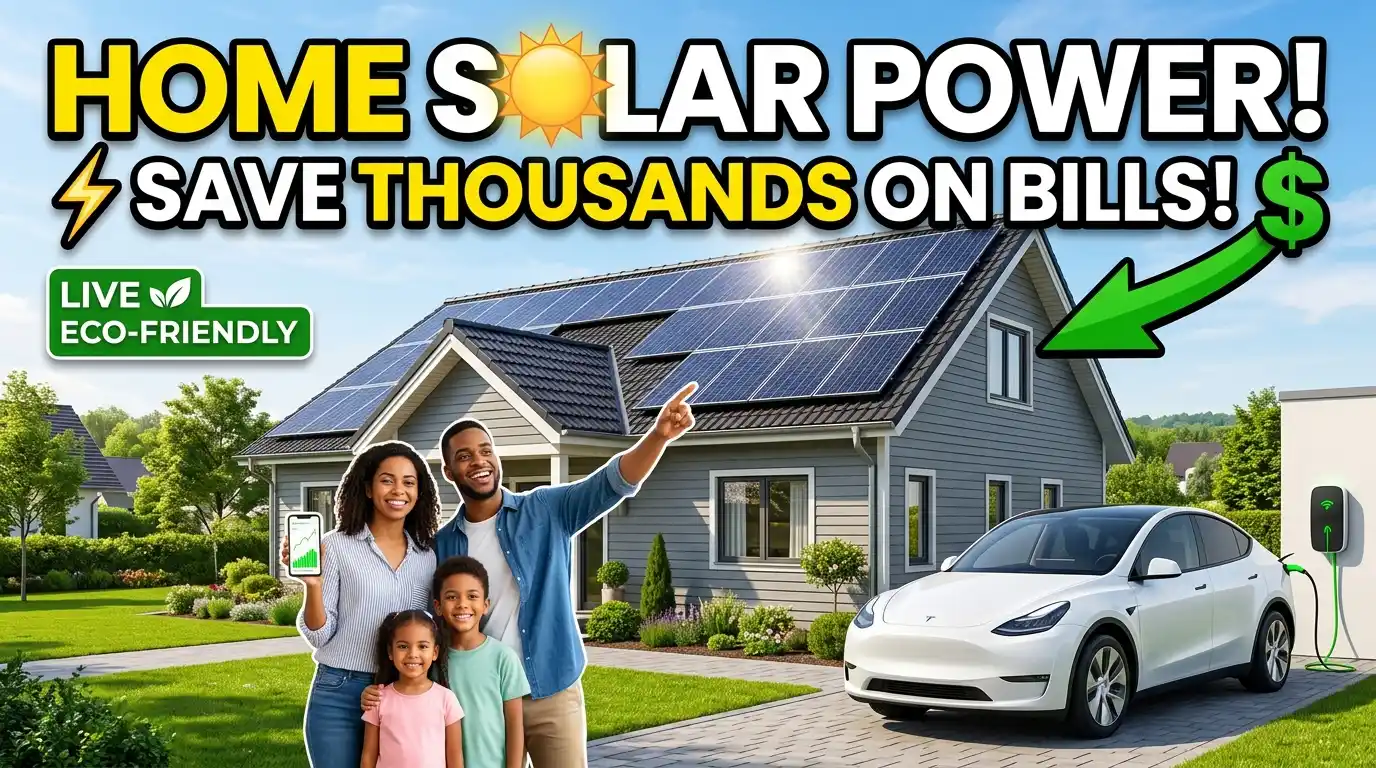
A home solar panel system turns sunlight into electricity you can use in your house. Think of it like a plant using sunlight to grow. Instead of growing, the panels make power. If you want the deeper technical breakdown, see our guide on how solar panels work.
People search for this idea in a lot of different ways: solar panels for home, solar panels for house, solar panels for my house, home solar panels, residential solar panels, house solar panels, household solar panels, and solar power panels for home. They all mean the same basic thing — panels on your house that make your own electricity.
Every home solar panel system has these main parts:
- Solar panels — photovoltaic (PV) modules mounted on your roof, or on the ground near your house, that capture sunlight. Browse the full range of solar panels and types of solar panels available today.
- Inverter — converts the direct current (DC) electricity your panels make into the alternating current (AC) electricity your home actually uses. Learn more in our solar inverter guide.
- Racking and mounting hardware — secures the panels to your roof or the ground. See our solar panel mounting hardware guide for details.
- Battery storage (optional) — stores extra solar power for use at night or during an outage.
- Monitoring system — lets you track production and use from an app on your phone.
| Setup Type | How It Works | Best For |
|---|---|---|
| Grid-tied | Stays connected to the power company | Most homes |
| Off-grid | Makes and stores all its own power | Cabins, tiny homes, remote land — see our off-grid solar inverter guide |
| Hybrid | Solar plus battery, but still grid-connected | Homes that want backup power |
The Best Solar Panels for Home Use in 2026
Not all panels are the same. Here’s what the highest-efficiency residential solar panel test data actually shows for 2026:
| Brand & Model | Efficiency | Temp. Coefficient | Warranty | Best For |
|---|---|---|---|---|
| SunPower Maxeon 7 | ~24.1% | -0.27%/°C | 40 years | Small roofs, max power per panel |
| REC Alpha Pure-R | ~22.3% | -0.24%/°C | 25 yrs, 92% output at yr 25 | Hot climates, shaded roofs |
| Panasonic EverVolt | ~21.6–22.5% | -0.26%/°C | 25 years | Hot climates, low-light performance |
| Qcells Q.TRON | ~21.4% | -0.29%/°C | 25 years | US-made panels, good value |
| Canadian Solar HiKu7 | ~21–22.5% | -0.29%/°C | 25–30 years | Large roofs, budget-friendly |
| Jinko Tiger Neo | ~20.8–22.3% | -0.29%/°C | 25–30 years | Budget systems |
What Does “Efficiency” Really Mean?
Efficiency is how much sunlight a panel turns into power. A 24% panel turns 24 out of every 100 units of sunlight into electricity. The rest becomes heat. A higher number means you need fewer panels to make the same power — useful if your roof is small. Most premium panels today are monocrystalline solar panels, which offer the best efficiency-to-space ratio.
N-Type, TOPCon, HJT, and IBC: What’s the Difference?
Most new high-efficiency home solar panels use “N-type” silicon instead of the older “P-type.” N-type cells lose less power over time and handle heat better. Inside that N-type category, you’ll see three common technologies:
TOPCon
The most common and affordable N-type option. A good balance of price and performance, used by Qcells and Jinko.
HJT (Heterojunction)
Adds a thin extra layer for better heat resistance. Performs well in hot climates, usually costs a bit more than TOPCon.
IBC (Back-Contact)
Hides all the wiring behind the cell instead of on top. This is what gives SunPower Maxeon panels their all-black look and top efficiency.
Some newer panels are also “bifacial,” meaning they can catch sunlight on both the front and back side. This adds a small power boost on light-colored roofs or ground-mounted systems, though the gain is modest for most rooftop installs.
The honest trade-off: SunPower’s Maxeon panels lead in efficiency, but they also cost more per watt — often $2.80–$3.20 per watt just for that brand’s panels. If your roof has plenty of space, a mid-tier panel like Canadian Solar or Qcells often gives you better value, since you can simply add more panels for less total cost.
One more honest note: SunPower’s original company went through bankruptcy in 2024. Its Maxeon panel technology is now made by a different company. The panels still test well, but always check who backs the warranty before you buy — a 40-year warranty is only as good as the company standing behind it in year 30.
What Does a Home Solar Panel System Cost in 2026?
A home solar panel system usually costs about $2.50 to $3.50 per watt installed in 2026. Prices go up or down depending on your state, your roof, and the panel brand you pick. For a full breakdown, see our guide on solar panel installation costs.
| System Size | Typical Panel Count | Cost Before Incentives |
|---|---|---|
| 4–6 kW (small home) | 10–15 panels | $12,000–$19,000 |
| 7–10 kW (medium home) | 18–25 panels | $20,000–$28,000 |
| 12 kW (large home) | 28–32 panels | $29,000–$40,000 |
Only about 30–40% of that price is the panels themselves. The rest is labor, permits, the inverter, wiring, and the installer’s overhead — see our guide to solar panel installation for what that process looks like.
What Does “Price Per Watt” Actually Mean?
Solar companies price systems by the watt so you can compare quotes fairly, no matter the system size. If a 6,000-watt (6 kW) system costs $18,000, that’s $3.00 per watt. Two quotes for the same size home should land in a similar per-watt range — if one is far higher, ask what’s driving the difference (premium panels, extra roof work, or added markup). It’s worth comparing a few solar installation companies or searching solar installers near me to see local pricing before you commit.
The Tax Credit Changed. Here’s What’s Actually True in 2026.
This part trips up a lot of homeowners, so let’s be direct about it.
| Before 2026 | Now (2026) | |
|---|---|---|
| Cash or loan purchase | 30% federal tax credit | $0 federal credit |
| Lease or PPA (you don’t own the panels) | 30% credit went to the leasing company | Still 30% credit, through 2027 |
| State and utility rebates | Varies by state | Still available in many states |
The 30% federal Residential Clean Energy Credit (Section 25D) ended on December 31, 2025, under the One Big Beautiful Bill Act, signed in July 2025. It cut the credit about seven years earlier than planned, with no partial credit or phase-down — it simply stopped.
If you buy your solar panels with cash or a loan in 2026, you will not get a federal tax credit. If you lease your panels or sign a Power Purchase Agreement (PPA), the leasing company can still claim a similar credit through 2027, often passed to you as a lower monthly payment. State incentives still exist in many places, so check your state energy office before deciding on cash, loan, or lease. If you’re in a specific state market, our solar panels California guide covers regional incentives in more depth.
Cash vs. Loan vs. Lease: Which Fits You?
| Option | You Own the System? | Best For |
|---|---|---|
| Cash purchase | Yes | Homeowners who want the full home-value boost and no interest costs |
| Solar loan | Yes, once paid off | Homeowners who want ownership but can’t pay upfront |
| Lease or PPA | No | Homeowners who want lower monthly bills with no upfront cost, and don’t mind not owning the panels |
Still weighing whether the investment makes sense at all? Our Are Solar Panels Worth It? guide breaks down the real ROI math. For a more detailed, unbiased breakdown of financing basics and consumer protections, the U.S. Department of Energy’s solar consumer resources are a solid starting point before you sign anything.
How Many Solar Panels Does Your House Need?
The number of panels you need depends on your home’s energy use, roof space, and local sunlight — not just your square footage. Most estimates assume standard 400-watt solar panels, though wattage varies by brand.
| Home Size | Typical System Size | Approx. Panel Count |
|---|---|---|
| 1,000 sq ft home | 4–6 kW | 10–15 panels |
| 2,000 sq ft home | 8–12 kW | 20–30 panels |
| 2,000 sq ft home, high use (pool, AC, EV) | 12–15 kW | 30–36 panels |
A solar panel setup for a 2,000 sq ft house usually lands in the middle of that range, but two homes the same size can need very different systems. A 1,000 sq ft home’s needs vary a lot based on how much electricity that household actually uses. A home with an electric car, a pool pump, and central AC running all summer will need a bigger system than a home with none of those things.
Some people search for a “600 solar panel energy home.” That would be a massive system, far bigger than nearly any single home needs. Most homes need somewhere between 10 and 36 panels. Numbers that high usually point to a solar farm, not a typical house.
A solar company will look at your last 12 months of electric bills, your roof’s direction, and local sun hours to give you an exact number — always more accurate than guessing from square footage alone. Try our own solar panel calculator for a quick estimate, or get a free, independent second opinion using NREL’s PVWatts Calculator, a free government tool that estimates how much electricity a system of a given size would produce at your address.
Solar Panels for Every Type of Home
Not every home is a simple single-family house with a wide-open, south-facing roof. Here’s how solar works across different home types.
Solar panels houses of every type — from single-family homes to townhouses — can benefit, though the right setup depends on your roof and energy needs.
| Home Type | Can You Install Solar? | Key Thing to Check |
|---|---|---|
| Mobile or manufactured home | Yes, usually | Roof strength — many need extra support before panels go on |
| Tiny home | Yes | Usually a small off-grid setup with a battery |
| Townhouse | Yes | HOA rules and shared roof orientation |
| New construction | Often pre-installed | Check if it’s owned or a lease baked into the price |
Solar Panels for Mobile Homes
Can you put solar panels on a mobile home? In most cases, yes — but the roof needs to be checked first. Many manufactured home roofs aren’t built to hold the weight of panels without extra bracing. If the roof can’t take it, a ground-mounted system nearby is a common backup plan. Lighter small solar panels are often used for this reason, since a lighter panel setup is usually the simplest fix. If you’re wondering whether your community allows it, check your park’s rules first — some do not allow roof changes at all.
Tiny Home Solar Panels
These are usually small, off-grid systems paired with a battery, since tiny homes often aren’t hooked up to the power grid at all. A well-planned small array can often cover a tiny home’s full power needs — see our off-grid solar inverter guide for how these systems are wired.
Solar Panels on a Townhouse
Solar on townhouse buildings is common, but townhouses often share a roof structure and need approval from a homeowners’ association (HOA). Many states now have solar access laws that limit how much an HOA can block installations, but you should still check local rules first.
New Homes With Solar
More new construction now comes with solar already installed, especially in states that require or encourage solar-ready homes. Some builders also offer an integrated solar roof instead of traditional panels. If you’re buying new, ask whether the system is owned outright or tied to a lease — that changes your long-term cost significantly.
Does Solar Increase Your Home’s Value?
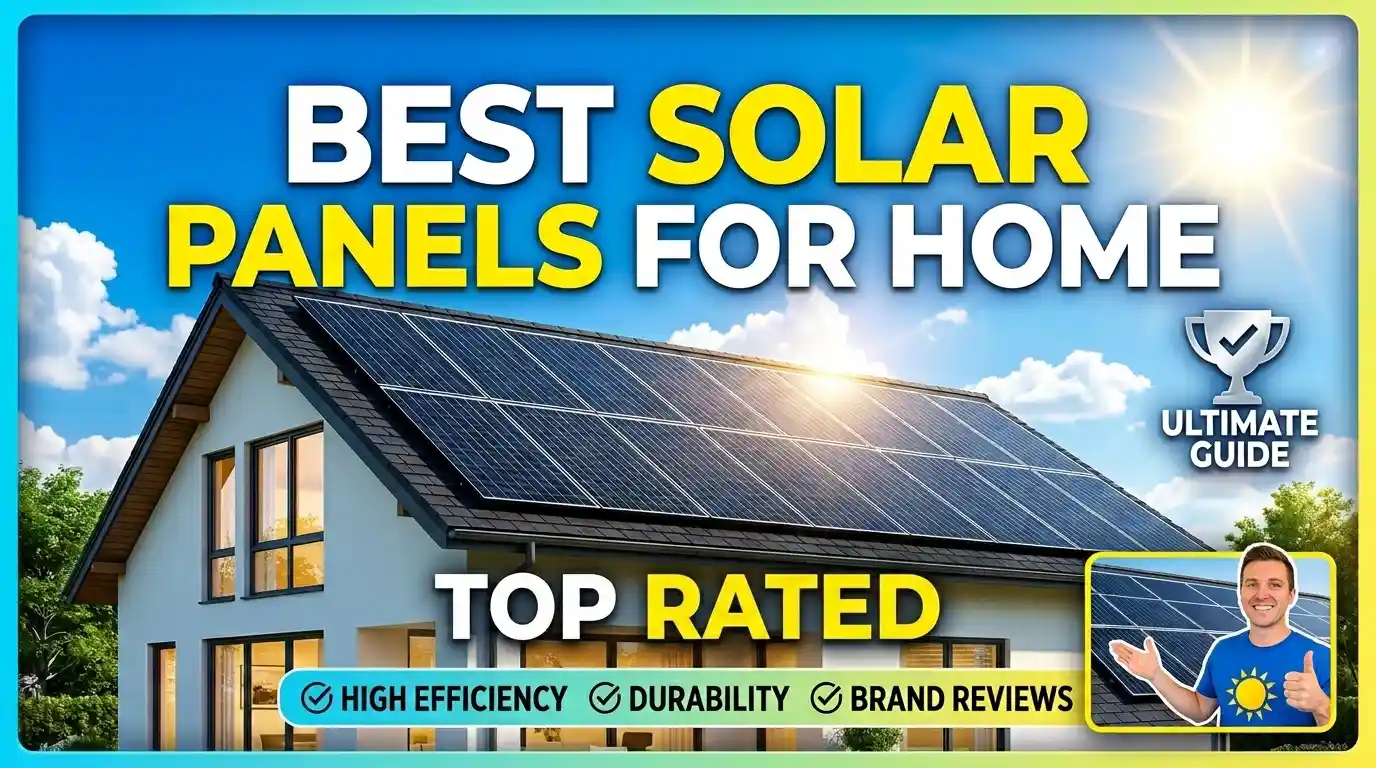
Yes, in most cases. According to a 2026 Zillow report, homes with solar sell for about 4.1% more than similar homes without it — roughly $12,000 more on a $300,000 home.
- Owning beats leasing. A system you own outright adds more resale value than a leased system, since a buyer may not want to take over someone else’s lease or loan payments.
- Keep your paperwork. Save your installation records, warranty documents, and production history. Buyers and appraisers want proof the system works as promised.
- Selling is easiest when the system is paid off. If you still owe money on a solar loan, that balance usually needs to be settled or transferred at closing.
- Panels don’t lose value fast. Quality panels lose only about 0.25% to 0.5% of their output each year, which is very slow.
A Regional Note: Colorado and Pitkin County
Colorado, including mountain communities like Pitkin County, is a strong market for solar. High elevation and clear skies mean more usable sunlight, even in cold winters — and panels actually perform a little better in cool, sunny conditions than in extreme heat. Strong sun plus high electricity awareness among mountain-town buyers adds up to solid resale value. If you’re comparing quotes for a residential solar panel system in Pitkin, look for an installer experienced with steep or snow-loaded roofs, since mountain jurisdictions often have their own structural rules and HOA requirements.
Can Solar Power Your Whole House — Even During an Outage?
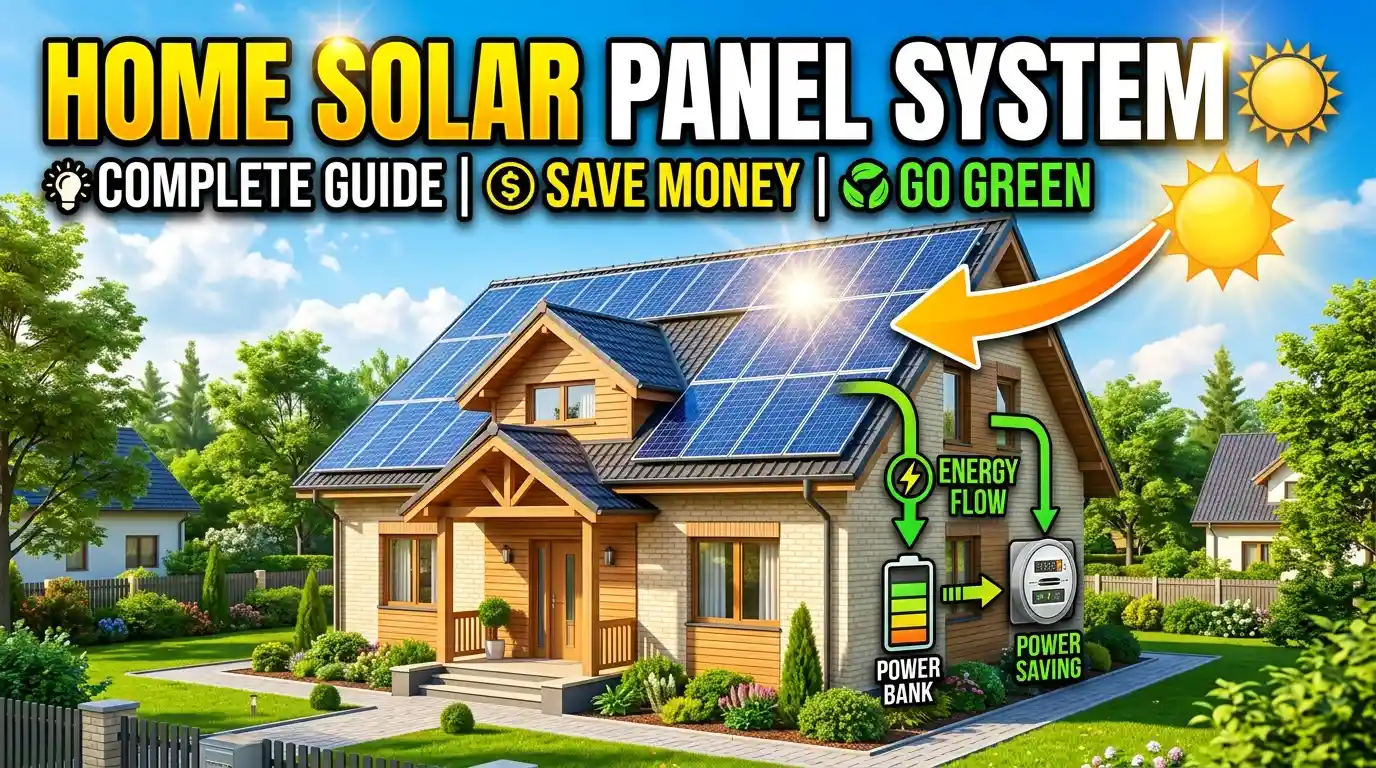
With the right system size, yes, solar can power a house completely. Many homes run entirely on solar during sunny days, sending extra power back to the grid or storing it in a battery.
How much of your yearly power solar can cover depends on:
- Your roof space
- Your local sunlight hours
- Your household’s electricity use
- Whether you have a battery
A solar company can model your actual usage against a system design and estimate the percentage — commonly 70% to 100%+ for a well-sized system.
But here’s the part most sales pages leave out: “can solar power a house” is a completely different question than “can solar panels power a house during a power outage.” A standard grid-tied system, with no battery, automatically shuts off during a blackout. This isn’t a flaw — it’s required, so utility workers aren’t at risk of electricity flowing backward into lines they think are dead.
To actually keep your lights on during an outage, you need panels plus a battery plus the right kind of inverter. A battery add-on typically costs $8,500 to $13,500 depending on size and brand. Without one, your rooftop panels are just as dark as everything else on the block during a blackout. For shorter, lighter backup needs, a portable solar power generator can also help cover essentials during an outage.
The Biggest Misconception About Home Solar
The most common myth: “Once I install solar, my electric bill goes to zero and I never think about it again.”
In reality:
- Most systems are sized to offset 70–100% of your usage, not generate unlimited extra power. If your usage grows (new EV, new pool, new baby who needs the AC lower), your bill can creep back up.
- Grid-tied systems without a battery still leave you in the dark during outages, as covered above.
- Panels do degrade slowly. They don’t stop working at 25 years, but they also don’t produce the same power forever. Most warranties guarantee 85–92% of original output at year 25, not 100%.
- Without a battery or net metering, extra power you make during the day may not fully carry over to power you use at night, depending on your utility’s rules.
None of this means solar is a bad investment — it usually still pays for itself over 25 to 30 years through lower bills. It just means “set it and forget it” isn’t quite accurate, and a good installer should walk you through these limits before you sign anything. For a deeper dive into ROI, read Are Solar Panels Worth It?
Solar Panel Kits for Home: DIY or Professional?
Some homeowners like to install their own solar panels. Solar panel kits for home use usually include:
- Panels
- An inverter (string or microinverter)
- Mounting rails and hardware
- Wiring and connectors
- A battery, if you want one
DIY companies claim you can cut installation costs by roughly 50–60% by skipping professional labor — often saving $10,000 or more on a mid-size system. That’s real, but it comes with real responsibility:
- You still need a permit and a utility interconnection approval before you can legally turn the system on.
- Rooftop, grid-tied systems need rapid shutdown devices to meet electrical code.
- Mistakes in wiring or mounting can void warranties or create fire risk.
DIY kits work well for sheds, cabins, RV solar panels, and small off-grid projects. For a full whole-house system tied into your main electrical panel, most homeowners still hire a licensed electrician, even if they handle some of the physical mounting themselves.
How Long Do Home Solar Panels Really Last?
Most quality panels are built to last 25 to 30 years, with slow, predictable output loss — typically 0.25% to 0.5% per year for premium panels, and up to 0.75–1% per year for budget panels.
Inverters wear out faster than panels. String inverters usually last 10 to 15 years. Microinverters often last 20 to 25 years. Plan on replacing your inverter at least once during the life of your panels.
Monitoring your solar panel’s efficiency at home is easy today. Apps from companies like Enphase, SolarEdge, and Tesla show real-time and historical production — see our comparison of SolarEdge vs. Enphase vs. Tesla vs. Sol-Ark to pick the right monitoring platform. Regular checks help catch:
- New shade from trees that have grown taller
- Dirt or debris cutting into output — see how to know if your solar panels are working
- A single underperforming panel or inverter fault
- Snow buildup in cold climates
Keeping panels clean and well-maintained protects that output over time. See our guides on solar panel maintenance and professional solar panel cleaning for upkeep schedules.
A Few Bonus Perks and Fun Ideas
Do solar panels keep your house cooler? A little, yes. Panels sit a few inches above your roof, creating a small air gap. That gap blocks some heat from reaching your attic, which can modestly lower cooling costs in hot weather — a nice bonus on top of the electricity savings.
Not every project has to be a full system. Homeowners also explore:
- Solar panels in front of house placements, on the street-facing section that gets the most sun (check HOA rules first if it will be visible from the road).
- Solar panel dog house kits — small setups that power a fan, light, or heating pad for an outdoor pet shelter. This is a genuinely different product than a home power system, more of a small accessory purchase.
- Other solar ideas for homes, like solar attic fans, solar water heaters, and solar yard lighting, which can work alongside a main system.
Is Your Home Ready for Solar?
Before requesting quotes, it helps to qualify your home type for solar. Installers generally check:
- Roof age and condition (an aging roof should be replaced before panels go on top of it)
- Roof direction and pitch (south-facing performs best in the Northern Hemisphere)
- Shading from trees or nearby buildings
- Your home’s electrical panel capacity (older homes sometimes need an upgrade)
- Local permitting and HOA rules
This applies whether you have a standard house, a townhouse, a mobile home, or a home still being built.
If you’re still weighing whether solar is good for your house, the honest answer depends on three things: how much sun your roof actually gets, how big your electric bill already is, and how long you plan to stay in the home. A short consultation can answer this more precisely than any general rule of thumb.
This guide is for general information. For an exact system size, cost, and savings estimate, confirm final numbers with a licensed local solar installer.
Frequently Asked Questions
Should I get solar panels on my house?
How much do solar panels for house cost on average?
How many solar panels will I need to run a house?
How much does a home solar panel system cost for a 2,000 sq ft house?
Can you legally install your own solar panels?
Can you put solar panels on a dormer?
Can I run AC with a home solar panel system?
Can a house run 100% on solar?

Munir Ahmed researches and writes about residential solar systems, cost trends, and homeowner buying guides for SolarCostUSA. He reviews pricing data, incentive changes, and installer practices to keep this guide accurate and up to date.