Smart Home Solar Guide · Updated for 2026
Ring Solar Panel: Complete 2026 Guide to Price, Compatibility, and Fixes
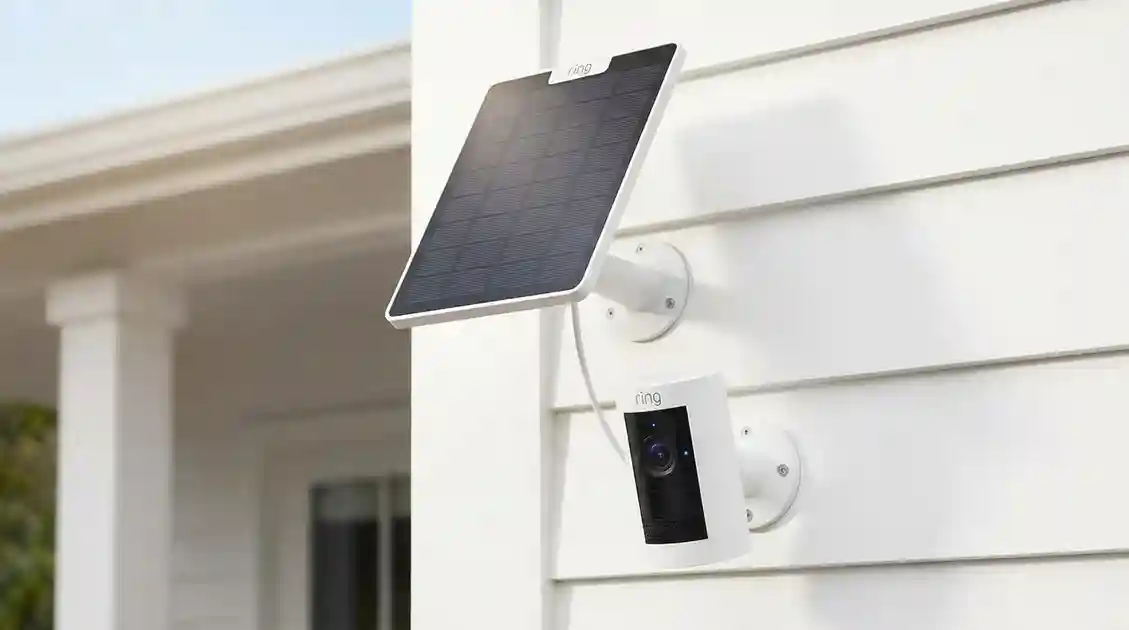
A Ring solar panel is a small charger that clips onto a mount and plugs into your Ring camera, feeding it power all day so you rarely need to charge the battery by hand. It works well, but only with real, direct sunlight, at least 2 to 4 hours a day. Prices run from about $32 to $70. It won’t charge a dead battery from zero, and it pauses once the battery is above 90%. Most panels last 2 to 5 years.
A Ring camera solar panel sounds like a simple fix: put it in the sun, forget about charging forever. The truth is a little more specific than that. This guide covers what the panel actually does, real prices from current listings, which model fits which camera, how to install it, and the exact steps to fix one that stops charging.
What’s in this guide
- What is a Ring camera solar panel, and does it really work?
- Ring solar panel price: what you’ll actually pay
- Ring solar panel models compared
- Ring Stick Up Cam, Outdoor Cam & Doorbell: which one works with it?
- Panel specs: efficiency, cable length, temperature range
- Ring solar panel installation and mount
- Battery, charger, and how power flows to your camera
- Ring solar panel not charging? Fix it in order
- Cleaning and maintenance
- How long does a Ring solar panel last?
- Ring vs. Wasserstein and other third-party panels
- The biggest myth about solar-powered cameras
- Frequently asked questions
1. What Is a Ring Camera Solar Panel, and Does It Really Work?
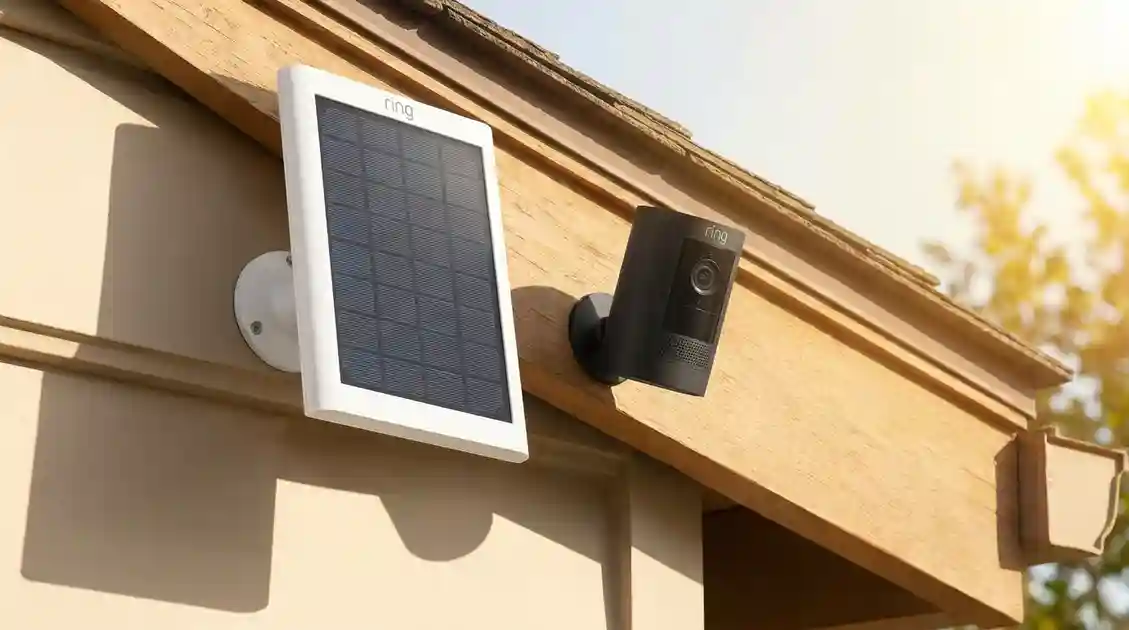
Yes, a Ring camera solar panel really works, but only where the mounting spot gets real, direct sun for 2 to 4 hours a day. It clips onto a mount, plugs into the camera, and tops off the battery continuously, so you rarely pull the camera down to charge it by hand.
Here’s the honest version. In good sun, most Ring solar panels keep the camera battery sitting between 90% and 100% almost all the time. In winter, in shade, or in far-northern states, owners often see the battery slowly drain and still need a manual charge every few weeks. That’s not a defect. It’s just how small solar panels behave.
Example: a camera mounted on a south-facing porch with full afternoon sun typically never drops below 85%. The same camera moved under a shaded eave can drift down to 40–50% over a cloudy week.
And yes, does Ring have a solar option? Ring sells a solar panel for nearly its whole outdoor camera lineup, so almost any battery-powered Ring camera has a solar add-on available.
2. Ring Solar Panel Price: What You’ll Actually Pay
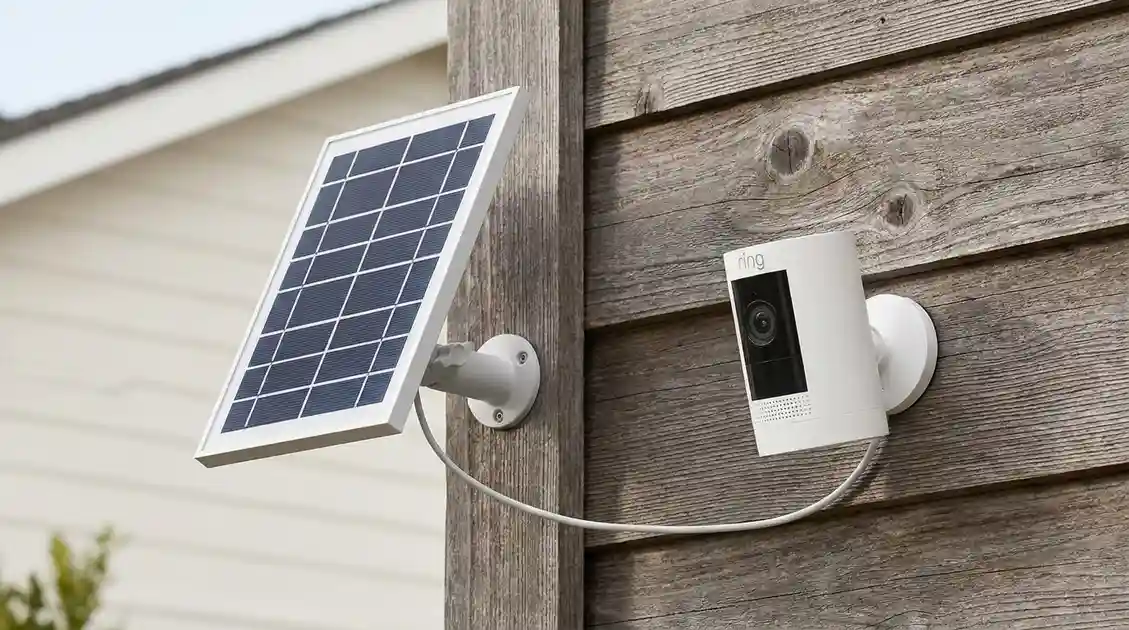
A Ring solar panel costs $32 to $70 depending on the model, with the standard 2nd Generation panel typically landing around $48 to $60 after common sale discounts.
| Model | Typical Full Price | Sale Price Seen | Where |
|---|---|---|---|
| Small Solar Panel (USB-C) | $40 | $32 | Ring.com, Amazon |
| Solar Panel, 2nd Gen (4W) | $59.99–$69.99 | $48 | Ring.com, Home Depot, Best Buy |
| Super Solar Panel (5W) | $69.99 | Rarely discounted | Ring.com |
| Two-Pack (2nd Gen) | $120 | $96 | Amazon |
Third-party brands like Wasserstein sell similar panels for a bit less, but Ring’s own panel wins on warranty and official compatibility, which matters more than a few dollars saved.
A quick note on price: retailers rotate discounts often, especially around Black Friday and mid-year sales, so it’s worth checking two or three sites before buying.
3. Ring Solar Panel Models Compared
Ring makes three solar panel models, not one, and picking the wrong one means it won’t charge your camera fast enough for how it’s used. The table below compares wattage and best-fit use case for each.
| Model | Wattage | Sun Needed Per Day | Best For |
|---|---|---|---|
| Small Solar Panel | ~1.9W–2.2W | 3–4 hours | Light use, mild traffic areas like entryways |
| Ring Solar Panel (2nd Generation) | 4W | 2–3 hours | Most homes; charges up to 60% faster than the 1st gen |
| Super Solar Panel | 5W | 1–2 hours | Busy areas with lots of motion events, or homes with limited sun |
The Ring Solar Panel (2nd Generation) is the one most people should buy. It’s the current standard panel, it charges noticeably faster than the older version, and it fits the widest range of cameras.
4. Ring Stick Up Cam, Outdoor Cam & Doorbell: Which One Works With It?
A Ring solar panel works with nearly every battery-powered Stick Up Cam and Outdoor Cam model, using either a USB-C or barrel-plug connector. It does not work with any Ring Video Doorbell or wired Floodlight Cam.
| Connector Type | Compatible Cameras |
|---|---|
| USB-C | Outdoor Cam Plus, Stick Up Cam Pro, Spotlight Cam (2nd Gen), Spotlight Cam Plus, Spotlight Cam Pro |
| Barrel plug (adapter included) | Outdoor Cam / Stick Up Cam (2nd & 3rd Gen), Spotlight Cam Battery |
So for a Ring Stick Up Cam and solar panel pairing: the Stick Up Cam Pro takes USB-C directly, while the older 2nd and 3rd generation Stick Up Cam Battery models use the barrel plug with the included adapter. Either way, there’s a matching solar panel for that Stick Up Cam model.
Shopping for a Ring solar panel for Outdoor Cam works the same way: check whether your Outdoor Cam has USB-C or the older barrel-plug port before you order.
Does the Ring Video Doorbell Have a Solar Panel Option?
No. A Ring doorbell solar panel does not exist in Ring’s current lineup. Every Ring Video Doorbell model, whether hardwired or battery-powered, draws power differently from the Stick Up Cam and Outdoor Cam line and has no solar panel port. If your doorbell battery runs low, the only options are hardwiring it to existing doorbell wiring or removing the battery to charge it indoors.
5. Panel Specs: Efficiency, Cable Length, and Temperature Range
A Ring solar panel uses monocrystalline silicon cells rated at roughly 23.5% conversion efficiency, the same cell type found in many home rooftop panels. Our monocrystalline solar panels guide covers this cell technology at full home-system scale, where the same efficiency principle applies at 20 to 26 times the power output. That’s high for a small accessory panel, which is part of why it performs well even with limited sun.
| Spec | Detail |
|---|---|
| Cell type | Monocrystalline silicon |
| Efficiency | About 23.5% |
| Cable length | About 6.5 ft, with built-in cable management |
| Operating temperature | Roughly -5°F to 120°F (some listings show up to 140°F) |
| Mount | Adjustable arm, 360° rotation, 180° tilt |
| Warranty | 1-year limited warranty |
6. Ring Solar Panel Installation and Mount
Ring solar panel installation takes about 10 to 15 minutes with basic tools: a screwdriver and the included mounting hardware, no electrician required. Here’s the simple version:
- Pick a spot near your camera that gets direct sun for at least 2 to 4 hours a day.
- Screw the adjustable mounting base to the wall, gutter, or pole using the included screws and anchors.
- Clip the solar panel onto the base and angle it about 45 degrees toward the sky.
- Face the panel south if you’re in the northern hemisphere, or north if you’re south of the equator.
- Plug the cable into your camera’s USB-C port, or use the barrel-plug adapter for older models.
- Use the cable clips to tidy up any extra wire.
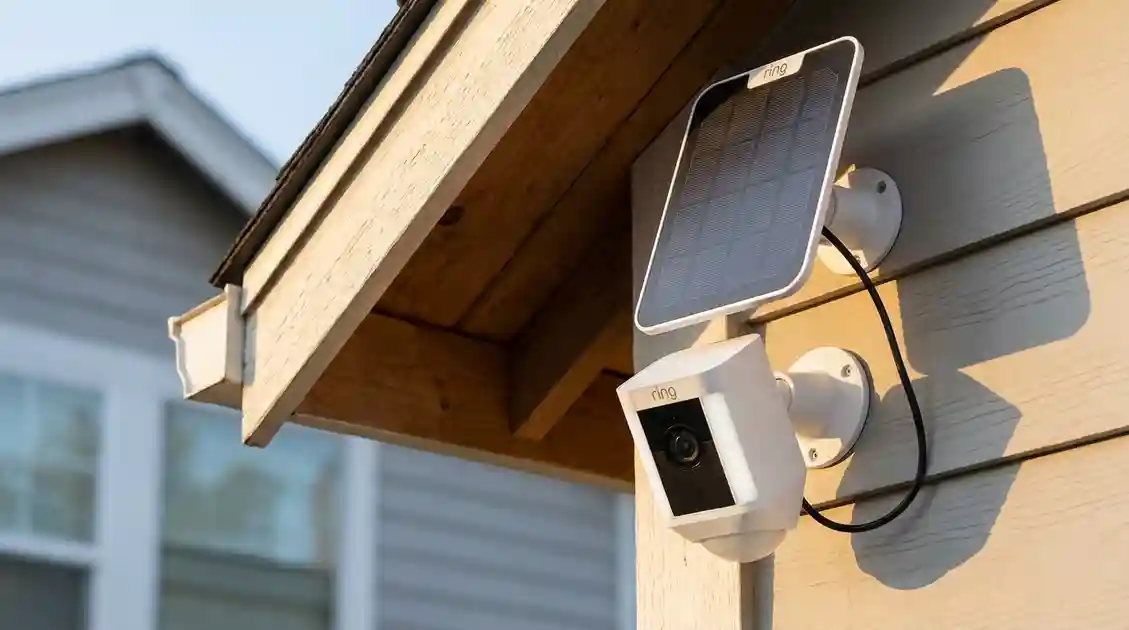
For mounting hardware, Ring sells three add-on options separately: a gutter mount, a pole mount, and a wall mount. These let you attach the camera and panel together without drilling a second set of holes, which is handy if you’re mounting on a narrow post or awkward corner. If you’re also planning a full home solar install, our solar panel mounting hardware guide covers racking options at that larger scale.
7. Battery, Charger, and How Power Flows to Your Camera
The Ring solar panel acts purely as a charger; it has no battery of its own. It feeds power into the camera’s internal battery all day, and the battery is what actually stores and runs the camera.
Think of it like a phone and a car charger. The camera’s internal battery stores the power and runs the camera. The solar panel feeds power into that battery all day long instead of you removing it to charge indoors. On a cloudy stretch of several days, the battery will slowly drain, since there’s less sun feeding it. That’s normal, and the fix is simply patience or a manual charge.
One detail almost no one knows until it confuses them: the panel is a trickle charger, not a way to bring a dead battery back to life. Ring’s own system will not begin actively charging until your camera’s battery drops below 90%. If your battery already shows 90% or higher, the app may say the solar panel is “not charging,” and that’s expected, not a fault.
8. Ring Solar Panel Not Charging? Fix It in Order
A Ring solar panel that stops charging is almost always fixed by working through eight checks in order: battery level, sun exposure, panel cleanliness, cable condition, app status, firmware, a camera reboot, and a fresh pairing.
- Check the battery level first. If it’s already at 90% or above, the panel will not add more charge. This is normal, not a defect.
- Confirm real sun exposure. Watch the mount spot for a full day. It needs 2 to 4 hours of direct, unobstructed sunlight, not filtered light through leaves or clouds.
- Clean the panel surface. Dust, pollen, and bird droppings block cells even when it looks mostly clean.
- Inspect the cable and connectors. Unplug and replug the cable, and look for fraying, corrosion, or a bent pin. Use only the Ring-supplied cable and adapter.
- Check the Ring app for a “Not Connected” status. This usually means a loose connector or a firmware issue, not a dead panel.
- Update firmware. Open the Ring app and check for a device software update; outdated firmware can misreport charging status even when the panel works fine.
- Reboot the camera. Remove the battery pack, wait 30 seconds, then reinsert it and reconnect the panel.
- Reinstall the panel from scratch. Disconnect everything, then set up the connection again as if it were new.
If you’ve worked through every step above and the panel still shows “Not Connected” in full, direct sunlight with a confirmed-compatible cable, that points to a hardware failure. Contact Ring support if it’s still under the 1-year warranty, or budget for a replacement panel; at $30 to $60, it’s far cheaper than replacing the whole camera.
9. Cleaning and Maintenance
A Ring solar panel needs very little upkeep: a soft wipe every 2 to 3 months and a twice-yearly shade check are usually enough to keep it working at full strength. The same basic upkeep principles apply to full rooftop systems too; see our solar panel maintenance guide for the home-scale version.
- Wipe the panel surface with a soft, dry cloth or a soft brush every 2 to 3 months to remove dust, pollen, and bird droppings.
- Never use water jets, harsh chemicals, or abrasive cleaners on the panel.
- Check twice a year that no new tree growth or roofline shadow has crept over the mounting spot.
- Gently check the cable connection for wear each season, especially before winter.
10. How Long Does a Ring Solar Panel Last?
Most Ring solar panels last 2 to 5 years of solid performance before output starts to fade, backed by a 1-year limited warranty. Some well-maintained panels run 5 to 10 years.
Ring’s own materials don’t publish a hard lifespan number, but the panel is rated to handle temperatures from about -5°F to 120°F. Some users on forums report their original panel stopped charging effectively after about 3 years, especially in areas with harsh winters. That’s shorter than a full home solar system, which is built to last 25 years or more, but a Ring panel is a much smaller, cheaper device doing a much smaller job.
| Component | Typical Lifespan |
|---|---|
| Ring solar panel | 2–5 years (1-year warranty), up to 10 with care |
| Ring camera battery | 2–3+ years with regular charging (300–500 charge cycles) |
| Full home solar panel system | 25–30 years |
Don’t confuse the two. A home rooftop solar system and a small Ring camera panel are built for completely different jobs, so it’s not fair to expect decades of life from a $50 accessory. If you’re curious about that larger-scale comparison, our home solar panels guide covers what a full residential system actually involves.
11. Ring vs. Wasserstein and Other Third-Party Panels
Ring’s own solar panel wins on official compatibility and warranty support; third-party panels like Wasserstein usually win only on price.
✅ Ring’s Own Panel
- Guaranteed official compatibility with all current Ring cameras
- 1-year warranty backed directly by Ring
- Works seamlessly with the Ring app’s charging status
⚠️ Third-Party (e.g. Wasserstein)
- Usually a few dollars cheaper
- Compatibility and app reporting can be less reliable
- Warranty support is separate from Ring
Third-party brands like Wasserstein make panels shaped and priced to compete directly with Ring’s official accessories. They can work well, but if anything goes wrong, you’re troubleshooting with a different company than the one that made your camera, which adds a layer of hassle most buyers don’t expect.
12. The Biggest Myth About Solar-Powered Cameras
Myth: “A solar panel means my camera never needs charging again.” Reality: the panel only tops up power while the sun is shining on it.
If your mounting spot has shade for part of the day, or you live somewhere with long gray winters, the panel simply can’t keep up, and you’ll still need to bring the camera in to charge now and then. The fix is picking the right spot, not blaming the product. Before you install, watch the mounting area for a full day and note how many hours of direct sun it actually gets. If it’s under 2 hours, either move the spot or expect to top off the battery by hand sometimes.
13. Frequently Asked Questions
Does the Ring solar panel really work?
Yes, as long as the mounting spot gets a few hours of direct sun each day. It keeps most cameras charged between 90% and 100% in good conditions, but it is a trickle charger, not a way to charge a dead battery from zero.
How much is a Ring solar panel?
Between $32 and $70 depending on the model, with the standard 2nd Generation panel usually landing around $50 to $60 before any sale.
Why is my Ring solar panel not charging?
The most common reasons are not enough direct sunlight, a battery that’s already above 90% (the panel pauses above that level), a dirty panel surface, a loose or damaged cable, or outdated firmware. Working through these in order fixes almost every case.
How long does a Ring solar panel last?
Most last 2 to 5 years before output fades, backed by a 1-year limited warranty from Ring. Some owners report 5 to 10 years of use with regular cleaning.
Does Ring have a solar option?
Yes. Ring sells solar panels sized for nearly every battery-powered outdoor camera in its current lineup, in USB-C and barrel-plug connector versions.
Can I install the Ring solar panel myself?
Yes. It takes about 10 to 15 minutes with a screwdriver and the included mounting hardware, and no electrician or professional installer is needed.
Does the Ring Video Doorbell have a solar panel option?
No. Ring solar panels are built for battery-powered cameras like the Stick Up Cam and Outdoor Cam. No Ring Video Doorbell model, wired or battery, supports a solar panel attachment.
Bottom Line
A Ring solar panel is worth buying if your camera sits somewhere with real daily sun. Get the 2nd Generation panel for most homes, size up to the Super Solar Panel for busy, high-traffic spots, and skip it entirely if your mount point is stuck in shade most of the day. It won’t make charging disappear forever, but it will cut how often you touch that camera down to almost never. And if it ever stops charging, the fix is almost always one of the simple steps above, not a trip back to the store.