Solar Panel Maintenance Tips and Schedule: The Complete 2026 Guide
The full maintenance schedule, seasonal checklist, DIY testing steps, and real costs for keeping your solar panels producing at full strength.
Solar panel maintenance is the routine care used to keep a solar energy system producing electricity safely and efficiently. Most homeowners do not need to maintain their panels every week. A simple schedule of monitoring, visual checks, occasional cleaning, and periodic professional inspections is usually enough for a residential solar system. Solar panels don’t have moving parts, so they don’t need much care, but “not much” isn’t “none” — skipping maintenance can quietly cost you output without you ever noticing. This guide gives you practical solar panel maintenance tips and a clear schedule for every stage, plus how to test your panels yourself, real cleaning and repair costs, seasonal care, and when to call in a professional. If you’re still deciding whether to install a system at all, our breakdown of solar payback periods by state is a good place to start first.
Solar panels are relatively low-maintenance, but they are not maintenance-free. Most homeowners should monitor system production regularly, visually check the panels and equipment, clean the panels when dirt or debris builds up, and arrange a professional inspection when needed. The right maintenance schedule depends on your climate, roof conditions, shading, dust, pollen, and the type of solar equipment you have.
Solar panel maintenance tips and schedule refers to the recurring checks, cleanings, and professional inspections that keep a solar system running near its rated output. A basic plan covers monthly monitoring, cleaning every 6–12 months, and a professional inspection every 1–3 years.
What Is Solar Panel Maintenance?
Solar panel maintenance is the routine care used to keep a solar energy system safe, clean, and producing electricity as expected. It includes monitoring energy production, checking panels for visible damage or debris, cleaning when needed, and inspecting the inverter, wiring, and mounting equipment.
Do Solar Panels Need Maintenance?
Yes, but solar panels usually need very little maintenance compared with many other home systems. Solar panels have no moving parts, so the main maintenance tasks are monitoring energy production, checking for dirt or debris, inspecting for visible damage, and keeping the surrounding area free from new sources of shade. Inverters, wiring, and mounting equipment may require additional professional attention. If your system includes a battery, see our solar batteries guide for battery-specific care, since batteries have their own maintenance and lifespan considerations.
Solar Panel Maintenance Tips
The best solar panel maintenance tips are simple: monitor your system, keep the panels reasonably clean, check for visible damage, watch for new shade, and deal with problems early.
- Monitor your energy production. Check your solar monitoring app regularly and look for unusual drops in output.
- Clean panels when they need it. Dust, pollen, bird droppings, and other debris can reduce the sunlight reaching the cells. For detailed cleaning instructions, see our solar panel cleaning guide.
- Check panels from the ground. Look for cracks, discoloration, heavy debris, or other visible damage without climbing onto the roof.
- Watch for new shade. Growing trees, new construction, and other objects can reduce solar production.
- Inspect after severe weather. Hail, high winds, heavy snow, and falling branches can damage panels or mounting equipment.
- Keep records. Save dated photos, production data, cleaning records, and professional inspection reports for future warranty or insurance needs.
- Leave electrical repairs to qualified professionals. Do not open an inverter or work on live solar wiring unless you are properly trained and qualified.
A good maintenance routine does not mean doing more work. It means checking the right things at the right time and fixing small problems before they become larger ones.
Solar Panel Maintenance Schedule
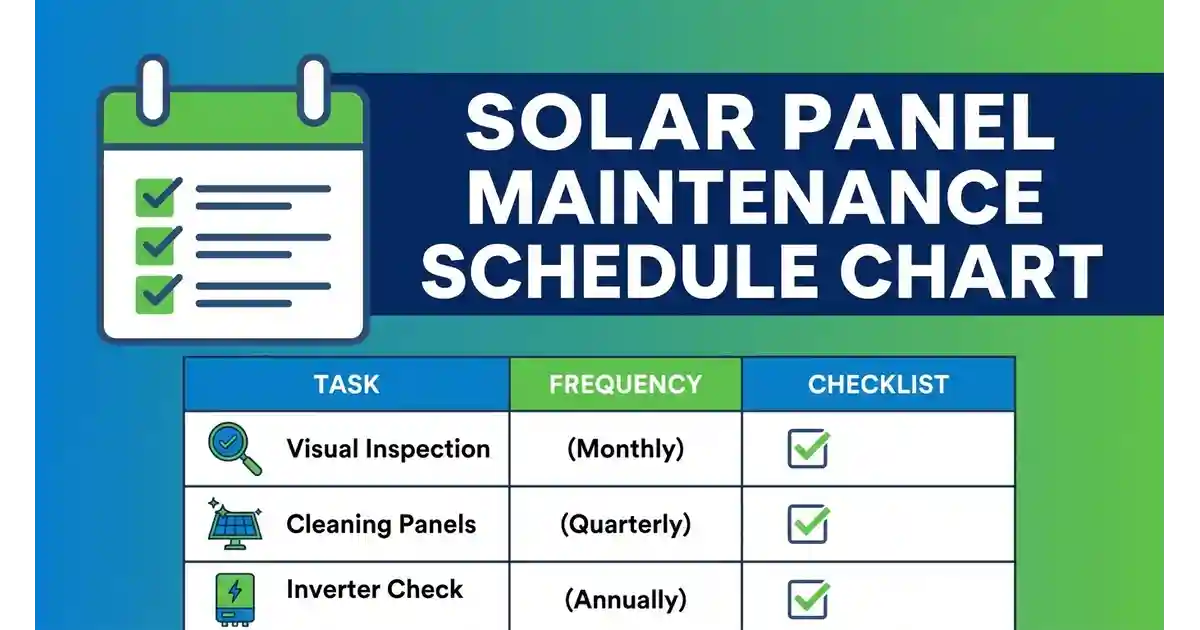
A good solar panel maintenance schedule works in layers. You don’t need to do everything every week. You just need to match the task to the right time frame.
| Task | How often | Who does it |
|---|---|---|
| Glance at your monitoring app | Monthly | You (2 minutes) |
| Visual check for debris, shade, cracks | Every 1–3 months | You (10–15 minutes) |
| Panel cleaning | As needed; often every 6–12 months | You or a pro |
| Full visual inspection from the ground | Once a year | You (15–20 minutes) |
| Professional inspection (electrical + physical) | Follow installer/manufacturer guidance; often every 1–3 years | A licensed technician |
| Inverter check | Every year; replace at 10–15 years | A technician |
| Post-storm safety check | After any hail, high wind, or heavy snow | You or a pro |
Cleaning frequency depends on dust, pollen, bird droppings, rainfall, tilt, and local conditions, so treat the 6–12 month figure as a typical range rather than a fixed rule. In dusty, coastal, or high-pollen areas, move everything toward the more frequent end of these ranges. In mild, rainy climates, panels often go longer between cleanings because rain does some of the work for you, though it doesn’t replace a proper cleaning. If your rails or mounts look loose during any check, see our guide to solar panel mounting hardware before tightening anything yourself.
How Often Should Solar Panels Be Maintained?
There is no single maintenance schedule that fits every solar system. A practical approach is to monitor your system regularly, visually inspect the panels at least once or twice a year, clean them when significant dirt or debris builds up, and arrange professional electrical or system inspections when recommended by the installer or equipment manufacturer.
Professional inspection frequency is best set by your installer and equipment manufacturer’s recommendations. A professional inspection every 1 to 3 years can be a practical general guideline for many residential systems, especially when the system is aging or showing performance problems, but it isn’t a universal requirement.
Homes in dusty, dry, coastal, high-pollen, or heavily shaded areas may need more frequent checks. Homes that receive regular rainfall may need less frequent panel cleaning.
The Complete Solar Panel Maintenance Checklist
Here’s the detailed, task-by-task version of the schedule above, broken into what to actually do at each interval.
Monthly Solar Panel Maintenance Tips
- Open your system’s monitoring app and check daily output against past months.
- Look for a sudden drop that doesn’t match weather or season.
Every 1 to 3 Months
- Walk outside and look at your panels from the ground.
- Check for leaves, dust, bird droppings, or other debris.
- Look for new shade from tree growth or nearby construction.
Every 6 to 12 Months
- Clean the panel surface with a soft brush, mild soap, and water, never a pressure washer.
- Clean during cool, overcast hours to avoid thermal stress on the glass.
Once a Year
- Do a careful visual inspection from the ground, using binoculars if needed.
- Check for cracks, discoloration, yellowing, or dark “hot spot” patches.
- Check mounting hardware and rails for looseness or rust.
- Check your inverter’s vents for dust buildup and look for error codes.
Periodically, Per Manufacturer Guidance
- Schedule a professional inspection that includes electrical testing, not just a visual check.
- Ask for a written report you can keep for warranty and insurance purposes.
After Severe Weather
- Inspect for cracked glass, loose panels, or damaged wiring before assuming everything is fine.
- Don’t turn the system back on if you see visible damage; call a professional first.
Keeping a simple log, even just photos with dates, of every task makes warranty claims and resale conversations much easier down the road.
How to Maintain Solar Panels
The basic maintenance process is simple for most homeowners:
- Check your monitoring system. Look for unusual drops in energy production compared with previous periods.
- Visually inspect the panels. Look for heavy dirt, leaves, bird droppings, cracks, or other visible damage from a safe location.
- Check for new shade. Growing trees, new construction, or other objects can reduce sunlight reaching the panels.
- Clean the panels when necessary. Remove significant dirt or debris using a safe cleaning method or hire a professional.
- Inspect accessible equipment. Look for obvious damage around the inverter, wiring, and mounting equipment without opening electrical equipment.
- Schedule professional service when needed. Electrical faults, damaged wiring, loose equipment, or unexplained production losses should be checked by a qualified technician.
Seasonal Solar Panel Maintenance Calendar
Solar panels need slightly different attention depending on the season, since weather changes what builds up on the glass and what stresses the system.

Spring
Schedule a thorough cleaning to remove winter debris and pollen buildup. Check for winter storm damage. Trim back overhanging branches that grew during winter.
Summer
Monitor closely during peak production months. Check early morning or evening for dust or bird droppings. On extremely hot days, panels naturally lose a little output from the heat itself.
Fall
Focus on leaf removal to prevent coverage and moisture buildup. Inspect roof drainage so leaves don’t clog gutters and cause water backup. Schedule a professional inspection before winter arrives.
Winter
Snow removal matters, but it should be done carefully to avoid scratching the panels. Most tilted panels clear themselves naturally within a day or two of sun.
How to Tell If Solar Panels Are Working
Most homeowners want a fast way to check things are fine without any tools. For a deeper walkthrough with photos, see our full guide on how to know if your solar panels are working.
- Check your monitoring app first. Nearly every modern system has an app, like Enphase Enlighten or SolarEdge, showing daily and monthly energy production. Compare today’s number to the same day last month, or last year, accounting for weather.
- Watch for a drop that doesn’t match the weather. A cloudy week explains lower output. A sunny week with unusually low output does not.
- Look at your utility bill trend. If your bill is climbing steadily with no major change in your habits, and it’s not just seasonal, that’s a sign to investigate.
- Do a visual scan. Dirt, shade, cracks, or a dark discolored patch on a panel are all visible red flags.
- Watch the inverter. Most inverters show a steady light when working normally and a red or blinking light when there’s a fault. Check the display for error codes.
If everything checks out visually but output still looks low, that’s when it’s time to move on to actual testing.
Solar Panel Test: Simple Methods Anyone Can Try
A basic solar panel test doesn’t require special equipment. Start with these before reaching for a multimeter.
- The production comparison test: compare your system’s current output with previous days, months, or years under similar weather conditions. If your monitoring system provides panel-level data, compare panels or strings to identify unusual differences.
- The cleaning test: clean one section of your array and compare its output to an uncleaned section over a day. A big difference tells you how much soiling was actually costing you.
Can You Test Solar Panels With a Multimeter?
You can check a single, disconnected, accessible panel’s open-circuit voltage (Voc) with a standard multimeter if you understand the electrical risks involved. Testing short-circuit current (Isc) requires the correct equipment and safety procedures, so that step is best left to a qualified solar technician.
Before you start: only test one disconnected, accessible panel. Don’t test a live rooftop array or grid-tied system unless you’re qualified to work on it. Find the panel’s rated Voc on the label on the back, and wear basic protective gear.
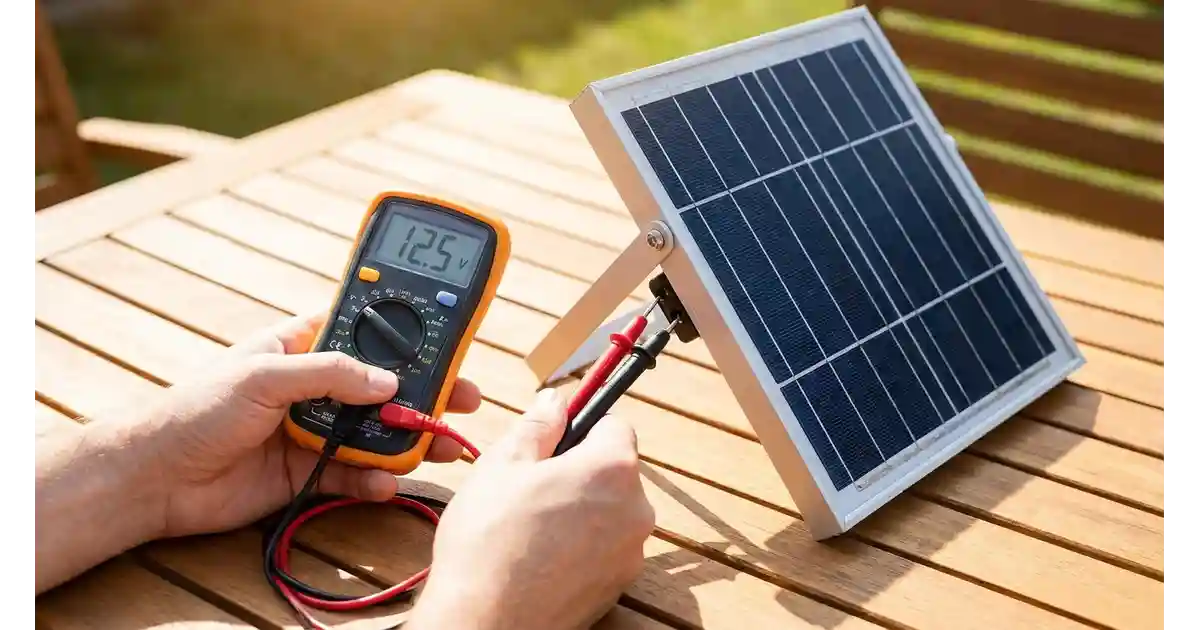
- Set your multimeter to DC voltage, using a range higher than the panel’s rated Voc.
- Plug the black lead into the COM port and the red lead into the voltage port.
- Place the panel in direct, unshaded sunlight, then touch the red probe to the positive terminal and the black probe to the negative terminal.
- Compare the measured voltage with the panel manufacturer’s rated Voc while accounting for the panel’s temperature and the conditions during testing. A significant difference from the expected value can indicate a problem, but one voltage reading alone does not prove that a panel has failed.
- Do not short-circuit a rooftop solar panel or live solar array with a standard multimeter. Measuring short-circuit current requires the correct equipment, meter rating, connections, and safety procedures. For most homeowners, it is safer to compare the system’s monitoring data with the manufacturer’s specifications or have a qualified solar technician perform electrical testing.
| Reading | Likely meaning |
|---|---|
| Voltage and current both close to rated specs | Panel is healthy |
| Voltage low, current normal | Possible shading, dirt, or panel age |
| Both low or zero | Check sunlight, connections, and polarity before assuming failure |
| Big gap between one panel and its neighbors | Isolated fault: check that specific panel or its wiring |
If your readings are far off and basic troubleshooting doesn’t explain it, that’s a sign to bring in a professional rather than keep testing on your own. This same voltage-check approach works just as well for a single off-grid panel, like the setup on RV solar panels or other portable solar panels.
Can You Maintain Solar Panels Yourself?
Yes, homeowners can handle some basic solar panel maintenance, such as monitoring production and checking for visible dirt or debris from the ground. However, climbing onto a roof, opening electrical equipment, testing live wiring, or repairing damaged components can be dangerous. Leave electrical repairs and difficult roof work to qualified professionals — the same standard that applies to a full solar panel installation, which is best left to licensed installers rather than attempted DIY on a grid-connected system.
Solar Panel Maintenance Cost: Cleaning and Who to Hire
Professional solar panel cleaning typically costs $150 to $500 per visit, or roughly $8 to $25 per panel, and full annual maintenance (cleaning plus inspection) usually runs $390 to $720 a year.
How to Clean Solar Panels
For light dirt, rainfall may remove some surface debris naturally. When cleaning is necessary, follow the panel manufacturer’s instructions and use a gentle method that will not scratch the glass. Avoid abrasive materials and harsh chemicals. If panels are difficult to access safely, hire a professional rather than climbing onto the roof yourself.
Solar panel maintenance companies to call
A licensed solar panel cleaning service or an electrician with solar experience are the two most reliable choices. Some installers also offer cleaning as part of your original contract, so it’s worth asking.
What’s included
A proper visit covers inspecting for dirt and debris, cleaning the glass, removing debris, trimming shading branches, checking components, and clearing snow in winter if needed. See our full solar panel cleaning guide for a step-by-step breakdown.
For many homeowners, routine maintenance is a relatively small cost compared with the potential value of keeping the system operating properly. Actual costs depend on cleaning frequency, system size, roof access, local labor rates, and whether repairs are needed. If you’re local to one of our service areas, see our dedicated pages for solar panel cleaning in Vancouver, WA, Myrtle Beach, or Fort Lauderdale.
Signs Your Solar Panels Need Maintenance
Your system may need attention if you notice:
- A sudden or unexplained drop in electricity production
- Repeated inverter warnings or error messages
- Visible cracks or damage on a panel
- Heavy dirt, leaves, bird droppings, or other debris
- New shading over part of the array
- Damaged or exposed wiring
- Loose-looking mounting equipment
- Water or physical damage around system components
A drop in production does not automatically mean the panels are dirty. Weather, shading, inverter problems, grid issues, and equipment faults can also reduce output.
Solar Panel Snow Removal: Cost and Safety
In most cases, you don’t need to manually remove snow at all. Panels are usually tilted and dark, so they absorb heat and melt their own snow within a day or two of sunlight.
- When it’s worth clearing: if snow is likely to sit on the array for several days and block sunlight, such as during a long cloudy stretch.
- The safest tool: a roof rake with a soft foam edge, used from the ground, costs about $50 to $80 and won’t scratch the glass or damage anti-reflective coatings.
- What to avoid: climbing onto a snowy, icy roof yourself, and using metal shovels or hard-edged tools that can scratch or crack panels.
- Professional removal: costs roughly $0.52 to $0.64 per square foot if you hire it out.
- Snow guards: can be installed to prevent large sheets of snow from sliding off all at once, protecting gutters and anything below.
If you can’t safely clear snow from the ground, the better move is usually to let it melt naturally or call a professional, rather than risk a fall.
Solar Panel Maintenance Services: When to Call a Professional
DIY testing catches a lot, but professional solar panel maintenance services bring tools and training that go beyond a multimeter reading.
- Thermal imaging to spot hotspots invisible to the eye.
- I-V curve testing, which maps a panel’s full performance curve, not just two data points.
- Grounding and bonding checks for electrical safety.
- Wiring and combiner box inspection, especially on complex or multi-string systems.
| Inspection type | Typical cost |
|---|---|
| Basic visual inspection | $100 – $250 |
| Visual + electrical output testing | $200 – $450 |
| Thermal imaging add-on | $150 – $250 |
| Full system audit (inverter, wiring, grounding, shading) | $500 – $1,200 |
Location affects pricing too. Dry, dusty climates, like parts of Utah, can cause panels to lose meaningful output from soiling alone, which makes regular inspection and cleaning especially worthwhile there. You can compare vetted providers on our solar installation companies page or search solar installers near me for local options.
Call a pro instead of DIY-testing further if:
- Your system is more than 5 years old and has never been professionally inspected.
- You see visible damage, burn marks, or a persistent unexplained output drop.
- Your system uses microinverters or optimizers with complex wiring.
- You need documentation for a warranty claim or a home sale.
Drone Inspection for Solar Panels
A drone equipped with a thermal camera and a visual camera can spot problems a ground inspection would miss and cover far more roof area, far faster — useful for large residential, commercial, or hard-to-access arrays.

Residential drone inspection typically costs $200 to $800, with thermal imaging pushing toward the higher end. It’s worth considering if your roof is steep, hard to access safely, or large enough that a full manual check would take a long time. For a small, easily accessible home system, a standard professional inspection often covers what you need without the added cost. Drones catch hotspots and visible soiling well, but very early-stage micro-cracks can be too small to detect this way, so a drone inspection isn’t always a full substitute for hands-on electrical testing.
Solar Panel Maintenance Cost: Repairs and Warranty Tips
Solar panel repairs typically cost $250 to $1,550, depending on the issue, and keeping good maintenance records helps protect your warranty coverage.
- Labor for repairs and routine maintenance averages around $100 an hour, or roughly $10 to $20 per panel for basic service.
- Neglecting maintenance can void parts of your warranty if a manufacturer requires documented upkeep, so ask for a written report at every professional visit.
- Keep dated photos or service records; they make both warranty claims and eventual home resale conversations far easier. If a full replacement ever comes up, our solar panel installation cost guide breaks down current pricing.
Monitoring Apps: What They Show You
Most solar systems come with a free monitoring app, commonly Enphase Enlighten or SolarEdge, that tracks your system’s daily and historical energy production.
These apps let you compare today’s output against past months or years, spot a sudden unexplained drop, and in many systems, see panel-level or string-level data so you can tell whether a problem is isolated to one panel or affects the whole array. Confirming your login still works and checking the app monthly is one of the easiest, fastest maintenance habits you can build. If you’re still sizing a new system, our solar panel calculator can help estimate expected output to monitor against.
How Climate Affects Solar Panel Maintenance
Your local climate can change how often your solar panels need attention. Dry and dusty areas can lead to faster buildup of dirt. Areas with heavy pollen may need more frequent cleaning during certain seasons. Coastal locations can expose equipment to salty air, while regions with heavy snow may require different inspection and snow-management practices.
Rain can naturally remove some dust, but it does not eliminate the need to monitor system performance or inspect for damage. The best maintenance schedule is the one that matches your local conditions and the recommendations for your specific equipment.
The Biggest Misconception About Solar Panel Maintenance
Here’s the misconception to avoid: “Solar panels have no moving parts, so they never need maintenance.” Solar panels are low-maintenance, but dirt, debris, shading, damaged equipment, and electrical faults can reduce system performance. Regular monitoring helps you notice problems that may otherwise go undetected. Inverters, unlike panels, do have components that wear out and typically need replacement every 10 to 15 years. Skipping maintenance doesn’t usually cause a dramatic failure; it just means you may quietly lose output every month without any clear signal that something’s wrong.
Glossary of Terms
- Voc (open-circuit voltage)
- The voltage a panel produces with no load connected; used to check panel health.
- Isc (short-circuit current)
- The current a panel produces when its terminals are connected directly; used alongside Voc to test performance.
- Hotspot
- A small area of a panel that overheats due to a fault, often invisible without a thermal camera.
- I-V curve testing
- A professional test that maps a panel’s full voltage-and-current performance, not just two numbers.
- Soiling loss
- The amount of energy output lost specifically due to dirt, dust, or debris on the panel surface.
- Monitoring app
- Software, like Enphase Enlighten or SolarEdge, that tracks your system’s daily and historical energy production.
Frequently Asked Questions
Do solar panels need maintenance?
Yes. Solar panels are low-maintenance rather than maintenance-free. Most homeowners need to monitor production, check for visible dirt or damage, clean the panels when necessary, and arrange professional service when an electrical or system problem appears.
How often should solar panels be maintained?
Most homeowners can monitor their system regularly and perform basic visual checks once or twice a year. Cleaning is needed when dirt or debris builds up, while professional inspections depend on the system, equipment manufacturer, installer recommendations, and local conditions.
How often should solar panels be cleaned?
Most solar panels only need cleaning every 6 to 12 months, though the right interval depends on dust, pollen, bird droppings, rainfall, tilt, and local conditions. Rain removes some debris naturally, but it doesn’t replace a full cleaning.
Can you clean solar panels yourself?
Yes, if the panels are safely accessible and the manufacturer allows homeowner cleaning. Avoid climbing onto a roof or working around electrical equipment if you are not trained to do so.
What happens if solar panels are not maintained?
Neglected solar panels can quietly lose output from dirt and debris buildup, and unresolved electrical faults or damaged components can worsen over time. Skipping maintenance rarely causes a dramatic failure, but it can steadily reduce how much electricity your system produces and may affect warranty coverage.
How do you know if a solar panel is not working?
Signs a solar panel isn’t working properly include a sudden or unexplained drop in production, inverter error messages, visible cracks or discoloration, and output from one panel that’s noticeably lower than its neighbors. Checking your monitoring app is usually the fastest way to spot a problem.
How much does solar panel maintenance cost?
Full annual maintenance, including cleaning and a professional inspection, typically costs $390 to $720 a year for a residential system. Actual costs vary by system size, roof access, and local labor rates.
Do I need to remove snow from my solar panels?
Usually not. Tilted, dark panels typically melt their own snow within a day or two of sunlight. Manual removal is worth it mainly during long cloudy stretches, and should be done safely from the ground with a soft-edged roof rake, never by climbing onto a snowy roof.
Solar panel maintenance isn’t complicated, but it does need a real schedule, not just a “check it if something looks wrong” approach. Handle the monthly app checks and periodic cleaning yourself, do a real visual inspection once a year, and bring in a professional periodically for electrical testing you can’t safely do yourself. If your system is large, hard to access, or overdue for a check, a drone-based thermal inspection can be a fast way to catch problems before they cost you real money. The panels themselves will likely outlast their 25-year warranty either way, the question is just how much output you keep along the way. For more on how the underlying technology works, see our guide to how solar panels work.