Best Solar Panels 2026: Compare Every Top Brand by Efficiency, Warranty & Price
A plain-language guide to picking solar panels — what actually separates a great panel from an average one.
There is no single “best” solar panel for every home. But in 2026, a handful of names lead almost every serious comparison. This guide breaks down the top brands in plain words, tells you which searches (like “Sunrun solar panels”) don’t actually belong in a panel comparison, and covers the brands other guides skip. If you also want to know what these panels cost installed in your state, see our 2026 solar panel cost per watt guide.
1. How We Judge “Best” (So You Can Judge Too)
Every brand says it makes the best solar panel. That’s marketing. Here’s what actually separates a great panel from an average one:
- Efficiency — how much of the sun’s energy the panel turns into electricity. Higher means fewer panels needed for the same power.
- Temperature coefficient — how much power a panel loses as it heats up. A panel that loses less heat makes more real electricity in hot places like Arizona or the Central Valley.
- Degradation rate — how much output a panel loses every year as it ages. Lower is better over a 25-year system life.
- Warranty — both the product warranty (covers defects) and the performance warranty (guarantees a percent of output at year 25 or beyond).
- Price per watt — what you actually pay, installed, for each watt of power.
The number on the box (its wattage) tells you the least. A 400-watt panel that ages slowly and handles heat well can beat a “better” 420-watt panel over 25 years. For a full breakdown of what installed pricing looks like state by state, our solar panel cost per watt guide is a good next stop.
2. Monocrystalline vs Polycrystalline Solar Panels
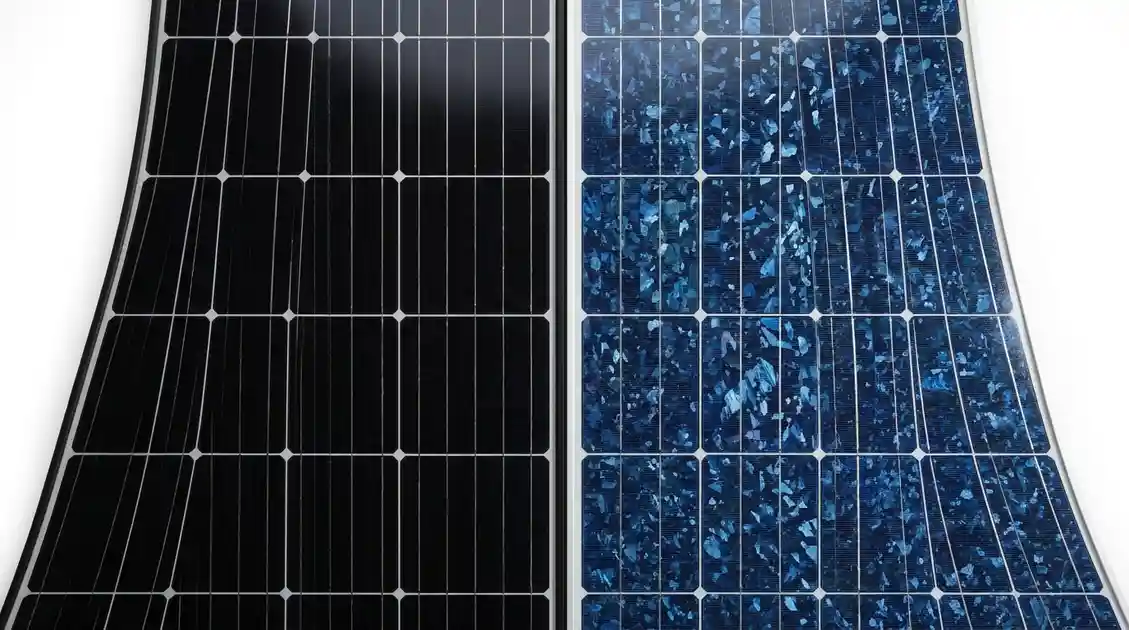
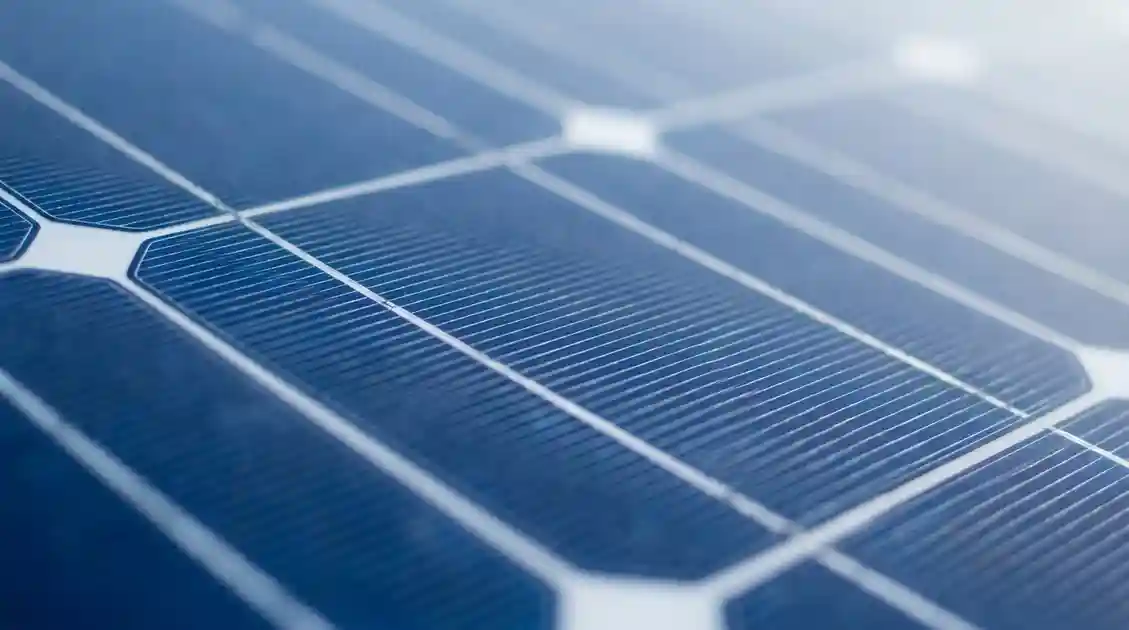
Monocrystalline panels are made from a single, pure crystal of silicon. They look solid black and reach 20–25% efficiency today. Polycrystalline panels are made from melted silicon fragments fused together. They look bluish and speckled, and usually reach 15–17% efficiency. See our full Monocrystalline Solar Panels 2026 guide for a deeper look at pricing and performance.
Ten years ago, polycrystalline panels were noticeably cheaper. Today, manufacturing has advanced so much that monocrystalline panels cost almost the same to make. As a result, nearly every Tier 1 brand — Jinko, LONGi, Canadian Solar, Trina, Qcells — now ships monocrystalline panels as standard. Polycrystalline panels are mostly gone from the U.S. residential market.
3. Every Major Brand Compared at a Glance
| Brand | Efficiency | Price Installed | Warranty | Best For |
|---|---|---|---|---|
| SunPower Maxeon | up to 24.1% | $2.80–$4.20/W | 40 yr | Small roofs, top efficiency |
| REC Alpha Pure-RX | 22.1–22.6% | $2.30–$3.40/W | 25 yr + 25-yr labor | Hot climates, balanced value |
| Jinko Solar | 21.5–22.8% | $0.70–$0.95/W | 25 yr | Widely available, strong value |
| Canadian Solar | 21.4–22.5% | $0.75–$0.95/W | 25 yr | Best all-around value |
| LONGi | 22.0–24.3% | $0.70–$0.90/W | 25 yr | Lowest sticker price, Tier 1 |
| Trina Solar | 21.4–23.3% | $0.80–$1.05/W | 25 yr | Balanced mid-range |
| JA Solar | 21.8–22.5% | $0.75–$0.95/W | 12–30 yr | Budget-conscious buyers |
| Qcells | 21.4–22.5% | $0.65–$0.85/W | 25 yr | Made-in-USA, tax credit fit |
| Hyundai | 22.5% | $0.90–$1.10/W | 25 yr + 30-yr performance | All-black curb appeal, mid-range |
| Silfab | 21.5–22.7% | $0.85–$1.10/W | 25 yr + 30-yr performance | Strong rear load rating, N. American made |
This table blends specs from independent brand comparisons, including manufacturer datasheets and marketplace pricing tracked by EnergySage. Always confirm exact numbers on the datasheet for the specific model you’re quoted, since specs update between product revisions.
4. Premium Tier: SunPower Maxeon, REC, Panasonic & LG
This tier is what most homeowners with small roofs or bigger budgets look at first.
SunPower Maxeon
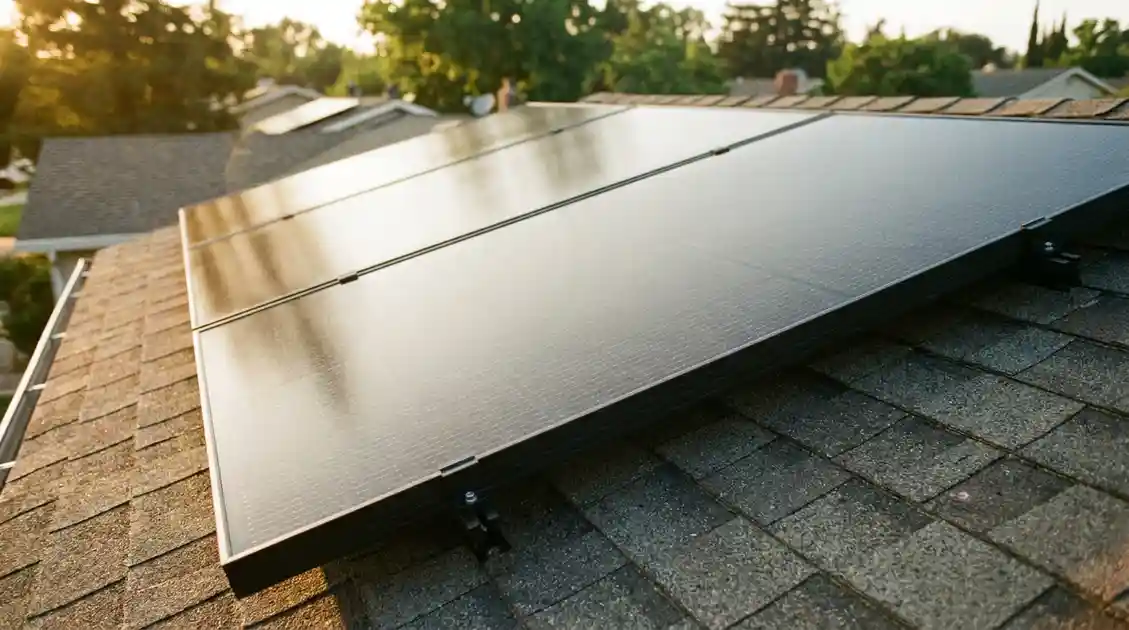
SunPower’s manufacturing arm split off years ago into a separate company called Maxeon Solar Technologies, and SunPower itself went through bankruptcy in 2024. Panels sold under this name today are made by Maxeon. They use interdigitated back contact (IBC) technology, meaning the wiring sits on the back of the cell so no sunlight gets blocked. That’s a big reason Maxeon tops most efficiency charts at up to 24.1%. We cover this brand in more depth in our Maxeon Solar Panels 2026 guide.
Its temperature coefficient sits around -0.24% to -0.27% per °C — for every degree above 25°C, the panel loses about a quarter of a percent of output, which matters most in a hot state like California. Maxeon backs its panels with a 40-year combined warranty, nearly double the industry standard. The catch: Maxeon panels cost $2.80–$4.20 per watt installed, 40–70% more than mid-tier options. Given the 2024 bankruptcy and ongoing restructuring, always confirm exactly which company is backing your warranty at time of purchase.
REC solar panels
REC’s Alpha Pure-RX line uses heterojunction (HJT) technology, hitting 22.1–22.6% efficiency with an excellent -0.24%/°C temperature coefficient — some of the best heat performance available. REC backs it with a 25-year product and performance warranty, plus a 25-year labor warranty through certified installers, which most competitors don’t offer at all. REC is headquartered in Norway but manufactures in Singapore, running its own factory rather than outsourcing.
What happened to LG and Panasonic solar panels?
People searching “SunPower vs LG” or “Panasonic vs SunPower” are usually a few years behind the news. LG exited the solar panel business in 2022 and stopped making new panels — it still honors existing warranties, but you can’t buy a new LG panel today. Panasonic ended its solar and battery business in April 2025. If you want a brand that matches their old reputation for efficiency and warranty, REC is the closest match today. Historically, LG panels cost $1.30–$2.00 per watt before installation, reflecting in-house manufacturing in South Korea and Alabama.
5. Best Value Tier 1: The Global Manufacturing Giants
Short answer: Canadian Solar, Jinko, LONGi, Trina, JA Solar, Qcells, Hyundai, and Silfab are the leading Tier 1 value brands, delivering 21–22.5% efficiency at $0.65–$1.10 per watt installed.
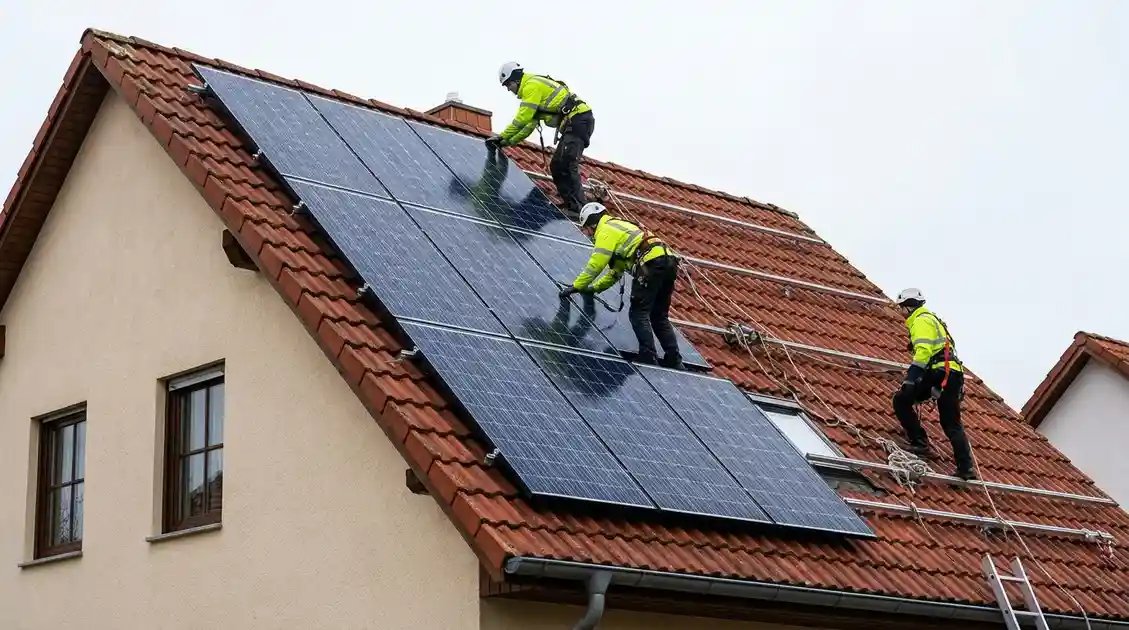
This tier makes up the majority of panels installed on U.S. roofs today. “Tier 1” is a bankability rating, not a quality score — it just means a manufacturer has shipped enough panels to enough financed projects that banks trust it to still be around.
- Canadian Solar — despite the name, mostly made in China, Vietnam, and Malaysia. Its HiKu7 line uses n-type TOPCon cells at about 22.5% efficiency, undercutting premium panels by 40–50%.
- Jinko Solar — one of the world’s largest solar panel makers and a mainstream TOPCon supplier, reaching 21.5–22.8% efficiency at strong value pricing. Jinko panels show up across residential and commercial U.S. installs.
- LONGi — the world’s largest monocrystalline silicon wafer producer. Its budget Hi-MO series often prices $0.10–$0.15 per watt below Trina, while its premium Hi-MO X10 Explorer back-contact panel reaches 24.3% efficiency.
- Trina Solar — its Vertex S+ line reaches 21.4–23.3% efficiency with pricing that undercuts premium brands by $0.15–$0.40 per watt.
- JA Solar — one of the lowest price points among Tier 1 names, with n-type panels degrading around 0.4% per year, in line with other Tier 1 brands.
- Qcells — manufactures in Dalton, Georgia, which qualifies its panels for U.S. domestic content bonuses and avoids many import tariff issues.
- Hyundai — its 440W N-type TOPCon all-black panel reaches 22.5% efficiency with a 25-year product and 30-year performance warranty, a popular pick for curb-appeal-focused buyers.
- Silfab — North American-assembled panels around 21.5–22.7% efficiency, known for strong rear-load ratings (useful in snow or high-wind regions) and 30-year performance coverage.
Canadian Solar bifacial panels
A bifacial panel captures light on both the front and back, picking up extra energy reflected off the roof or ground. Canadian Solar’s 530-watt bifacial panel can deliver 15–20% more total output than a same-sized standard panel when mounted with the right ground clearance racking — though on a flush residential roof, that bonus shrinks a lot since little light reflects back onto the rear side.
6. The Most Efficient Panels You Can Buy Today
- Aiko Solar NEOSTAR 3P54 — about 25.0% efficiency, currently the highest commercially available rating.
- Recom Black Tiger series — about 24.8% efficiency, filling the premium gap left by Meyer Burger’s struggles.
- LONGi Hi-MO X10 Explorer — about 24.3% efficiency, LONGi’s premium back-contact line.
- SunPower Maxeon 7 — 24.0–24.1% efficiency with the longest warranty in the category.
All of these use back-contact or hybrid back-contact architecture, which removes front-side wiring so no sunlight gets blocked. Is chasing that extra 2–3% worth it? Only if your roof space, electricity rates, or shading make every extra watt count. With plenty of unshaded roof space, a standard 21–22% Tier 1 panel usually delivers better financial value.
7. Niche and Specialty Brands
Short answer: Axitec, Seraphim, Upsolar, VSUN, CertainTeed, and Tesla serve narrower markets — smaller manufacturers, budget imports, or building-integrated products — rather than competing directly with mainstream Tier 1 brands.
These names come up often in searches but serve narrower markets than the big Tier 1 brands above.
- Axitec — German-engineered, 22–23% efficiency, a low 0.4% annual degradation rate, and an unusually long 30-year warranty. Smaller company, so less financial track record than Trina or JA Solar.
- Seraphim — a mid-range Chinese brand at 18.8–20.6% efficiency, a notch below top Tier 1 brands, with a 15-year product and 25-year performance warranty.
- Upsolar — builds mostly through contracted manufacturing partners rather than owning its own factories, so specs can vary more between batches. Worth checking the exact factory on your quote.
- VSUN (Vietnam Sunergy) — n-type TOPCon panels up to about 20.4% efficiency, with a 30-year linear power warranty and strong wind/snow ratings.
- CertainTeed Solstice — actually a solar shingle (building-integrated photovoltaic) rather than a rack-mounted panel. See the roofing section below.
- Tesla — best known for its Solar Roof shingle product rather than standard rack-mounted panels. We break down pricing and performance in our Tesla Solar Panels 2026 guide.
8. First Solar & Meyer Burger: Different Technology
First Solar panels
First Solar doesn’t use crystalline silicon at all — it builds thin-film panels from cadmium telluride (CdTe). That gives better heat tolerance, better performance in humid or dusty conditions, and a low manufacturing carbon footprint. The tradeoff is efficiency: its Series 6 panels run 17.4–18.6%, well below the 21%+ common with silicon panels. First Solar mostly sells to utility-scale solar farms, not homeowners, so most residential buyers won’t see this brand quoted for their roof.
Meyer Burger panels
This Swiss-engineered, German-built brand uses heterojunction (HJT) technology and reaches 20.4–22.1% efficiency with very low degradation (about 0.25% per year after year two) and 25–30 year warranties guaranteeing over 92% output. The honest caveat: Meyer Burger has faced serious financial instability recently. Several independent reviewers now suggest REC or other HJT brands as more stable alternatives with similar performance.
9. Solar Roofing: GAF Energy & Solar Shingles
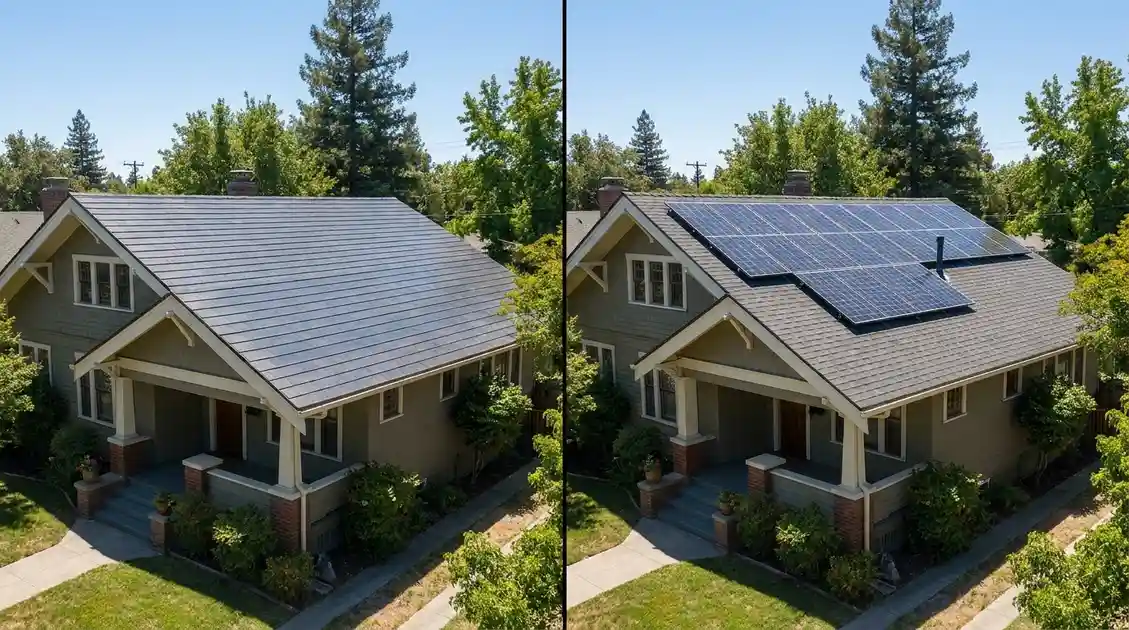
GAF Energy’s Timberline Solar is a nailable solar shingle — roughly the size of a normal asphalt shingle, generating 15–57 watts each, installed with a standard nail gun instead of racking hardware. Tesla’s Solar Roof is another well-known option in this category — see our Solar Roof Guide 2026 for a full cost and performance comparison.
| Format | Efficiency | Cost Installed |
|---|---|---|
| GAF Timberline Solar (nailable shingle) | 17–19% | $3.75–$4.50/W |
| CertainTeed Solstice (clip-in shingle) | 18–20% | $4.00–$5.25/W |
| Standard rack-mounted panel | 20–24% | ~$2.55/W |
Solar shingles cost more per watt and run lower efficiency, since the flush, low-profile look sacrifices some performance. They make the most financial sense if you already need a new roof. If your roof is already in good shape, a standard panel system is almost always the cheaper path to solar.
10. Solar Panel Terms, Explained Simply
Solar module vs solar panel
Technically, “module” is the correct engineering term for a single unit of solar cells wired together and framed. “Panel” is the everyday word for the same thing. In casual use, and even on most spec sheets, the two words mean the same product.
TOPCon and n-type panels
A TOPCon panel (Tunnel Oxide Passivated Contact) adds a wafer-thin layer between the silicon and the back wiring. That layer cuts a type of energy loss, which is why TOPCon panels outperform older PERC panels. “N-type” describes how the silicon is treated during manufacturing — with phosphorus instead of the boron used in older “p-type” cells. N-type cells don’t suffer the same light-related degradation, so they typically lose less output per year (around 0.4% versus 0.7–0.8% for older technology). By 2026, TOPCon is the mainstream standard — roughly two-thirds of new global manufacturing uses it, according to industry tracking from NREL.
Solar tracking vs fixed mount
A fixed panel is mounted at one angle and stays put. A tracking system slowly rotates panels to follow the sun, boosting output 15–25% — but it adds moving parts that can break and cost much more upfront. For almost every home roof, a fixed mount is the practical choice. Trackers show up almost only on ground-mounted solar farms.
Direct sunlight vs shaded performance
A panel in full sun produces close to its rated output. The same panel under partial shade — even one corner blocked by a chimney — can lose far more output than the shaded area alone would suggest, because standard panels wire their cells in a series, so one weak cell drags down the whole string. This is why some buyers pay extra for microinverters or power optimizers, which let each panel perform independently.
11. Warranties: What “Best” Really Means
Chasing the biggest warranty number is a common mistake. A 40-year warranty from a company that no longer exists in 15 years is worth nothing.
| Warranty Type | What It Covers | Typical Range (2026) |
|---|---|---|
| Product warranty | Manufacturing defects, physical failure | 12–40 years |
| Performance warranty | Guarantees a % of original output at a set year | 25–40 years, guaranteeing 85–94% output |
| Labor warranty | Covers the cost of removing and reinstalling a failed panel | Rare; usually 10 years if offered at all |
Three questions matter more than the number on the page:
- Is the company financially stable enough to still exist when you need to file a claim?
- Does the warranty cover labor, or just the replacement part?
- What’s the guaranteed output at year 25, not just the warranty length? A panel guaranteed at 92% output beats one only guaranteeing 80%, even under the same “25-year” label.
12. Buying Considerations Most Guides Skip
Short answer: Beyond specs, curb appeal, tax credit eligibility, and installer availability all affect which solar panel is realistically the best choice for your home.
All-black design
Many buyers care about curb appeal as much as specs. Brands like Hyundai and Canadian Solar now offer all-black panels with black frames and backsheets, popular with homeowners who don’t want visible silver grid lines on their roof.
Tax credit and domestic content rules
Some 2026 commercial and lease-based tax credits require a minimum share of “domestic content,” and exclude equipment tied to certain foreign entities (a rule often shortened to “FEOC”). If you’re financing through a lease or prepaid solar structure, ask your installer which specific panel models still qualify — this changes which brands are actually available under $0-down financing programs. Note that the federal purchase tax credit for buying panels outright expired at the end of 2025; our solar cost guide covers exactly what that means for your total installed price.
Installer network and lead times
A great panel is only useful if someone nearby can install and service it. Some premium brands, including REC, have thinner installer networks in parts of the Midwest and Mountain West, and lead times can stretch 8–10 weeks in peak season. Ask a few local installers how long they’ve carried a brand before you commit.
13. The Biggest Misconception About “Best” Solar Panels
The overhyped claim that trips up more buyers than anything else: that the highest-efficiency panel is automatically the best choice. Efficiency only matters as much as your roof space forces it to. On a large, unshaded roof, a mid-tier 21% efficiency panel at $0.80/watt will very likely deliver better financial value over 25 years than a 24% efficiency panel at $3.50/watt, because you’re paying a premium for watts you didn’t need to squeeze from a smaller footprint.
Flip that around for a small or heavily shaded roof, and the math changes: every extra point of efficiency translates directly into usable capacity you couldn’t otherwise fit. The “best” panel is the one matched to your roof and budget, not the one at the top of an efficiency chart. If you’re still on the fence about whether any of this is worth it for your home, our are solar panels worth it guide walks through that decision separately from picking a brand.
14. Best Care & Maintenance for Solar Panels
Buying a good panel is only half the equation. Good care determines whether it actually delivers its rated output for the full 25 years:
- Cleaning: once or twice a year in most climates; more in dusty or high-pollen areas, since dirt buildup can cut output by up to 10%. See our solar panel cleaning guide for cost and frequency by climate.
- Monitoring apps: most installers now include panel-level tracking, so one underperforming panel gets caught early — our guide on how to know if your solar panels are working covers what to check yourself between app alerts.
- Inverter checkups: inverters typically need replacing once during a 25-year system life.
- Vegetation trimming: one of the cheapest ways to protect long-term output.
- Post-storm inspection: hail, wind, and falling branches are the leading cause of panel damage.
15. Searches That Don’t Quite Belong Here
A few searches that lead people to “best solar panels” articles are actually looking for something else:
- Sunrun solar panels — Sunrun doesn’t manufacture panels. It’s an installer that sources Tier 1 panels depending on region and deal. Comparing Sunrun to a panel brand mixes up an installer with a manufacturer.
- Aureus solar panel — likely points to AuREUS, an experimental UV-capturing material still in prototype stage, not a product you can buy for your roof.
- Solbian solar panels — real and well-regarded, but built for boats and RVs, not house roofs.
- Portable/foldable panels (like a 100-watt foldable monocrystalline panel) — these are camping and RV products for charging a battery bank, not rooftop residential equipment. See our Small Solar Panels 2026 guide and Solar Panel Kit Guide 2026 if that’s what you’re after.
Bottom Line
There’s no single best solar panel — there’s a best panel for your roof, your climate, and your budget. If your roof has plenty of space, a Tier 1 TOPCon panel from Canadian Solar, Jinko, Trina, LONGi, or JA Solar delivers excellent value at $0.65–$0.95 per watt. If your roof is small or partly shaded, the extra efficiency from REC, Hyundai, or SunPower Maxeon can be worth the premium. Whatever you pick, weigh the manufacturer’s financial stability and real guaranteed output at year 25 more heavily than the marketing number on the box.
Frequently Asked Questions
What is the best solar panel on the market?
By raw efficiency, back-contact panels from Aiko, Maxeon, and Recom lead at 24–25%. By overall balance of efficiency, warranty, and price, REC’s Alpha Pure-RX is one of the most commonly recommended picks in 2026.
Which brand of solar panel is the best?
No single brand wins every category. SunPower Maxeon leads efficiency and warranty length, Qcells leads U.S. manufacturing, Canadian Solar and Jinko lead global value, and REC leads hot-climate performance.
Is monocrystalline or polycrystalline better?
Monocrystalline panels are more efficient, last longer, and perform better in heat. Polycrystalline panels are cheaper but rarely sold for new homes today because pricing has converged.
Which solar panels are the best value?
For most homeowners with average roof space, a Tier 1 TOPCon panel from Canadian Solar, Jinko, Trina, JA Solar, or Qcells delivers the best real-world value per dollar.
Does a higher wattage solar panel mean better quality?
Not by itself. Wattage just reflects panel size and efficiency together. A smaller, high-efficiency panel can outperform a larger, lower-efficiency one over 25 years if it degrades slower and handles heat better.