Updated: September 2026
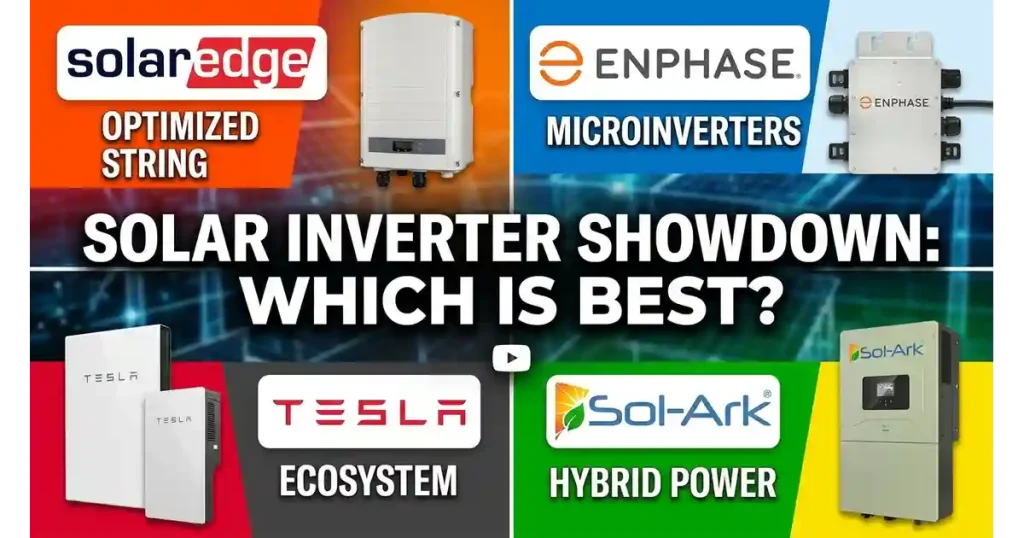
Choosing a solar inverter brand can be just as important as choosing your solar panels. SolarEdge, Enphase, Tesla, and Sol-Ark all take different approaches to converting and managing solar electricity.
SolarEdge uses power optimizers with a central inverter. Enphase uses microinverters at the panel level. Tesla uses a central solar inverter designed to work closely with its energy ecosystem. Sol-Ark focuses heavily on hybrid energy storage, backup power, and flexible solar-plus-battery systems.
So which one is best?
There is no single winner for every home. The right solar inverter depends on your roof design, shading, battery plans, backup needs, budget, and the installer available in your area — and whether solar panels are worth it for your specific home in the first place.
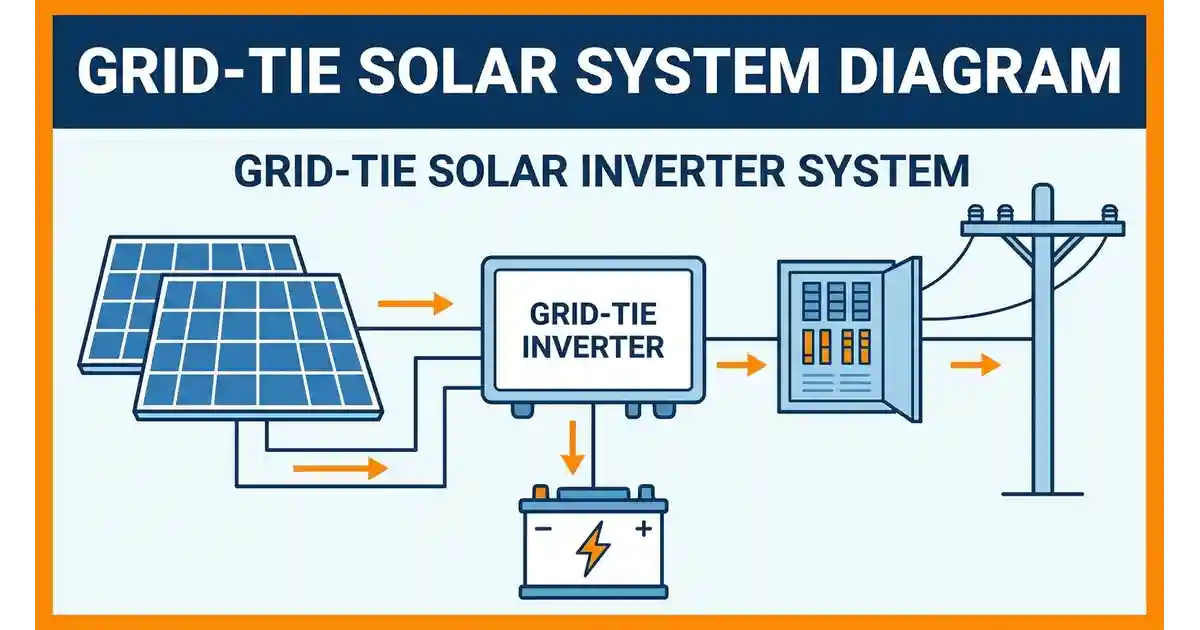
A Sol-Ark inverter installation typically involves connecting the hybrid inverter with solar panels, batteries, the electrical panel, and the grid or backup loads depending on the system design.
This guide compares SolarEdge vs Enphase vs Tesla vs Sol-Ark so you can understand the differences before requesting solar quotes.
Quick Answer
Enphase is a strong choice for homeowners who want panel-level microinverters and a long warranty. SolarEdge is a good fit for homeowners who want power optimizers with a central inverter. Tesla makes the most sense for homeowners who want a tightly integrated solar and Powerwall ecosystem. Sol-Ark is especially suited to whole-home backup, hybrid systems, and off-grid applications.
Key Takeaways
- SolarEdge combines power optimizers with a central inverter and can be a strong choice for roofs with multiple orientations or shading.
- Enphase uses microinverters at the panel level and is particularly attractive for complex roofs and homeowners who want panel-level monitoring.
- Tesla offers a central Solar Inverter that integrates closely with Powerwall and the wider Tesla energy ecosystem.
- Sol-Ark focuses on hybrid inverter systems with strong battery backup and off-grid capabilities.
- Enphase IQ8 microinverters carry a 25-year limited warranty in North America.
- Tesla Solar Inverter has a 12.5-year warranty according to Tesla’s current specifications.
- SolarEdge provides a 12-year standard inverter warranty, with extensions available to 20 or 25 years depending on the model.
- Sol-Ark’s 12K-2P-N product carries a 10-year limited warranty.
- The best brand depends more on your home’s needs than on the brand name alone.
SolarEdge vs Enphase vs Tesla vs Sol-Ark: Quick Comparison
| Feature | SolarEdge | Enphase | Tesla | Sol-Ark |
|---|---|---|---|---|
| Main architecture | Central inverter + power optimizers | Microinverters | Central inverter | Hybrid inverter |
| Panel-level optimization | Yes | Yes | No optimizer architecture | Depends on system design |
| Battery integration | Yes | Yes | Strong Tesla ecosystem integration | Strong battery focus |
| Backup capability | Available with compatible system | Available with compatible system | Designed around Powerwall ecosystem | Strong whole-home/off-grid focus |
| Best suited for | Complex roofs and optimization | Complex or shaded roofs | Tesla ecosystem users | Backup and hybrid systems |
| Standard/typical warranty | 12 years standard on inverters | Up to 25 years for IQ8 in North America | 12.5 years | 10 years for 12K-2P-N |
| Monitoring | SolarEdge monitoring | Enphase App | Tesla app | Sol-Ark monitoring |
| Main strength | Optimizer + central inverter design | Panel-level microinverters | Integrated ecosystem | Flexible hybrid/backup capability |
Warranty periods vary by product, model, territory, and warranty terms, so always check the exact equipment in your quote.
In simple terms: Enphase is strongest for panel-level microinverters, SolarEdge for optimizer-based systems, Tesla for integrated solar-plus-storage, and Sol-Ark for flexible hybrid and backup systems.
What Is SolarEdge?
SolarEdge is a solar technology company known for combining power optimizers with central inverters.
Instead of putting a complete microinverter on every solar panel, SolarEdge places a power optimizer at the module level while a central inverter handles the main DC-to-AC conversion.
SolarEdge describes its architecture as using DC/DC power optimizers connected to individual solar modules, with groups of optimizers connected to the inverter.
This gives homeowners some of the benefits associated with panel-level optimization while retaining a central inverter architecture.
SolarEdge Inverter: How It Works
A SolarEdge inverter works with power optimizers installed with the solar modules.
The optimizer manages the power from each module while the central inverter converts the system’s DC electricity into AC electricity for the home.
SolarEdge’s optimizer technology uses module-level maximum power point tracking and is designed to reduce mismatch-related losses between panels.
Best for:
- Roofs with multiple orientations
- Some shading
- Homeowners wanting panel-level optimization
- Systems where SolarEdge’s battery ecosystem is desired
- Homeowners who want detailed system monitoring
SolarEdge Inverter Warranty
SolarEdge currently lists a 12-year standard warranty on its inverters.
Depending on the inverter model, the warranty can be extended to 20 or 25 years for an additional fee.
That means the exact warranty you receive should be checked against the model number in your installer quote.
What Is Enphase?
Enphase is best known for its microinverter-based solar systems.
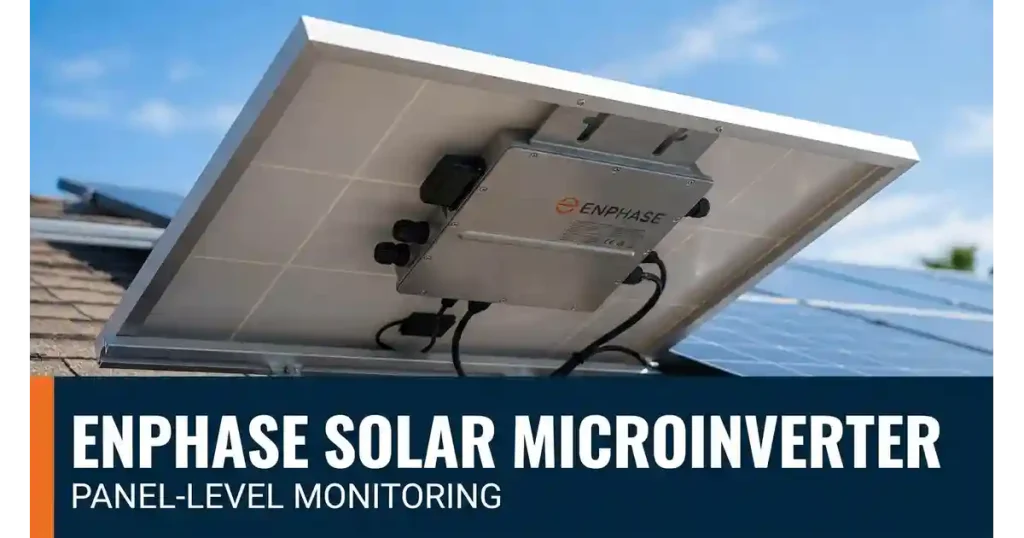
Instead of sending DC electricity from many panels to one central inverter, Enphase places a microinverter at each solar module.
This means the DC-to-AC conversion happens at the panel level.
Enphase Solar Inverter: How It Works
An Enphase solar inverter is a microinverter attached to an individual solar panel.
Enphase’s IQ8 microinverters are designed to convert DC electricity from individual PV modules into AC electricity. They can also integrate with the Enphase IQ Battery, IQ Gateway, and Enphase App.
Because each panel has its own microinverter, the system does not rely on one central inverter for all panel-level conversion.
This can be useful for roofs with:
- Multiple roof orientations
- Partial shading
- Complex layouts
- Different panel operating conditions
Enphase Inverter Warranty
Enphase states that its IQ8 Series Microinverters have a 25-year limited warranty in North America.
That long warranty is one of the strongest reasons homeowners consider Enphase.
However, the warranty applies to the specific covered products and is subject to Enphase’s warranty terms.
What Is Tesla Solar Inverter?
Tesla Solar Inverter is Tesla’s residential solar inverter designed to work with Tesla’s energy ecosystem.
Unlike Enphase’s panel-level microinverter approach, Tesla Solar Inverter uses a central inverter architecture.
Tesla states that its Solar Inverter converts DC power from solar modules into AC power for home consumption. It also integrates with the Tesla ecosystem, including Powerwall and the Tesla app.
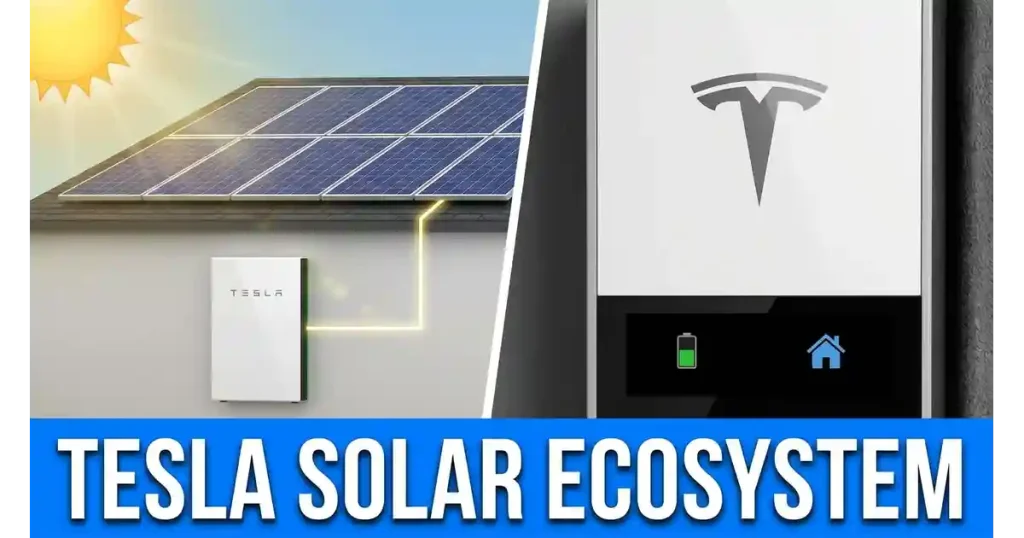
Tesla Solar Inverter: How It Works
Tesla Solar Inverter accepts DC electricity from a solar array and converts it into AC electricity for household use.
Tesla currently lists multiple power ratings and four maximum power point trackers on its Solar Inverter specification page. Tesla also lists 98.0% CEC efficiency at 240 V and a 12.5-year warranty.
Tesla’s ecosystem approach can be attractive if you already want Powerwall or prefer using one company’s energy products, especially for home solar panel systems built entirely around one brand.
Tesla Solar Inverter Warranty
Tesla currently lists a 12.5-year warranty for its Solar Inverter.
Tesla’s warranty documentation also states that registration and commissioning requirements apply for the full warranty period.
Always review the current warranty document associated with the equipment being installed.
What Is Sol-Ark?
Sol-Ark specializes in hybrid inverter and energy-storage systems.
The brand is particularly relevant to homeowners who care about battery backup, whole-home backup, hybrid operation, or off-grid capability.
Sol-Ark’s residential product range includes hybrid inverters such as its 12K, 15K, and newer systems. Its current product documentation includes systems designed for on-grid, off-grid, AC-coupled, and DC-coupled configurations.
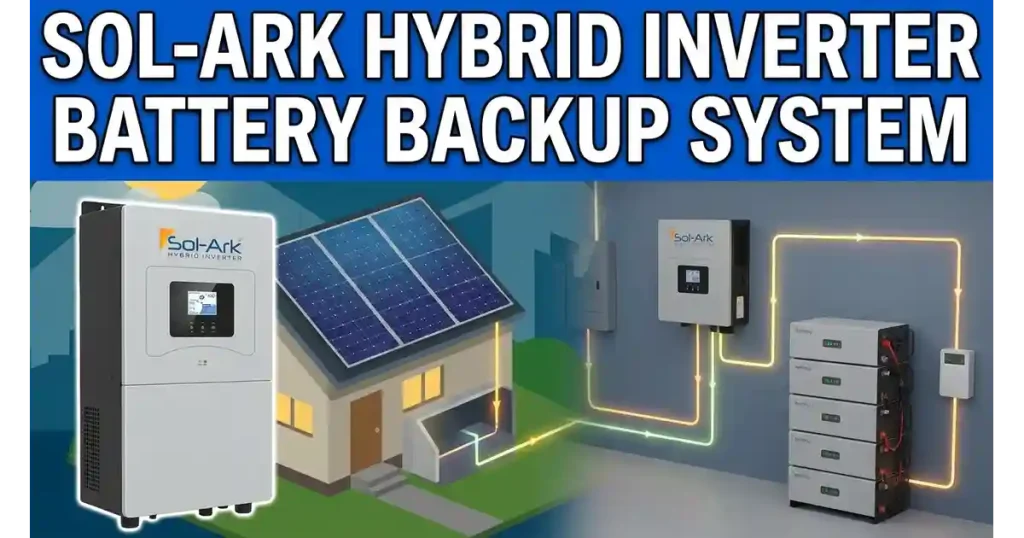
Sol-Ark Inverter: How It Works
A Sol-Ark inverter can coordinate solar panels, batteries, household loads, and the grid.
Depending on the model and configuration, Sol-Ark systems can support:
- Solar generation
- Battery storage
- Grid connection
- Backup loads
- AC-coupled solar
- DC-coupled solar
- Off-grid operation
For example, Sol-Ark’s current 15K-2P system is marketed as a whole-home hybrid inverter designed for backup power and energy management.
Sol-Ark Inverter Warranty
The current Sol-Ark 12K-2P-N warranty document provides a 10-year limited warranty against defects in materials and workmanship.
Because Sol-Ark offers several inverter models, check the warranty document for the exact model included in your installation.
SolarEdge vs Enphase
SolarEdge vs Enphase is one of the most common comparisons because both approaches provide panel-level power management but use different architectures.
SolarEdge
SolarEdge uses:
Solar panel → Power optimizer → String → Central inverter → AC
The power optimizer is installed at the module level, while the central inverter performs the main conversion.
Enphase
Enphase uses:
Solar panel → Microinverter → AC
Each panel has its own microinverter.
Which Is Better?
Neither is automatically better.
SolarEdge may make more sense if:
- You prefer a central inverter architecture.
- You want module-level optimization.
- You want SolarEdge’s battery ecosystem.
- Your installer has strong SolarEdge experience.
Enphase may make more sense if:
- Your roof has several orientations.
- You have partial shading.
- You prefer panel-level microinverters.
- A long microinverter warranty is important to you.
| Feature | SolarEdge | Enphase |
|---|---|---|
| Architecture | Central inverter + power optimizers | Microinverters |
| DC-to-AC conversion | Central inverter | At each panel |
| Panel-level optimization | Yes | Yes |
| Shading performance | Strong | Strong |
| Panel-level monitoring | Yes | Yes |
| Battery integration | Yes | Yes |
| Typical warranty | 12 years standard inverter warranty | Up to 25 years for IQ8 in North America |
| Best fit | Optimizer + central inverter system | Panel-level microinverter system |
SolarEdge vs Tesla
SolarEdge vs Tesla is a different comparison because both use central inverter architectures but have different ecosystem strategies.
SolarEdge focuses heavily on power optimizers and its own solar-plus-storage ecosystem.
Tesla focuses on integrating its Solar Inverter with Powerwall and other Tesla energy products.
Tesla’s Solar Inverter is designed for native integration with Powerwall and the Tesla app.
Choose SolarEdge If
- You want module-level optimization.
- Your roof has multiple orientations.
- You want a broad SolarEdge system architecture.
- Your installer specializes in SolarEdge.
Choose Tesla If
- You already want Powerwall.
- You prefer Tesla’s monitoring ecosystem.
- You want solar and storage closely integrated.
- You are comfortable with Tesla’s equipment ecosystem.
| Feature | SolarEdge | Tesla |
|---|---|---|
| Architecture | Central inverter + power optimizers | Central inverter |
| Panel-level optimization | Yes | No optimizer architecture |
| Battery ecosystem | SolarEdge ecosystem | Tesla Powerwall ecosystem |
| Monitoring | SolarEdge monitoring | Tesla app |
| Standard inverter warranty | 12 years | 12.5 years |
| Best fit | Module-level optimization | Integrated Tesla solar + storage |
Enphase vs Tesla
Enphase vs Tesla mainly comes down to panel-level microinverters versus a central inverter.
Enphase puts conversion equipment at the panel level.
Tesla uses a central Solar Inverter.
Enphase May Be Better for
- Complex roofs
- Multiple orientations
- Panel-level monitoring
- Homeowners who prefer microinverters
- Long microinverter warranty coverage
Tesla May Be Better for
- Powerwall-focused systems
- Homeowners wanting one integrated Tesla ecosystem
- Systems where a central inverter is preferred
- People who already use Tesla energy products
Enphase’s IQ8 microinverters have a 25-year limited warranty in North America, while Tesla lists 12.5 years for its Solar Inverter.
Tesla vs Sol-Ark
Tesla vs Sol-Ark is especially important for homeowners focused on battery backup.
Tesla’s approach is highly integrated around its own energy ecosystem.
Sol-Ark takes a more flexible hybrid-inverter approach and markets systems for on-grid, off-grid, AC-coupled, and DC-coupled applications.
| Feature | Tesla | Sol-Ark |
|---|---|---|
| Main architecture | Central inverter | Hybrid inverter |
| Battery focus | Powerwall ecosystem | Flexible battery integration |
| Whole-home backup | With compatible Powerwall setup | Strong focus |
| Off-grid capability | Limited compared with dedicated hybrid systems | Strong |
| AC/DC coupling | System-dependent | Supports AC/DC-coupled configurations |
| Best fit | Tesla ecosystem | Hybrid, backup, and off-grid systems |
Tesla May Be Better for
- Powerwall users
- Tesla ecosystem integration
- Simple app-based energy management
- Homeowners who prefer Tesla’s product ecosystem
Sol-Ark May Be Better for
- Whole-home backup
- Off-grid applications
- Flexible battery configurations
- AC-coupled or DC-coupled designs
- Homeowners working with specialized energy-storage installers
Sol-Ark’s 15K-2P is specifically marketed as a whole-home backup solution and can continue generating power independently of the grid during prolonged outages when configured appropriately. If you want backup power without a full hybrid system, a portable solar power generator is another option worth comparing.
Which Solar Inverter Is Best for Your Home?
| Your priority | Best choice |
|---|---|
| Panel-level microinverters | Enphase |
| Power optimizers + central inverter | SolarEdge |
| Tesla solar + Powerwall ecosystem | Tesla |
| Whole-home backup | Sol-Ark |
| Off-grid flexibility | Sol-Ark |
| Complex or shaded roof | Enphase or SolarEdge |
| Long microinverter warranty | Enphase |
| Integrated Tesla energy system | Tesla |
SolarEdge vs Enphase vs Tesla vs Sol-Ark: Which Is Best?
There is no universal winner.
Instead, think about the type of home and solar system you have.
Best for Panel-Level Microinverters: Enphase
Enphase is a strong choice if you specifically want microinverters at the panel level.
Its IQ8 series also offers a 25-year limited warranty in North America.
Best for Optimizers + Central Inverter: SolarEdge
SolarEdge is a strong option if you want module-level optimization while keeping a central inverter architecture.
Its standard inverter warranty is 12 years, with extensions available to 20 or 25 years depending on model.
Best for Tesla Energy Ecosystem: Tesla
Tesla is a natural choice for homeowners who want Solar Inverter, Powerwall, and Tesla monitoring to work together.
Tesla states that its Solar Inverter integrates with Powerwall and the Tesla app.
Best for Backup and Off-Grid Flexibility: Sol-Ark
Sol-Ark is particularly compelling when backup power and flexible hybrid operation are major priorities.
Its residential systems support on-grid and off-grid configurations and can work with AC- or DC-coupled solar depending on the model and design.
Solar Inverter Cost in 2026
It is difficult to give a single price for SolarEdge, Enphase, Tesla, or Sol-Ark because inverter pricing depends on the system design.
The total price can include:
- Inverter equipment
- Power optimizers
- Microinverters
- Battery equipment
- Backup equipment
- Electrical upgrades
- Labor
- Permits
- Monitoring equipment
- System design
SolarEdge Cost
SolarEdge pricing varies according to inverter capacity, number of optimizers, battery configuration, and installer — for a full breakdown, see our solar panel installation cost guide.
The optimizer architecture means the equipment cost cannot be fairly compared with a microinverter simply by using one price-per-watt number.
Enphase Cost
Enphase pricing depends heavily on the number and model of microinverters required.
Because conversion occurs at the panel level, a larger system generally requires more microinverter units.
Tesla Cost
Tesla Solar Inverter may be quoted as part of a broader Tesla solar and battery system.
If Powerwall is included, the inverter should be evaluated as part of the complete energy-storage package rather than as an isolated component.
Sol-Ark Cost
Sol-Ark pricing depends strongly on inverter capacity, battery configuration, backup requirements, and whether the system is grid-connected or off-grid.
Bottom line: don’t compare these four brands using inverter price alone. Compare the complete installed system and what the quote includes.
What Should You Compare When Getting Solar Inverter Quotes?
When installers give you different brands, ask them to provide the same information for each quote. Start by comparing solar installers near me or browsing top solar installation companies to see who works with each brand.
Compare:
- Exact inverter model
- Inverter capacity
- Panel wattage and total system size — use a solar panel calculator to estimate what your home needs
- Battery compatibility
- Backup capability
- Warranty
- Monitoring
- Installation cost
- Electrical upgrades
- Labor and service terms
- Expected system production
- Who handles warranty service
This makes it much easier to compare SolarEdge, Enphase, Tesla, and Sol-Ark fairly.
How We Compare Solar Inverter Brands
We compare solar inverter brands using factors that matter to homeowners rather than choosing a winner based only on brand popularity.
Our comparison considers:
- Inverter architecture
- Panel-level optimization
- Battery compatibility
- Backup capability
- Warranty coverage
- Monitoring
- Installation flexibility
- System scalability
- Off-grid capability
- Overall fit for different roof and energy needs
Product specifications and warranty information can change, so homeowners should verify the exact model and current terms in their installer quote before purchasing.
Frequently Asked Questions
What Is SolarEdge?
SolarEdge is a solar technology company known for systems that combine module-level power optimizers with central inverters. The architecture allows each module to be optimized while the central inverter handles the main DC-to-AC conversion.
Is a SolarEdge Inverter Better Than Enphase?
Not for every home. SolarEdge uses power optimizers with a central inverter, while Enphase uses microinverters at the panel level. The better option depends on your roof, shading, battery plans, budget, and installer.
What Is an Enphase Solar Inverter?
An Enphase solar inverter is a microinverter installed at the panel level. Enphase’s IQ8 microinverters convert DC electricity from individual solar modules into AC electricity and can integrate with the Enphase battery and monitoring ecosystem.
Does Enphase Have a 25-Year Warranty?
Yes. Enphase states that IQ8 Series Microinverters have a 25-year limited warranty in North America, subject to the applicable warranty terms.
What Is a Tesla Solar Inverter?
Tesla Solar Inverter is a central solar inverter that converts DC electricity from solar modules into AC electricity for home consumption. Tesla designed it to integrate with Powerwall and the Tesla energy ecosystem.
How Long Is the Tesla Solar Inverter Warranty?
Tesla currently lists a 12.5-year warranty for its Solar Inverter. Warranty conditions and registration requirements apply.
What Is a Sol-Ark Inverter?
Sol-Ark makes hybrid inverters designed to manage solar, batteries, grid power, and backup loads. Its residential products include systems designed for both on-grid and off-grid applications.
Is Sol-Ark Good for Whole-Home Backup?
Sol-Ark is particularly focused on whole-home backup and hybrid energy systems. Its 15K-2P product is marketed as a whole-home backup solution, while its systems can support different solar and battery configurations depending on the model.
Can SolarEdge, Enphase, Tesla, and Sol-Ark Work With Different Solar Panel Brands?
In many cases, different types of solar panels and inverters can be sourced from different manufacturers, but compatibility depends on the exact equipment and system design.
The important point is not simply the panel brand. The installer must verify electrical compatibility, inverter input requirements, rapid-shutdown requirements, and other system specifications.
Which Solar Inverter Has the Longest Warranty?
Among the products discussed here, Enphase IQ8 microinverters have a 25-year limited warranty in North America. SolarEdge offers a standard 12-year inverter warranty with extensions to 20 or 25 years depending on model, Tesla lists 12.5 years for its Solar Inverter, and the Sol-Ark 12K-2P-N carries a 10-year limited warranty.
Which Is Better for a Shaded Roof: SolarEdge or Enphase?
Both can be strong options because both provide module-level power management.
SolarEdge uses power optimizers while Enphase uses microinverters. The final choice should consider the pattern of shade, roof layout, system design, battery plans, and installer experience.
Which Is Better for Off-Grid Solar: Tesla or Sol-Ark?
Sol-Ark is generally the more natural fit when off-grid flexibility is the primary requirement because its hybrid inverter products are explicitly designed for on-grid and off-grid configurations. Tesla focuses more heavily on its integrated solar-plus-Powerwall ecosystem.
Which Solar Inverter Brand Is Best Overall?
There is no universal best brand.
Enphase may be a strong fit for homeowners who want microinverters. SolarEdge can be attractive for module-level optimization with a central inverter. Tesla makes sense for homeowners focused on the Tesla energy ecosystem. Sol-Ark is particularly relevant to homeowners prioritizing hybrid, backup, or off-grid capability.
Is Enphase Better Than SolarEdge?
Neither is automatically better. Enphase uses microinverters at each solar panel, while SolarEdge uses power optimizers with a central inverter. The better choice depends on roof design, shading, battery plans, installer experience, and your preferred system architecture.
Is Tesla Solar Inverter Better Than Enphase?
They use different architectures. Tesla uses a central inverter while Enphase uses microinverters at the panel level. Enphase may be a better fit for homeowners who want panel-level conversion, while Tesla can be attractive for homeowners who want an integrated Tesla solar and Powerwall ecosystem.
Is Sol-Ark Better Than Tesla for Backup?
Sol-Ark is generally a stronger fit when flexible hybrid, whole-home backup, or off-grid capability is the main priority. Tesla can be attractive when you want a tightly integrated Solar Inverter and Powerwall system.
Which Solar Inverter Is Best for a Shaded Roof?
Enphase and SolarEdge can both be strong choices for shaded roofs because both provide panel-level power management. Enphase uses microinverters while SolarEdge uses power optimizers with a central inverter.
Which Solar Inverter Brand Is Best for Battery Backup?
There is no single best brand for every home. Sol-Ark is particularly focused on hybrid and backup applications, Tesla is closely integrated with Powerwall, and SolarEdge and Enphase also offer solar-plus-storage solutions.
Bottom Line
The SolarEdge vs Enphase vs Tesla vs Sol-Ark decision comes down to how you want your solar system to work.
Choose Enphase if you prefer panel-level microinverters and a long microinverter warranty.
Choose SolarEdge if you want power optimizers combined with a central inverter and detailed module-level monitoring.
Choose Tesla if Powerwall and the Tesla energy ecosystem are central to your solar plans.
Choose Sol-Ark if battery backup, whole-home resilience, or off-grid flexibility is your main priority.
The best way to make the decision is to get comparable quotes from qualified installers. Ask each installer for the exact inverter model, warranty, battery compatibility, expected production, backup configuration, installation cost, and service terms.
Don’t choose an inverter simply because it is the most popular brand. Choose the system that fits your roof, energy use, battery plans, and long-term goals.
For broader solar pricing information, see our 2026 solar panel cost guide.
You can also read our complete solar inverter guide to understand inverter types before comparing brands.
If you’re considering Tesla’s ecosystem, see our guides to Tesla solar panels and Tesla Solar Roof.
About the Author
Munir Ahmed
Solar Industry Researcher & Pricing Analyst, Solar Panels Cost USA
Munir Ahmed researches solar equipment, installation pricing, system design, and renewable-energy technologies for U.S. homeowners. His work focuses on explaining technical solar topics in clear, practical language so readers can compare equipment and make better-informed purchasing decisions.
For this guide, he reviewed inverter architecture, warranty information, battery integration, backup capabilities, and manufacturer specifications for SolarEdge, Enphase, Tesla, and Sol-Ark.
Expertise: Solar Energy, Solar Inverters, Solar Systems & Renewable Energy
Content Focus: Solar technology, inverter comparisons, solar costs, and homeowner guides
Updated: August 2026
Sources
- SolarEdge — Inverter warranty information
- SolarEdge — Power Optimizer architecture
- Enphase — IQ8 Microinverter specifications and warranty
- Tesla — Solar Inverter specifications and warranty
- Tesla — Powerwall system design
- Sol-Ark — Residential hybrid inverter products
- Sol-Ark — 12K-2P-N warranty