Portable Solar Power Generator: The Complete Buying Guide
A portable solar power generator can keep your lights, fridge, and phone running when the grid goes down — with no fuel, no fumes, and almost no noise. Here’s how to pick the right one.
A portable solar power generator is a battery-based power station that stores electricity and can be recharged with solar panels, a wall outlet, or a vehicle. For camping and emergency backup, the right size depends on two numbers: watt-hours (Wh) for runtime and watts (W) for how much power it can deliver at once. A power outage does not wait for a good time — storms knock out the grid, camping trips need light after dark, and job sites need power for tools. A portable solar power generator solves all three problems with one box.
This guide covers how a portable solar power generator works, how to size one for your home or camping trip, and how it stacks up against a gas generator. If you already have portable solar panels to pair with one, we’ll show you how the two work together.
Key takeaways
- A portable solar power generator is a battery box with an inverter — solar panels are sold separately unless it’s marketed as a “kit.”
- Size your unit by watt-hours (total energy) and running watts (what it can power at once), not just price.
- Most home backup buyers land between 1,000Wh and 3,600Wh; campers usually need less.
- It is safe to run indoors, unlike a gas generator, because it produces no exhaust fumes.
- Lithium iron phosphate (LiFePO4) batteries last far longer than older lithium-ion units — check this before you buy.
What is a portable solar power generator?
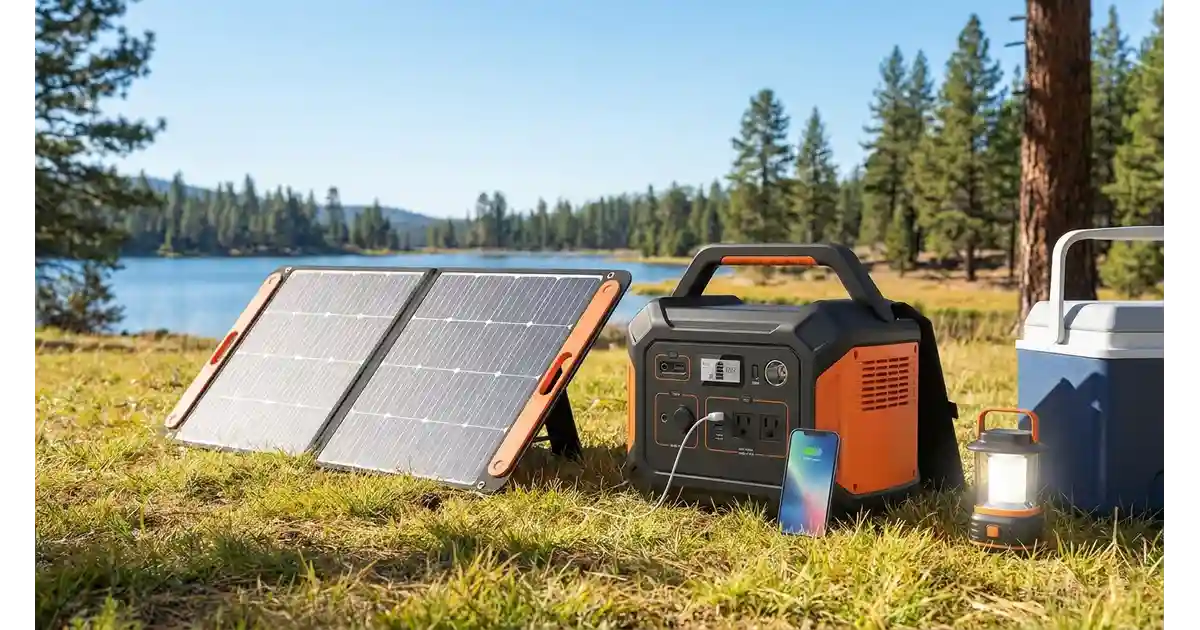
A portable solar power generator is a battery generator with plugs built in. It stores power from sunlight, a wall outlet, or a car charger, then sends that power back out through AC outlets, USB ports, and DC ports. Despite the name, most units sold alone do not come with solar panels — you buy those separately or as part of a bundled kit.
People also call this device a “solar battery generator,” a “portable power station,” a “portable battery station,” or a “solar backup generator.” All of these names point to the same kind of off-grid power device.
How does a portable solar power generator work?
Question: How does a portable solar power generator actually make electricity?
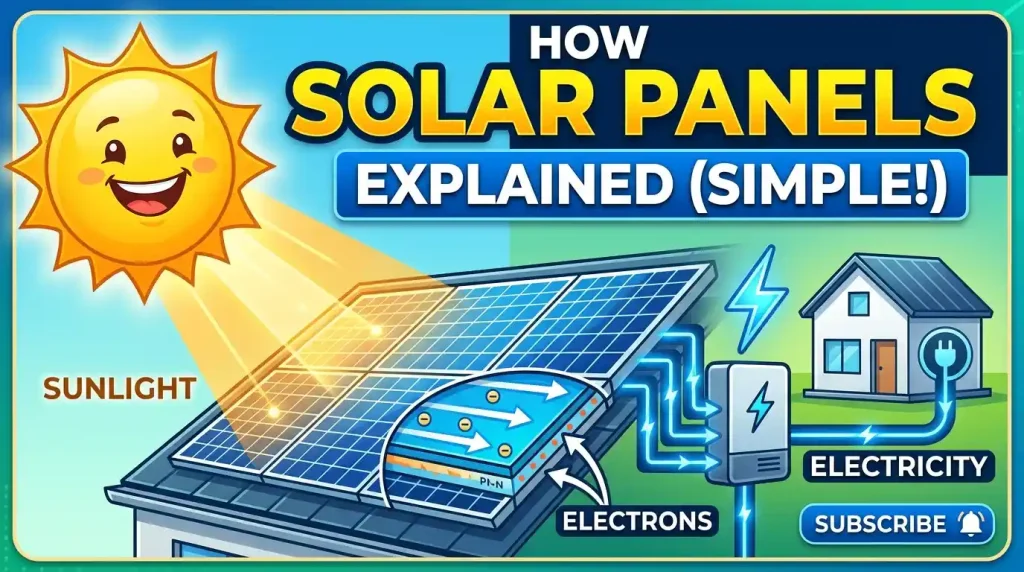
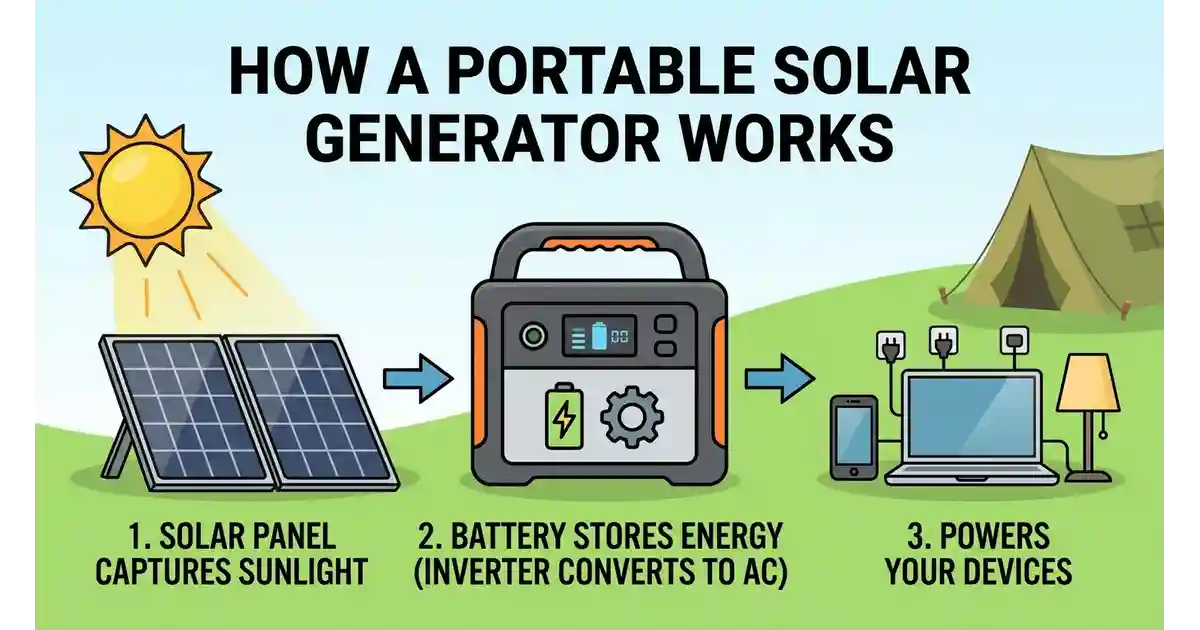
Answer: It doesn’t make electricity — it stores it. Solar panels convert sunlight into DC power, which flows into the unit’s battery. An inverter inside then turns that stored power into the AC electricity your home appliances use.
Example: Plug a 200-watt solar panel into a 1,000Wh power station on a sunny day, and the battery can refill in about 5 to 6 hours. Plug the same station into a wall outlet instead, and it often refills in 2 hours or less.
What Can a Portable Solar Power Generator Power?
A portable solar power generator can run many small and medium appliances, but the actual runtime depends on battery capacity, appliance wattage, and inverter efficiency.
| Appliance | Typical power use |
|---|---|
| Phone charger | 5–20W |
| LED lights | 5–20W |
| Laptop | 40–100W |
| TV | 50–150W |
| Refrigerator | 100–400W while running |
| CPAP machine | 30–100W |
| Microwave | 800–1,500W |
| Air conditioner | 1,000W+ |
Check both the appliance’s running watts and startup or surge watts before connecting it to a portable power station.
Portable solar power generator vs. gas generator
A portable solar power generator is quieter, cleaner, and safer indoors than a gas generator, but it stores less total energy and costs more per watt. A gas generator produces more power for less money upfront, but needs fuel, makes noise, and cannot run inside your house.
| Factor | Solar power generator | Gas generator |
|---|---|---|
| Fuel source | Sunlight or wall outlet | Gasoline, propane, or diesel |
| Noise | Silent to near-silent | 60–80 decibels |
| Indoor use | Safe | Never — carbon monoxide risk |
| Typical output | 300–7,200 watts | 2,000–17,000+ watts |
| Ongoing cost | Free to recharge with sun | Fuel, oil changes, maintenance |
| Upfront cost | Higher per watt | Lower per watt |
If your outage needs are short and your load is under about 2,000 watts, a solar power generator usually makes more sense. If you need to run heavy appliances for days at a time, a gas generator — or a much larger solar unit — is the better fit.
How many watts do you need?
Add up the running watts of everything you want to power at the same time, then choose a unit rated above that number. Separately, check watt-hours (Wh) to see how long the battery will last before it needs to recharge.
- For basic camping: 300–500W
- For larger camping/RV loads: 500–1,000W
- For home emergency backup: 1,000–3,600W+
| Device | Running watts | Notes |
|---|---|---|
| Phone charger | 5–20W | Charges hundreds of times on 1,000Wh |
| Laptop | 50–100W | Runs 8–15 hours on 1,000Wh |
| Mini fridge | 60–100W (running), 200W+ (startup surge) | Check the surge rating, not just running watts |
| Full-size refrigerator | 150–400W (running) | Needs 1,000–2,000Wh for a full day |
| Window AC unit | 500–1,500W | Needs a unit rated 2,000W or higher |
| Power tools (drill, saw) | 500–1,800W | Startup surge is often 2–3x running watts |
A refrigerator’s compressor draws a short burst of extra power when it turns on. This is the “surge” or “peak” rating. If your generator’s surge rating is too low, the fridge simply won’t start, even if the running-watt number looks fine on paper. If you’re unsure how to add up your own numbers, our solar panel calculator can help you work out the wattage your household actually needs.
How Do You Calculate Runtime?
A simple estimate is:
For example, a 1,000Wh power station running a 100W appliance could provide roughly 8.5 hours of runtime under ideal conditions. Real-world runtime can be lower because of inverter losses, battery limits, temperature, and the appliance’s changing power draw.
Portable solar generator size calculator
Select the devices you want to power below, and this tool adds up the watt-hours you’ll need for one day of use. It gives a starting estimate, not an exact spec — always round up to the next size for safety margin.
Best portable solar power generators by use case
The right size depends on what you’re powering and for how long, whether you want a light camping power station for a weekend trip or a larger system for home backup. Here’s how common capacity classes match up to real needs.
| Use case | Suggested capacity | Example models in this class |
|---|---|---|
| Phones, lights, small camping gear | 150–300Wh | Jackery Explorer 290, small Cummins Onan units (194–296Wh) |
| Weekend camping or a car-camping fridge | 500–1,000Wh | EcoFlow River Max, Jackery Explorer 1000 |
| RV trips and multi-day power outages | 1,000–2,000Wh | Anker Solix C1000 (1,056Wh), Jackery Explorer 1000 Plus, Champion Power Equipment (1,638Wh lithium-ion) |
| Whole-room home backup | 2,000–3,600Wh+ | Jackery Explorer 600 Plus systems, Anker Solix C1000 expansion setups |
Capacity classes are general guidance based on published manufacturer specs; always confirm current wattage, surge rating, and price on the manufacturer’s own product page before buying.
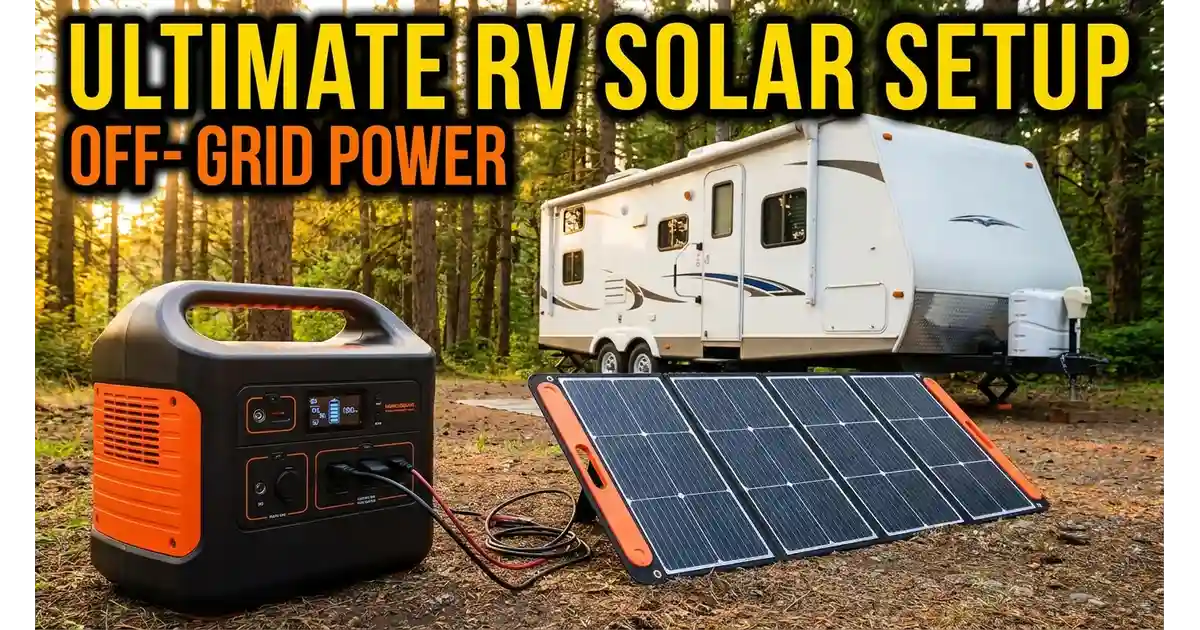
For campers, weight matters as much as capacity — a heavier 40-pound unit is harder to carry to a tent site than a 10-pound one, even if both hold similar power. Pairing a compact unit with small, lightweight solar panels keeps your whole setup easy to carry. For RV setups, pair a mid-size unit with a foldable panel so you can recharge while driving or parked in the sun. If you’re setting up backup power at home instead, see our home solar panel guide for how a fixed rooftop system compares to a portable one.
Best portable solar power generators by category
Instead of one “best” pick, match a category to your priority. These are grouped by what each unit is strongest at, based on published capacity, weight, and warranty specs — always confirm current pricing and availability directly with the manufacturer.
Best overall: mid-size LiFePO4 power stations (around 1,000Wh)
Pros: Balances weight and capacity; runs a mini fridge or laptop for a full day; recharges from solar in about half a day.
Cons: Costs more per watt-hour than smaller units; too small for whole-home backup.
Typical specs: ~1,000Wh capacity, 20–25 lbs, 5–6 hour solar recharge, 3–5 year warranty.
Best budget: entry-level units (150–300Wh)
Pros: Low cost, lightweight, enough for phones and small lights.
Cons: Can’t run a fridge for long; frequent recharging needed.
Typical specs: ~200Wh capacity, 5–8 lbs, 3–4 hour solar recharge, 1–2 year warranty.
Best for camping: compact, lightweight units under 15 lbs
Pros: Easy to carry to a tent site; pairs well with a small folding panel.
Cons: Limited runtime for anything beyond lights, phones, and a fan.
Typical specs: 150–500Wh capacity, under 15 lbs, built-in carry handle.
Best for RVs: expandable 1,000–2,000Wh systems
Pros: Handles a mini fridge plus electronics; some models allow extra battery packs to expand capacity later.
Cons: Heavier; needs a larger solar panel to recharge quickly while parked.
Typical specs: 1,000–2,000Wh capacity, 25–40 lbs, expandable battery add-ons on some models.
Best for home backup: 2,000Wh+ systems with expansion batteries
Pros: Covers a fridge, medical devices, and lighting during an outage; some models stack extra batteries for multi-day coverage.
Cons: Highest upfront cost; too heavy to move easily without wheels.
Typical specs: 2,000–3,600Wh+ capacity, 40–60+ lbs, 5-year warranty common at this tier.
Brand comparison: Jackery vs. EcoFlow vs. Anker Solix vs. Bluetti
| Brand | Known for | Watch out for |
|---|---|---|
| Jackery | Wide range of sizes, strong name recognition, simple app controls | Mid-tier models can charge slower than newer competitors |
| EcoFlow | Fast recharge speeds, strong expansion battery options | Premium pricing on higher-capacity models |
| Anker Solix | Competitive pricing, growing lineup of expandable systems | Newer to the category than Jackery or Goal Zero |
| Bluetti | High-capacity home backup systems, LiFePO4 across most models | Larger units are heavy and less “portable” in practice |
Brand comparisons reflect general market positioning, not lab-tested figures. Confirm specific model specs, current pricing, and availability on each brand’s official site.
Portable solar power generator price by capacity
Price scales closely with watt-hour capacity: expect roughly $1–$1.50 per watt-hour for lithium-ion units and somewhat more for premium LiFePO4 models with faster charging.
| Capacity | Typical price range | Good for |
|---|---|---|
| 150–300Wh | $150–$350 | Phones, small lights, weekend camping |
| 500–1,000Wh | $400–$900 | Car camping, a mini fridge, laptops |
| 1,000–2,000Wh | $800–$1,800 | RVs, multi-day outages |
| 2,000–3,600Wh+ | $1,800–$3,500+ | Whole-room home backup |
Prices are general U.S. market estimates and change often with sales and new model releases; check current pricing directly with retailers before budgeting.
How to charge a portable solar power generator
Most portable solar power generators charge three ways: solar panels, a wall outlet, or a car’s 12V port. Solar charging is the slowest but free; wall charging is the fastest.
| Charging method | Approximate time |
|---|---|
| 200W solar panel, full sun | 5–6 hours |
| 100W solar panel, full sun | 10–12 hours |
| AC wall outlet | 1–2 hours |
| Car 12V outlet | 8–10 hours |
Cloud cover, panel angle, and dust on the panel all slow down solar charging. Point panels directly at the sun and wipe them clean for the fastest refill. If you don’t yet own solar panels, our monocrystalline solar panel guide covers which panel type charges fastest per square foot.
Is a portable solar power generator safe to use indoors?
Portable battery power stations produce no combustion exhaust, so they can generally be used indoors. However, follow the manufacturer’s instructions and keep the unit dry and properly ventilated around its cooling vents. This is the biggest safety advantage a portable solar power generator has over a gas generator, which can release deadly carbon monoxide in an enclosed room.
Even so, keep the unit away from direct heat, standing water, and out of reach of small children, since the battery and outlets can still get warm during heavy use.
How long does a portable solar power generator last?
Most units last 5 to 10 years with regular use, though the battery chemistry inside makes the biggest difference. Lithium iron phosphate (LiFePO4) batteries typically handle 2,500–4,000 charge cycles, while older lithium-ion batteries handle closer to 500–1,000 cycles before capacity drops off noticeably.
A “cycle” means one full charge and one full discharge. If you fully recharge a LiFePO4 unit once a week, 3,000 cycles works out to roughly 57 years of weekly use — in practice, most people replace the unit sooner due to newer features, not battery failure. Keeping the unit’s solar panels clean also protects charging speed over time; see our solar panel maintenance guide for upkeep tips.
What’s in a portable solar power generator kit?
A “kit” bundles the battery unit with one or more solar panels, so you don’t have to buy them separately. Most kits also include a charging cable and a carrying case or bag. See our solar panel kit guide if you’re comparing panel-only kits versus a bundled power station kit.
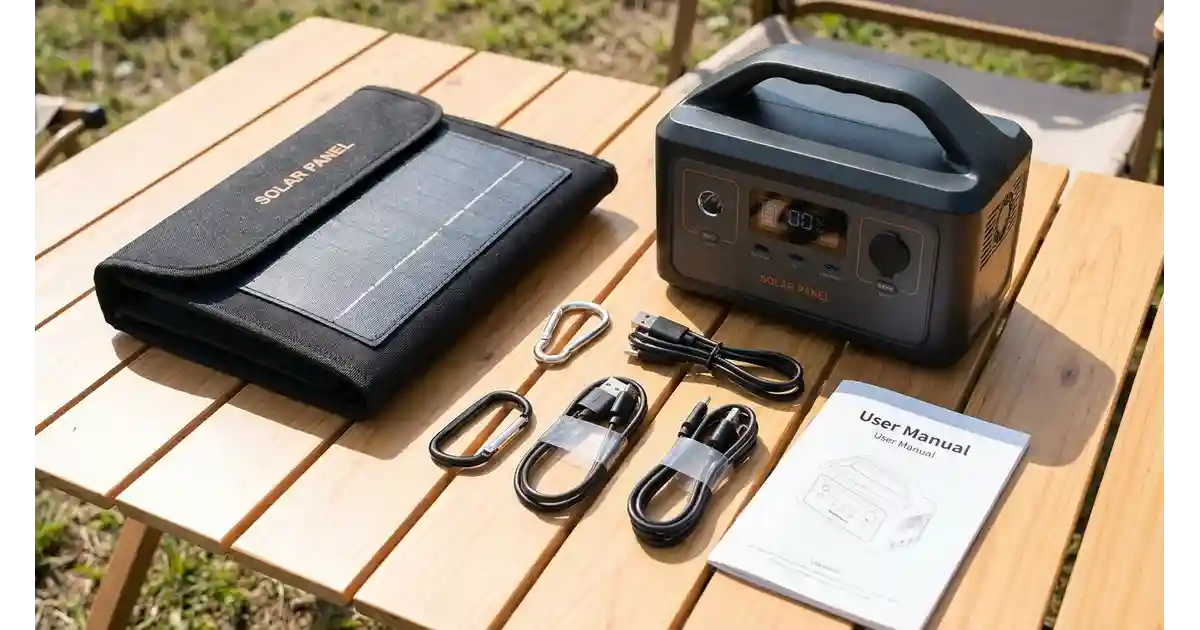
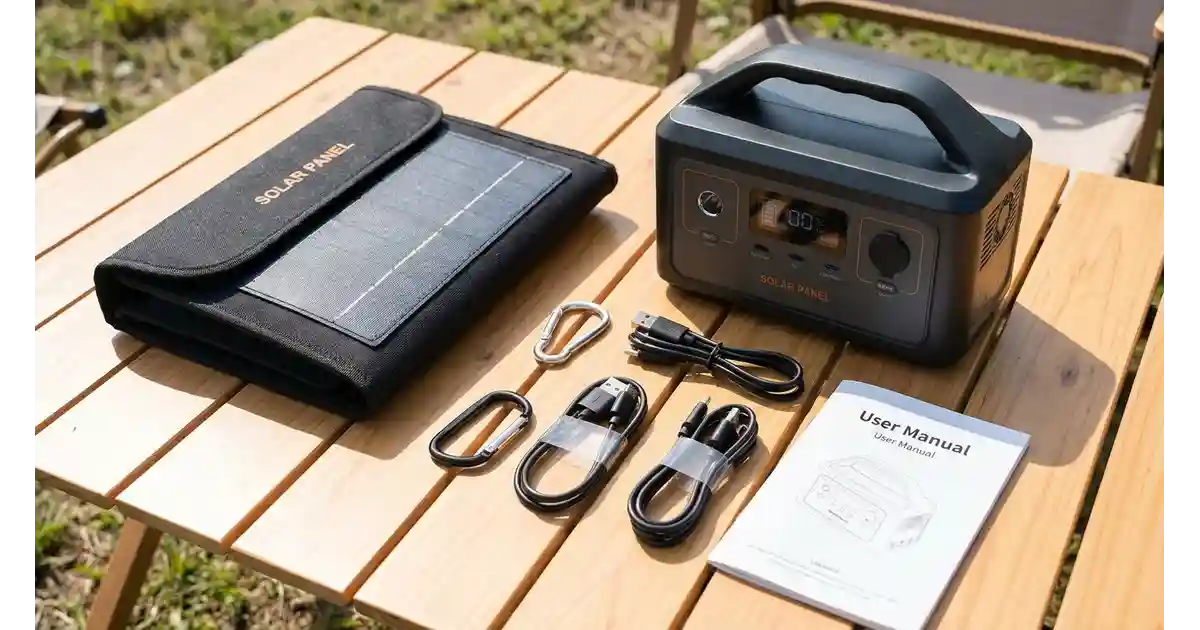
- Power station: The battery, inverter, and outlets.
- Solar panel(s): Usually foldable, 100W–200W each.
- Cables: Solar-to-station cable, AC charging cable, sometimes a car charging cable.
- Case or bag: For the panels, to protect them during transport.
Buying a kit is usually cheaper than buying the station and panels separately, and it guarantees the parts are compatible with each other.
Solar Powered Generator for Home: What Size Kit Do You Need?
A solar powered generator for home backup typically pairs a 1,000–2,000Wh power station with a 100–200W solar panel, giving enough capacity to run a fridge, lights, and basic electronics during a multi-day outage. If you’re comparing a solar power generator for home use against a full rooftop system, the portable option is usually the faster and cheaper way to get started.
DIY vs. buying a portable solar power generator
You can build a portable solar power generator yourself, but it usually costs about the same as buying one — and skips the safety testing a pre-built unit goes through. DIY makes sense mainly for hobbyists who want to learn or need a custom size.
Question: What do you need to build one from scratch?
Answer: Four core parts: a battery (usually LiFePO4), a charge controller, an inverter, and a case to hold it all with outlets wired in.
Example: A basic 500Wh DIY build might use a 12V 40Ah LiFePO4 battery, a 30A charge controller, a 300W pure sine wave inverter, and a plastic toolbox case — parts alone often run close to what a finished 500Wh unit costs at retail.
| Factor | DIY build | Pre-built unit |
|---|---|---|
| Upfront cost | Similar, sometimes higher for small batches of parts | Fixed, often on sale |
| Safety certification | None unless you test it yourself | UL or equivalent certified |
| Warranty | None | 1–5 years typical |
| Customization | Full control over size and ports | Fixed by the manufacturer |
| Time investment | Several hours to a full weekend | Ready to use out of the box |
For most homeowners, a pre-built unit is the safer and faster choice. DIY is worth it mainly if you enjoy the build process itself or need an unusual size that no retail unit offers.
5 mistakes buyers make
Most buyer regret comes from the same few mistakes — all avoidable if you check the right numbers before ordering.
- Buying based on watts only. Watts tell you what it can power right now; watt-hours tell you how long it lasts. Check both.
- Ignoring surge power. A fridge or power tool needs a short burst well above its running watts to start. A low surge rating means it simply won’t turn on.
- Choosing the wrong battery chemistry. Older lithium-ion batteries degrade far faster than LiFePO4. Paying slightly more for LiFePO4 usually pays off within a couple of years.
- Pairing it with a solar panel that’s too small. A 400Wh unit charging from a 60W panel can take all day and still not fill up. Match panel wattage to battery size.
- Skipping expansion support. Some units let you add extra battery packs later; others are fixed at their original capacity forever. If your needs might grow, this is worth checking before you buy.
Pros and cons of a portable solar power generator
| Pros | Cons |
|---|---|
| Silent operation | Higher upfront cost per watt than gas |
| No fumes — safe indoors | Solar recharging is slow and weather-dependent |
| No fuel to store or buy | Lower total output than large gas generators |
| Low maintenance | Heavier units are hard to carry long distances |
| Works with phones, laptops, and small appliances | Not built for running an entire house at once |
What do portable solar power generator reviews say?
Professional testers, including Consumer Reports and CNN Underscored, consistently flag three things across brands: recharge speed, weight, and price. Faster-charging units tend to cost more, and the most powerful models are often too heavy to carry without wheels.
- Recharge speed: Top-tested units refill roughly six times faster than the slowest models in the same test group.
- Weight: Reviewers regularly note that larger units — some over 100 pounds — are not truly “portable” without built-in wheels.
- Price: Reviews consistently rank solar generators as more expensive upfront than gas generators of similar output, with the gap narrowing over time as fuel and maintenance costs add up.
Before buying based on a review score alone, check whether the reviewer tested the model at your target capacity — a unit rated best-overall at 2,000Wh may not be the best pick if you only need 500Wh.
Which portable solar power generator is best for you?
The best portable solar power generator is the smallest one that comfortably covers your running watts and daily watt-hour needs — buying bigger than that just adds cost and weight. If you’re also weighing a full rooftop system, our guide on whether solar panels are worth it covers the bigger financial picture.
- Best for backpacking or small camping trips: A 150–300Wh unit under 10 pounds.
- Best for car camping or an RV weekend: A 500–1,000Wh unit with a 200W solar panel.
- Best for multi-day power outages: A 2,000Wh+ unit, ideally expandable with extra battery packs.
- Best for running a fridge and a few essentials: A unit with at least a 1,800W surge rating and 2,000Wh capacity — this size range is what most buyers mean when searching for a solar powered generator for home backup.
Frequently asked questions
What is a portable solar power generator?
It’s a battery power station that stores energy from solar panels or a wall outlet and gives it back through regular plugs, USB ports, and DC ports.
What is the difference between a solar generator and a power station?
There isn’t a meaningful technical difference — a solar generator and a portable power station are the same core product: a battery with an inverter and outlets. The word “solar” usually just signals that the unit is sold with, or designed to pair with, solar panels for recharging.
How long will a portable solar generator run?
Runtime depends on the battery’s watt-hour (Wh) capacity and the wattage of what you’re running. As a rough estimate, multiply the battery’s Wh by about 0.85 and divide by the appliance’s watts — a 1,000Wh unit running a 100W appliance provides roughly 8.5 hours.
Can a portable solar power generator run a refrigerator?
Yes, as long as its surge rating is high enough to handle the compressor’s startup spike and its watt-hour capacity matches how long you need it to run — usually 1,000–2,000Wh for a full day.
Can a portable solar generator power a house?
A portable solar generator can power select circuits or appliances during an outage, such as a fridge, lights, and electronics, but most consumer units cannot power an entire house at once. Whole-home backup typically requires a much larger battery system or a dedicated home backup installation.
Can a portable solar generator run an air conditioner?
Only with a large unit. A window AC unit typically needs 500 to 1,500 running watts and a higher surge rating to start, so it usually requires a power station rated 2,000 watts or higher with enough watt-hour capacity to sustain it.
How many watts do I need?
Add up the running watts of everything you want to power at the same time and choose a unit rated above that total. As a general guide: 300–500W covers basic camping, 500–1,000W covers larger camping or RV loads, and 1,000–3,600W or more suits home emergency backup.
How many solar panels do I need?
This depends on your power station’s battery capacity and how quickly you want to recharge it. A common approach is to match a 100–200W solar panel to a 500–1,000Wh power station, adding more panels or higher wattage for larger batteries or faster recharge times.
How long do portable solar power generators last before they need replacing?
Most last 5 to 10 years of regular use. Units with LiFePO4 batteries last the longest, often rated for 2,500 or more full charge cycles.
Are portable solar generators worth it?
For most people who experience occasional outages or camp regularly, yes — they provide quiet, fume-free backup power without ongoing fuel costs. For extended multi-day outages powering an entire home, a larger battery system or a gas generator may be more practical.
Is a solar powered generator for home backup worth it?
For short outages under a couple of days, yes — a solar powered generator for home use is quiet, safe indoors, and needs no fuel. For extended multi-day outages powering a whole home, a larger battery system or a gas generator may be more practical.
How we researched this guide
This guide is built from published data, not hands-on lab testing. We compared manufacturer spec sheets across major brands, cross-checked runtime and wattage figures against independent testing from Consumer Reports and CNN Underscored, and used ENERGY STAR data for typical appliance power draw.
- Manufacturer specifications: Capacity (Wh), surge rating, weight, and warranty terms pulled from official product pages for Jackery, EcoFlow, Anker Solix, Bluetti, and Cummins Onan.
- Third-party lab testing: Recharge speed and real-world performance patterns referenced from Consumer Reports’ portable power station testing program and CNN Underscored’s product reviews.
- Appliance power data: Typical wattage for refrigerators, laptops, and other devices from ENERGY STAR’s published appliance energy guides.
All calculator estimates and price ranges in this guide come from these public sources, not proprietary or in-house testing. We update figures periodically as new models and pricing become available.