Tesla Solar Panels: The Complete 2026 Cost & Review Guide
What Tesla solar panels actually cost, how they’re made now, how they compare to SunPower and REC, and the honest trade-offs of the Solar Roof and Powerwall.
Tesla is one of the best-known names in home solar, but “Tesla solar” actually covers three very different products: solar panels, the Solar Roof, and the Powerwall battery. This guide breaks down the real cost, specs, and honest trade-offs of each, so you know exactly what you’d be buying. If you’re comparing Tesla against solar in general, our guide to whether solar panels are worth it covers the broader payback picture first.
Tesla solar panels are rooftop solar panels manufactured and sold by Tesla Energy, distinct from the Tesla Solar Roof (a full roof-replacement product) and the Powerwall (a home battery). As of 2026, Tesla builds its own panels in-house under the TSP series.
What Are Tesla Solar Panels?
Tesla solar panels are standard rooftop solar panels sold and installed by Tesla Energy. A Tesla solar panel looks similar to any other modern panel: a large, flat, all-black rectangle mounted on racking above your roof. You’ll also see them referred to as Tesla photovoltaic panels, since “photovoltaic” (PV) is simply the technical term for how solar cells convert sunlight into electricity.
| Spec | Tesla Solar Panel (2026) |
|---|---|
| Cell type | Monocrystalline silicon |
| Power output | 400W – 460W per panel |
| Efficiency | 19.3% – 22.5% (model dependent) |
| Warranty | 25 years (product and performance) |
| Guaranteed output at year 25 | At least 87% of rated capacity |
| Color/style | All-black, low-profile |
Tesla installs these panels using both its own crews and a network of over 1,000 certified installers, depending on your market. Working with certified installers has widened Tesla’s reach, though scheduling and service quality can still vary more than with a single national contractor. For a broader look at how these panels stack up against other types of solar panels, see our full comparison guide.
Tesla Home Solar Panels: Now Made In-House (2026 Update)
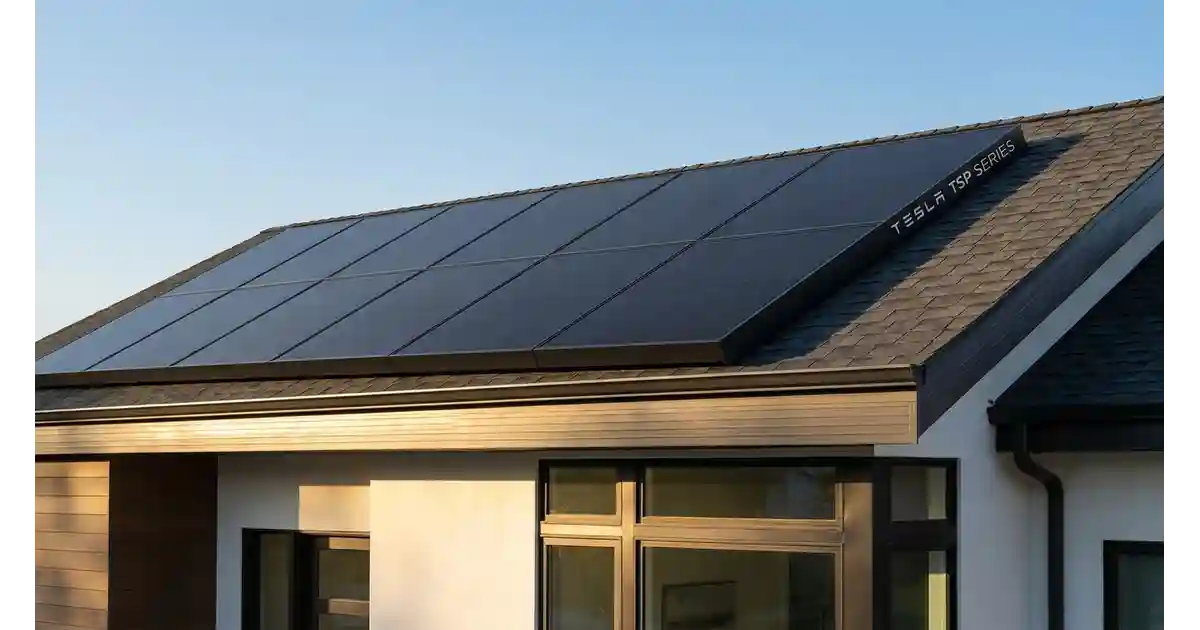
As of early 2026, Tesla builds its own home solar panels again, called the TSP series, ending years of relying only on third-party manufacturers.
For most of the years after Tesla acquired SolarCity, the company didn’t make its own solar cells. It bought panels from outside manufacturers, mainly Hanwha Q CELLS, and sold them under the Tesla Solar brand. That changed in January 2026, when Tesla launched the TSP-415 and TSP-420 modules, assembled at Gigafactory New York in Buffalo, the same facility originally built for SolarCity.
- 18 Power Zones per panel: most standard panels split their cells into just three zones. Tesla’s TSP series uses 18, which means a single shaded section of the panel drags down far less of the total output. This is a real advantage on roofs with trees, chimneys, or vents that cast partial shade.
- Rail-less mounting: a mounting design intended to cut install time by up to a third compared with traditional racking.
- Cascading cell technology: borrowed from the Solar Roof, this hides the visible silver busbars for a cleaner, more uniform black look.
- Domestic assembly: shipping lead times for the new panels run about 2 to 4 weeks, compared to 8 to 12 weeks for panels shipped from overseas, which can shorten your overall project timeline.
If you’re comparing an older review of Tesla solar against a newer one and the specs don’t match, this is why: older reviews describe Q CELLS-sourced panels, while any Tesla quote from 2026 onward will use the new in-house TSP series.
Tesla Solar Panels Cost in 2026
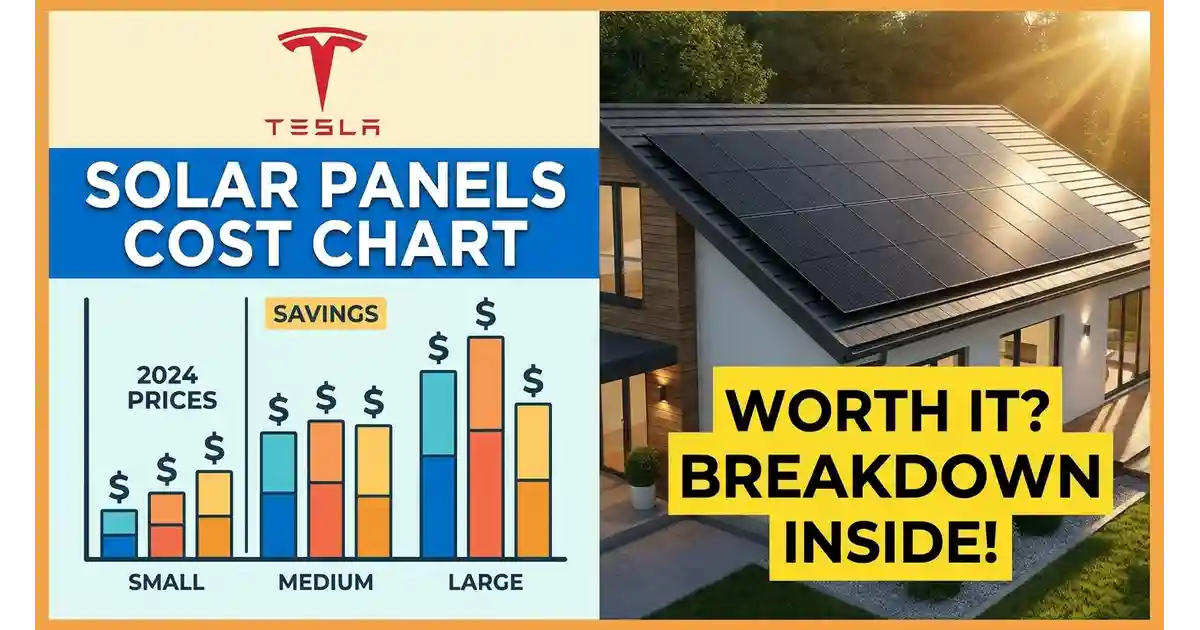
Tesla solar panels typically cost $2.27 to $3.30 per watt installed in 2026, generally at or below the national average of about $2.50 to $3.50 per watt.
| System size | Estimated cost |
|---|---|
| 4 kW | $10,960 – $16,000 |
| 6 kW | $13,600 – $19,800 |
| 8 kW | $18,200 – $26,400 |
| 9.6 kW | $21,800 – $31,700 |
| 14.4 kW | $32,700 – $47,500 |
Tesla also offers a price-match guarantee: if you get a lower quote for a comparable system elsewhere within about 14 days, Tesla will review it and may match the price. The guarantee only covers equipment and installation cost, not financing terms or incentive structures. For a general sense of what installation runs across the market, see our solar panel installation cost guide.
2026 tax credit update: The 30% federal solar tax credit for homeowners who buy their system outright (Section 25D) expired on December 31, 2025. If you purchase a Tesla solar system in 2026, you generally will not get this federal credit yourself. The credit still exists in a different form for third-party-owned systems, like solar leases, where the financing company claims a separate commercial credit and may pass some savings to you through lower monthly payments. State-level credits, rebates, and net metering are still available in many states and can meaningfully lower your net cost. You can confirm current federal rules directly at energy.gov.
Extra costs to plan for: an electrical panel upgrade, if your home’s panel can’t handle the new system, typically runs $1,500 to $3,000 on top of the base quote. Tesla will flag this during the design step, but it can extend your timeline.
Tesla Solar Panels vs. Others: How Do They Compare?
Tesla usually wins on price, but not on raw efficiency, when compared with premium brands like SunPower and REC.
| Brand | Efficiency | Price per watt | Warranty | Best for |
|---|---|---|---|---|
| Tesla (TSP series) | 19.3% – 22.5% | $2.27 – $3.30 | 25 years | Budget-conscious buyers, Powerwall/EV integration |
| SunPower (Maxeon) | Up to 22.8% | $3.50 – $4.00 | 40 years | Tight roof space, maximum output |
| REC Group (Alpha) | Up to 22.3% | $3.00 – $3.75 | 25 years | Cold-climate performance, strong mid-tier warranty |
| Qcells | Up to 22.5% | $2.60 – $3.20 | 25 years | Wide availability, U.S. manufacturing presence |
Tesla currently holds a small share of the U.S. residential solar market, around 4%, well behind installer-network companies like Sunrun. What keeps Tesla competitive isn’t the panel technology alone; it’s the price and the tight integration with the Powerwall battery and Tesla vehicles. If your roof has plenty of open space and cost matters most, Tesla panels are a reasonable pick. If your roof space is limited and you want to squeeze out every possible watt, a higher-efficiency Maxeon panel from SunPower may produce more electricity from the same area.
Tesla Solar Panel Installation: Ordering Process and Timeline
Most Tesla solar panel installation orders take about 3 to 5 months from signed contract to the system being switched on.
- Get an online quote: Tesla’s configurator gives an instant estimate based on your address and roof.
- Design review: Tesla controls your system size; you approve or decline the layout it proposes, but you generally can’t request more panels than it recommends for your roof.
- Permitting: your local building department reviews the plans. This step is outside Tesla’s control and is the most common source of delay, sometimes taking months in slower-moving municipalities.
- Installation: the physical work is usually done in one to a few days, similar to any other solar installation company.
- Inspection and activation: a final inspection and utility approval turn the system on.
If you’d rather compare local installers before committing to Tesla directly, our solar installers near me directory is a good starting point.
Tesla Roof Solar Panels: What Is the Tesla Solar Roof?
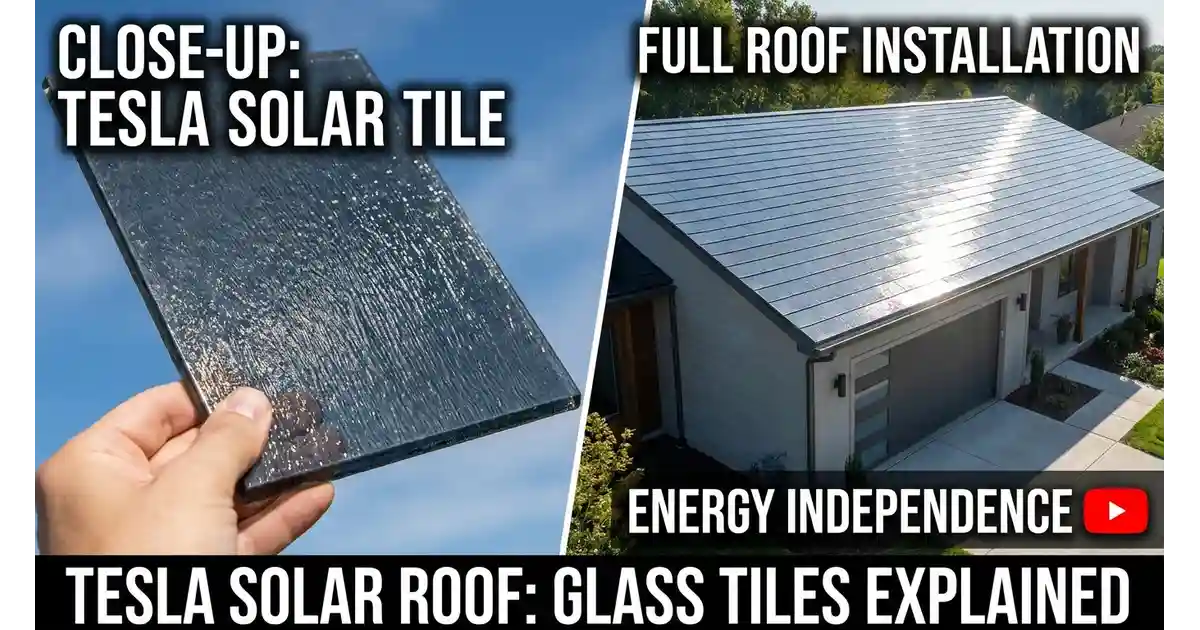
The Tesla Solar Roof is not a solar panel add-on. It’s a full roof replacement made of glass tiles, some of which generate electricity and some of which don’t.
From the ground, the tiles look similar to a slate or textured shingle roof. Only from directly overhead can you tell which tiles are active solar cells versus inactive filler tiles. Tesla backs the Solar Roof with three separate 25-year warranties: one for manufacturing defects, one for power output, and one for weatherproofing. For a broader look at glass-tile roofing beyond Tesla’s version, see our solar roof guide.
The catch is efficiency. Tesla’s Solar Roof tiles convert only about 8% to 14% of sunlight into electricity, compared to 19% to 22.5% for standard Tesla panels. Tesla partly makes up for this by covering more of the roof surface with active tiles than a standard panel layout would allow, but a same-sized Solar Roof system still typically produces noticeably less electricity per year than a standard panel system.
Tesla Solar Roof Cost
Tesla Solar Roof cost runs far higher than standard panels, mainly because you’re paying for a full roof replacement, not just an energy upgrade.
| Roof complexity | Cost per sq ft | Typical total (2026) |
|---|---|---|
| Simple (single-level, low pitch) | $14.50 | $65,000 – $85,000 |
| Intermediate (multi-level, more obstructions) | $16.50 | $85,000 – $105,000 |
| Complex (steep, many angles/dormers) | $19.00 | $105,000 – $126,000 |
For comparison, a standard Tesla solar panel system plus a brand-new conventional roof usually costs around $40,000 to $50,000 total, often $50,000 to $80,000 less than a Solar Roof of similar size. The Solar Roof only starts to make financial sense if you already need a full roof replacement anyway, since you’d be paying for that roof either way.
If your current roof is in good shape and made of thin, standard asphalt shingles, Tesla can sometimes install directly over it, which lowers cost. Any other roofing material, like tile, slate, or thick architectural shingles, has to be fully removed first, adding $6,000 to $7,500 in tear-off costs.
Disadvantages of the Tesla Solar Roof
Marketing pages tend to gloss over the downsides, so here’s an honest list of the real disadvantages of a Tesla Solar Roof.
Real drawbacks to weigh
- Much higher cost than panels: even after incentives, a Solar Roof typically costs two to five times more than standard panels for the same amount of power.
- Lower efficiency: at 8% to 14% efficiency, the tiles convert roughly half as much sunlight into electricity as a standard monocrystalline panel.
- Tiles sit flush with the roof: unlike tilted panel racking, the tiles can’t be angled toward the sun, so they can’t be optimized for your exact roof orientation.
- Hard to repair: if a tile cracks, repairs generally require a Tesla-certified crew, not a simple DIY swap.
- Long installation timelines: because it’s a full roofing project plus an electrical project, Solar Roof installs often take months longer than a standard panel install.
- Weaker long-term payback: some independent estimates suggest a Solar Roof only recovers about a third of its cost in electricity savings over 25 years, compared to standard panels, which typically pay for themselves well within the warranty period.
- Negative power tolerance: Tesla’s Solar Roof tiles carry a -5% power tolerance rating, meaning actual output can run measurably below the rated spec, worse than most standard panels.
The Solar Roof still makes sense for a specific buyer: someone who needs a full roof replacement regardless, cares deeply about aesthetics, lives in an HOA that restricts visible panels, or is fully invested in the Tesla ecosystem. For most homeowners simply looking to add solar, standard Tesla solar panels remain the more cost-effective choice.
Tesla Powerwall Solar Panels: How the Battery Works
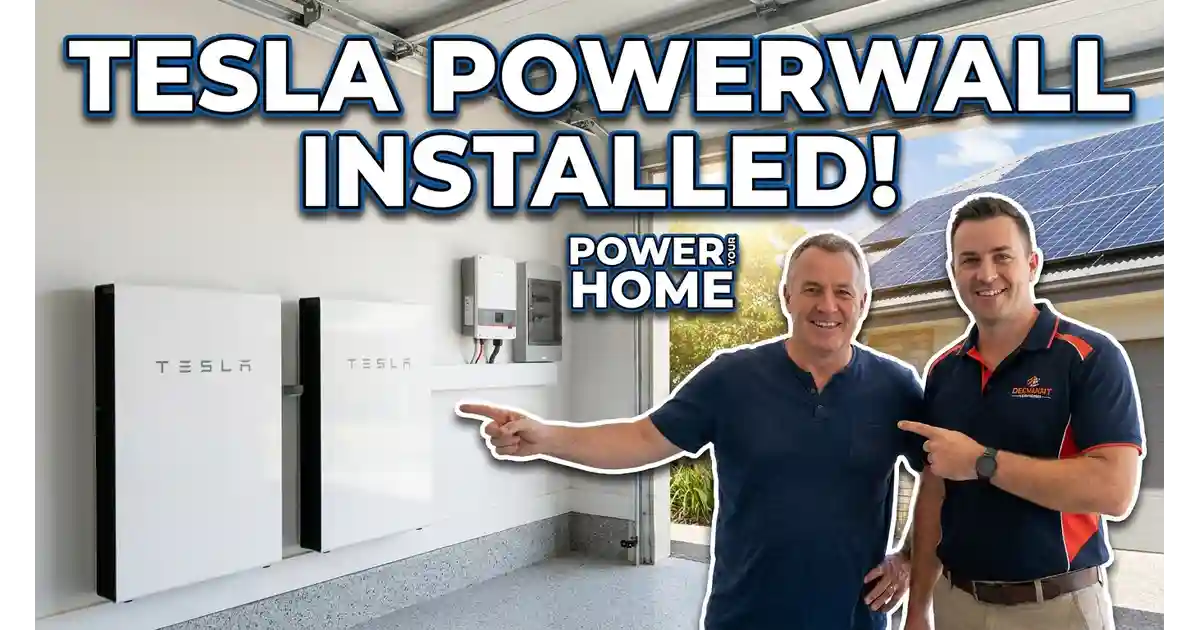
The Tesla Powerwall, often paired with Tesla solar panels, stores extra electricity your solar system produces during the day so you can use it at night or during a power outage.
| Spec | Powerwall 3 |
|---|---|
| Usable storage | 13.5 kWh |
| Continuous power output | Up to 11.5 kW |
| Built-in solar inverter | Yes (20 kW rated) |
| Warranty | 10 years |
| Approx. installed cost | $9,000 – $16,000, depending on installer and region |
One Powerwall can run essentials like your fridge, lights, and outlets for about a day during an outage. Most homeowners who want to run larger loads, like air conditioning or EV charging, during an outage install two or three units. Whether a Powerwall pays for itself depends on your situation. In areas with frequent outages, or utilities that pay very little for excess solar sent back to the grid, a battery often makes strong financial sense. In areas with full retail net metering and a reliable grid, the payback math is harder to justify on savings alone, though many owners still value the backup power and peace of mind.
Does Tesla Solar Work During a Power Outage?
Not by itself. A solar-only system, without a Powerwall, automatically shuts off during a grid outage for safety reasons, to avoid sending electricity back onto lines utility workers may be repairing.
Adding at least one Powerwall lets your solar system keep producing and powering your home even when the grid goes down, since the battery and inverter can safely isolate your home from the grid during the outage.
Does Tesla Sell a Solar Carport?
No. Tesla does not currently sell an official, Tesla-branded residential solar carport product. Tesla’s official lineup is solar panels, the Solar Roof, and the Powerwall.
What you’ll find instead are third-party solar installers who build a standard carport structure and mount Tesla panels and a Powerwall on top of it, or unrelated companies using “Tesla” in their name without any actual connection to Tesla, Inc. If you want a carport-style solar setup:
- Expect to work with a local or regional solar installer, not Tesla directly.
- Costs for a residential solar carport typically run about $30,000 to $100,000+ depending on size, and are usually higher per watt than a rooftop system, since you’re paying to build a new structure.
- A carport lets you angle panels for ideal sun exposure regardless of your roof’s orientation, and works well if you also want EV charging built in.
- Ask any installer directly whether they can supply genuine Tesla panels and Powerwall units as part of a carport build, since availability varies by region.
How Many Solar Panels Does It Take to Charge a Tesla?
A typical home solar system of around 8 kW, roughly 19 to 20 panels of 400 to 420 watts each, usually produces enough extra electricity to cover regular EV charging on top of normal household use.
The real number depends on how many miles you drive, your panels’ output in your climate, and how much electricity your home already uses. A daily commute of about 30 to 40 miles typically needs an extra 2 to 4 panels’ worth of production beyond what a home without an EV would need. If you’re sizing a system specifically to cover EV charging, tell your installer your typical annual mileage so the design accounts for it, rather than assuming a standard home system automatically covers it. Our solar panel calculator can help estimate the extra capacity you’d need.
Tesla Solar Availability: Oregon, Ohio, and Beyond
Tesla installs its Solar Roof and solar panel systems across most of the continental U.S., but availability, crew scheduling, and pricing vary a lot by region.
Tesla Solar Roof customers in Oregon generally have access to standard installation, though the state’s more variable weather and older housing stock in cities like Portland can add complexity, and cost, to roof tear-off and preparation work. Oregon’s net metering rules and any state solar incentives are worth checking separately from Tesla’s pricing, since they affect your real payback time.
Tesla Solar Roof projects in the Dayton, Ohio area are another market where Tesla operates, though installations in the Midwest can face longer scheduling windows than in Tesla’s higher-demand West Coast markets. Ohio’s electricity rates and local incentive programs vary by utility, so it’s worth getting a specific local quote rather than relying on national average pricing.
In any state, the smartest move is the same: get a direct quote from Tesla for your address, and compare it against at least one local installer’s quote for standard panels plus a separate roof, if you need one.
Tesla Solar Panels Review: Customer Service Reputation
Tesla solar panels consistently rank well on price in owner reviews, but customer service and scheduling speed are the most common complaints.
Across aggregated reviews on sites like SolarReviews, Google, and Trustpilot, and in owner communities like Reddit’s r/TeslaSolar, a consistent pattern shows up: homeowners are generally satisfied with equipment quality and pricing, but less satisfied with communication speed, especially during permitting delays or after-installation support requests. Because Tesla runs its solar business at a national scale rather than through a local office, some homeowners report longer wait times for a callback compared with a regional installer. If responsive, high-touch service matters more to you than saving a few percent on price, weigh that trade-off before choosing Tesla over a well-reviewed local installer.
Why Is My Tesla Solar Bill So High?
A high Tesla solar bill is usually explained by your financing type, the season, net metering timing, or a change in how much electricity your household is using.
- You’re on a lease or Power Purchase Agreement (PPA), not ownership. With these plans, your monthly invoice is based on how much electricity your system actually produced the previous month, multiplied by your contract rate. More sun means more production, which means a higher bill that month, even though you’re also saving more on your utility bill at the same time.
- Summer production spikes. Longer daylight hours and stronger sun mean your system produces more in summer, so a lease or PPA bill is often highest exactly when your system is working hardest.
- Net metering credit timing. If you’re on a net-metering plan, extra energy your system sends to the grid on sunny days becomes a credit for later, similar to rollover minutes on a phone plan. If your utility’s true-up period doesn’t match your production pattern, it can look like you’re being overcharged when you’re actually just early in your credit cycle.
- Usage crept up. It’s extremely common for people to use more electricity after going solar, since it feels “free.” Central air, EV charging, or new appliances can push your usage above what your system was sized to offset.
- A metering or wiring issue. In rarer cases, a bidirectional meter that isn’t reading correctly, or a system that isn’t exporting properly, can make your bill and your Tesla app numbers disagree. Routine solar panel maintenance checks can catch this early.
If your bill genuinely seems wrong, compare your utility meter reading against your Tesla app’s production numbers for the same time period. A mismatch between the two is the clearest sign something needs to be checked, rather than just normal seasonal variation.
The Biggest Misconception About Tesla Solar
Here’s the myth that trips up more shoppers than anything else: “Tesla solar panels and the Tesla Solar Roof are basically the same product, just different styles.” They aren’t. Tesla solar panels are a standard rooftop solar add-on, similar in function and efficiency to panels from other major brands, just usually priced lower. The Tesla Solar Roof is a completely different category: a full roof replacement product with roughly half the efficiency, several times the cost, and a totally different installation process. Comparing “Tesla solar” as one single option, without separating these two products, is the single biggest source of confused pricing expectations online.
How to Choose: A Simple Framework
| Your situation | Best fit |
|---|---|
| Roof is in good condition, just want solar added | Standard Tesla solar panels (TSP series) |
| Roof needs full replacement anyway | Tesla Solar Roof is worth comparing seriously |
| Roof space is tight and you need max output | A higher-efficiency brand like SunPower or REC |
| You want backup power during outages | Add a Powerwall to either panel option |
| You want solar over a driveway or parking area | A third-party installer building a carport with Tesla equipment |
| Budget is the top priority | Standard Tesla panels, cash purchase if possible |
Glossary of Terms
- TSP series
- Tesla’s in-house solar panel lineup (TSP-415, TSP-420, and variants), assembled at Gigafactory New York starting in 2026.
- Power Zone
- A section of a panel that can be optimized independently; more zones mean better performance when part of the panel is shaded.
- Powerwall
- Tesla’s home battery, which stores solar energy for use at night or during an outage.
- PPA
- Power-purchase agreement; a contract where you pay only for the electricity a system produces, rather than owning the equipment.
- Net metering
- A utility billing system that credits you for extra solar power your panels send back to the grid.
- Price-match guarantee
- Tesla’s offer to review and potentially match a lower competing quote for a comparable system.
Frequently Asked Questions
How much do Tesla solar panels cost?
Tesla solar panels typically cost $2.27 to $3.30 per watt installed in 2026. For an average 8 kW home system, that works out to roughly $18,000 to $26,000 before any state or local incentives.
Is it worth getting Tesla solar panels?
For many homeowners, yes. Tesla panels are usually priced at or below the national average, come with a 25-year warranty, and integrate cleanly with the Powerwall battery. The main trade-offs are slightly lower efficiency than premium brands like SunPower, and a customer service reputation that lags behind some local installers.
Does Tesla make its own solar panels?
As of 2026, yes. Tesla launched its own TSP-415 and TSP-420 panels, assembled at Gigafactory New York in Buffalo, ending its long-standing reliance on third-party manufacturers like Q Cells for new installations.
Why is my Tesla solar bill so high?
The most common reasons are being on a lease or PPA where your bill scales with how much electricity your system produced that month, seasonal production spikes in summer, net metering credit timing, or increased household electricity use after going solar.
What are the disadvantages of a Tesla Solar Roof?
The Solar Roof costs far more than standard panels, converts less sunlight into electricity (roughly 8–14% efficiency versus 19–22.5% for panels), can’t be tilted for optimal sun angle, and typically takes longer to install and repair. It only tends to make financial sense for homeowners who need a full roof replacement anyway.
Does Tesla solar work during a power outage?
Not without a Powerwall. A solar-only system automatically shuts off during an outage for safety reasons. Adding a Powerwall lets your system keep producing and powering your home when the grid goes down.
Does Tesla sell a solar carport?
No official Tesla-branded carport product exists. You’d need a third-party installer to build a carport structure and mount Tesla panels and a Powerwall on top of it.
A note on keyword scope: the keyword “Tesla Model X DIY solar” was intentionally left out of this guide. It combines a Tesla vehicle model with a DIY solar concept that doesn’t match this article’s topic, Tesla’s home solar panel and roof products, and doesn’t reflect a coherent, real search intent tied to this page. Forcing it in would have meant stuffing an unrelated phrase into an otherwise focused guide.
Tesla solar panels are a solid, budget-friendly option for most homeowners in 2026, especially if you’re already interested in a Powerwall or own a Tesla vehicle. They won’t beat premium brands on raw efficiency, but the price, warranty, and new domestically-made TSP series are competitive. The Tesla Solar Roof is a different animal entirely: a genuine roof replacement product that only pencils out financially if you need a new roof anyway. And if you’re picturing an official “Tesla solar carport,” know that it doesn’t exist as a Tesla-branded product, you’d be working with a third-party installer instead. Whichever direction you go, get a specific quote for your home and your state’s incentives, since national averages only tell part of the story. For the full picture on solar panels beyond Tesla, browse our complete solar panels guide.