
Solar Roof Guide · Updated for 2026
Solar Roof Guide: Mounting, Cost, Warranty & Solar Shingles vs. Panels
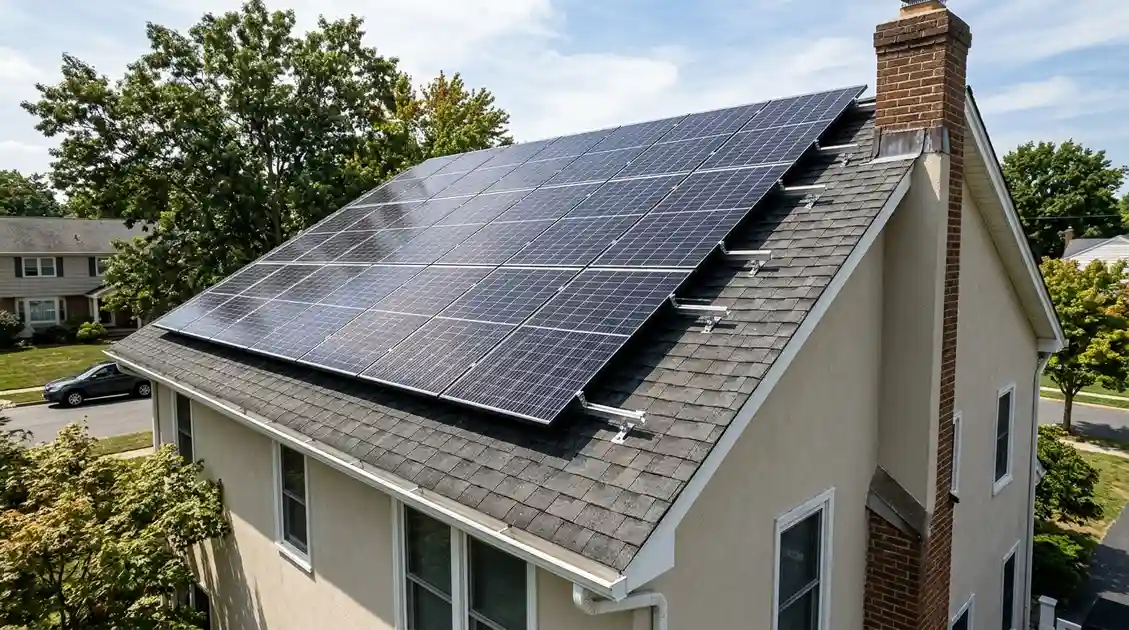
Most rooftop solar panels attach to your roof using metal rails or clamps, not glue or big holes. A trained installer bolts small metal feet into your roof rafters, seals each one with flashing, then bolts rails or clamps on top to hold the panels. Done correctly, this method does not cause leaks and does not void your roof warranty. Done poorly, it’s the #1 cause of solar-related roof problems.
This guide covers everything about a solar roof — how mounting works, which method fits your roof type, real cons most sites skip, how solar shingles compare to panels, and what happens when your roof needs work later.
What’s in this guide
- How solar panel mounting works
- Mounting solar panels by roof type
- Best roof pitch for solar panels
- Roof inspection before you install
- How many solar panels will fit on my roof?
- Do solar panels damage your roof? (the big misconception)
- Do solar panels void roof warranty?
- Replacing a roof that already has solar panels
- How long do solar panels last on a roof — and how to clean them
- Alternative mounting: wall, ground, fence, and patio
- Solar roof vs. solar panels: are solar shingles worth it?
- Tesla Solar Roof: how it compares
- Roofing and solar companies: who installs both?
- Does homeowners insurance cover a solar roof?
- The real cons of solar panels on your roof
- Mounting solar panels on vehicles: a different project
- Solar on commercial roofs
- Frequently asked questions
1. How Solar Panel Mounting Works
Solar panel mounting is the hardware system that holds panels onto your roof. Every solar panel roof mounting kit has three basic parts:
- Roof attachments (feet): Small metal brackets bolted into your rafters, sealed with flashing to keep water out.
- Mounting rails: Aluminum bars that run across the roof attachments. This is where rail mount solar panel systems get their name.
- Module clamps: Small clips that grip the edge of each panel and hold it to the rails.
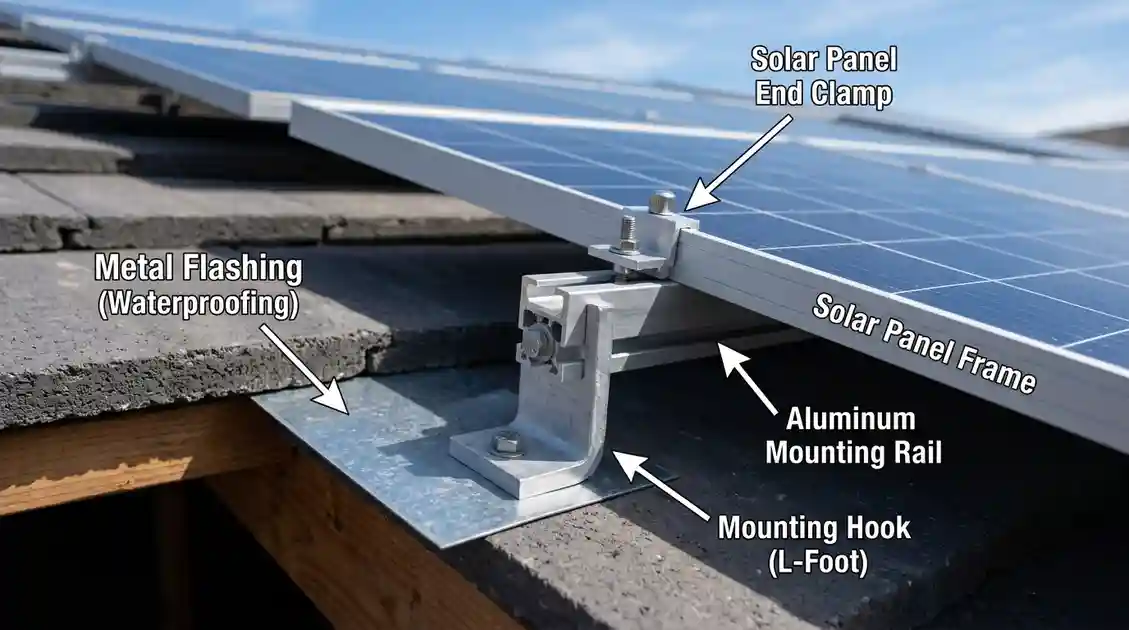
There’s also a rail-less option, sometimes called direct-attach. Instead of using rails, the panel clamps connect straight to the roof attachments. Rail-less kits use fewer parts, install faster, and cost 40-50% less in materials — but they need more precise planning since there’s no rail to adjust panel spacing later. Our solar panel mounting hardware guide breaks down every rail, clamp, and attachment type in more depth.
Roof solar panel mounting structure design always accounts for three loads: the weight of the panels, wind pushing up or sideways, and snow piling on top. A licensed installer calculates all three before choosing your mounting rails for solar panels and spacing them correctly.
A mounting kit for a solar panel system typically costs $0.20 to $0.35 per watt — about $2,000 to $3,500 in hardware for a 10 kW system, before labor.
Roof Solar Panels vs. a Solar Energy Roof
“Roof solar panels” and a “solar energy roof” get used interchangeably, but they describe two different products. Roof solar panels are standard panels bolted on top of your existing roofing material. A solar energy roof, like solar shingles, replaces the roofing material itself so the roof surface and the power system are the same product. Most homeowners are shopping for the first option without realizing the second one exists.
2. Mounting Solar Panels by Roof Type
Not every roof uses the same hardware. Here’s how solar roof mounting differs by roof material:
| Roof Type | Mounting Method | Roof Penetrations? | Notes |
|---|---|---|---|
| Asphalt shingle | Rail + standoff feet, through-flashed | Yes (flashed) | Most common U.S. roof type; well-proven method |
| Standing seam metal | Seam clamps (rail or rail-less) | No | Best roof type for solar — clamps grip the seam, no drilling |
| Corrugated/exposed-fastened metal | Rib-mounted brackets | Sometimes | Similar to standing seam, slightly more variation by profile |
| Clay or concrete tile | Tile hooks or tile replacement | Yes | Tiles are brittle and often need to be cut or swapped for a mounting tile |
| Slate | Specialized hooks, hand-cut work | Yes | The most fragile and labor-intensive roof type for solar |
| Flat/low-slope | Ballasted tilt racks | No (usually) | Weighted frames hold panels at an angle without drilling |
Solar panel mounts for standing seam roofs are widely considered the best option available. The clamps grip the raised seam using mechanical pressure, so there’s no drilling and no risk to the roof’s waterproofing. This is also why solar panels on steel roof installations are popular — steel roofs commonly use standing seam profiles.
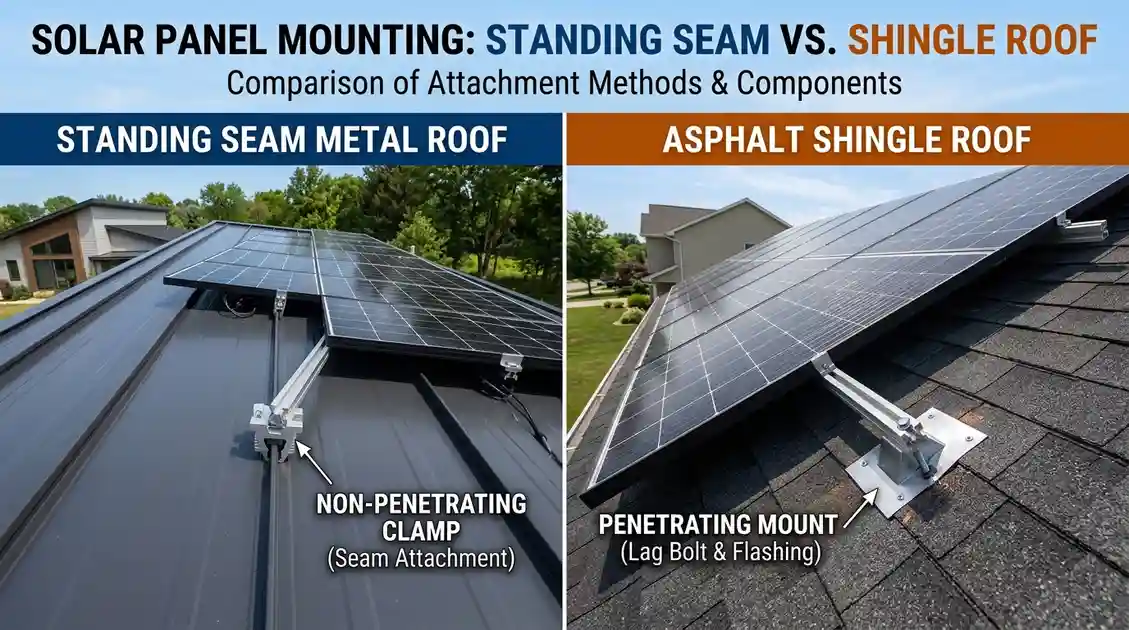
Solar panels on a slate roof are the trickiest of the group. Slate tiles crack easily, and mounting hardware often needs custom hangers that slide under the tile course above. If you have a slate roof, ask specifically about your installer’s slate experience — this isn’t a job for a general handyman.
3. Best Roof Pitch for Solar Panels
The best roof pitch for solar panels is generally between 30 and 40 degrees (roughly a 6/12 to 9/12 slope), matching the latitude of most U.S. homes.
But don’t panic if your roof isn’t in that exact range. Real-world data shows:
- A roof pitched at 4/12 (about 18°) still produces around 96% of maximum output — only a 4% loss.
- Flat roofs use tilted racking to recreate the ideal angle without changing the roof itself.
- Roof pitch matters less than roof direction. A south-facing roof at a mediocre pitch usually outproduces an east- or west-facing roof at a perfect pitch.
Solar panels on an east-facing roof typically produce about 15-20% less electricity than south-facing systems, since they catch the morning sun but miss peak afternoon sun. They still work — you may just need a couple of extra panels to hit the same output. Our solar panel calculator can help you estimate output for your roof’s exact pitch and direction.
4. Roof Inspection Before You Install
A proper roof inspection for solar panels happens before any hardware goes up, and it should check:
- Age and remaining lifespan. If your asphalt roof is more than 10-15 years old, most installers will recommend replacing it first (see Section 8).
- Structural condition. Any sagging, soft decking, or existing leaks need fixing before panels go on.
- Roof load. A standard rail-mounted system adds about 3 to 4 pounds per square foot — a properly built roof handles this easily, but older or already-strained structures may need reinforcement.
- Shading and obstructions. Chimneys, vents, and skylights all reduce your usable roof space and affect panel layout.
This inspection is one of the most valuable — and most skipped — steps in the entire process. Skipping it is the single biggest cause of the roof damage complaints covered in Section 6.
5. How Many Solar Panels Will Fit on My Roof?
The average number of solar panels for home use in the U.S. is between 15 and 22 panels, covering a typical household’s full electricity use.
To figure out how many solar panels will fit on your roof, you need two numbers: your usable roof space (after subtracting vents, chimneys, skylights, and shaded areas) and panel size — a standard residential 400 watt solar panel is about 17.5 square feet.
| System Size | Approx. Panels (400W each) | Roof Space Needed |
|---|---|---|
| 5 kW | 12-13 panels | ~220 sq ft |
| 7.5 kW | 18-19 panels | ~330 sq ft |
| 10 kW | 24-25 panels | ~440 sq ft |
| 12 kW | 29-30 panels | ~525 sq ft |
The average U.S. roof has about 1,700 square feet total, but only a portion is usable for solar once you account for pitch, shading, and obstructions. An installer will use satellite imaging or an on-site visit to give you an exact count for your home.
Solar panels for a shed roof follow the same math on a much smaller scale — sheds usually fit just 1-4 panels and work well for off-grid tools, lighting, or a small battery bank rather than powering a whole house.
Laying Out a Solar Array Roof
A solar array roof is simply your roof once the full panel layout is mapped onto it — rows and columns of panels arranged around vents, chimneys, and shaded edges to maximize usable space. Installers plan this layout digitally before any hardware goes up, so you can see exactly how many panels fit and where, before committing to a system size.
6. Do Solar Panels Damage Your Roof? (The Big Misconception)
This is the most common fear homeowners search for: does a solar roof leak, can solar panels damage your roof, or “solar panels ruined my roof.”
Solar panels themselves don’t damage roofs. Bad installation does.
- When a licensed installer properly flashes every mounting point, solar roof leaks are rare — most reported leak cases trace back to a poorly sealed penetration, not the panel itself.
- About 74% of installation-related leaks happen at the mounting point, caused by incorrect flashing technique, according to roofing warranty providers.
- Properly installed panels can actually protect the roof section underneath from UV rays and hail.
- Roof damage from solar panels is far more common with DIY installs, unlicensed crews, or companies that skip the roofing side of the job entirely.
One overlooked risk: the small gap (4-6 inches) between panels and the roof can attract birds, squirrels, and other wildlife looking for shelter. Nesting animals can chew through wiring, which is a real but preventable issue — ask your installer about critter guards, especially if you live somewhere with a lot of wildlife.
Does removing solar panels damage roof materials? It can, but only when done carelessly. A trained technician removes panels, mounting hardware, and any exposed screws, then seals the holes before your roof sits exposed. This is not a job for a DIY approach — mishandled removal is one of the more common causes of after-the-fact leaks.
7. Do Solar Panels Void Roof Warranty?
Do solar panels void roof warranty coverage? In most cases, no — as long as the installation follows your roofing manufacturer’s guidelines. Major shingle brands publish this in writing: GAF states that properly installed solar mounts do not void its limited shingle warranties, and Owens Corning’s published warranty terms stay in place even with a solar system on the roof, as long as the manufacturer’s install specs are followed.
| Scenario | What Happens to Your Warranty |
|---|---|
| Licensed installer follows manufacturer specs | Roof warranty stays intact |
| Installer drills without required flashing | Roof warranty can be voided at the affected area |
| DIY installation | Almost always voids the roof warranty |
| Roof develops a leak elsewhere, unrelated to panels | Original roof warranty still applies |
| Leak traced directly to a mounting point | Solar installer’s workmanship warranty applies instead |
A simple way to trace a leak: go into your attic and look at the underside of the roof above the leak. If it lines up directly under a mounting point, it’s likely a solar installation issue, not a general roofing issue.
Ask any solar company for their workmanship warranty (usually 5-10 years) and proof of liability insurance before signing anything. If a company can’t produce either, that’s a red flag.
8. Replacing a Roof That Already Has Solar Panels
How do you replace a roof with solar panels already installed? It’s a four-step process:
- Contact your solar installer. They disconnect the system, then remove the panels, racking, and wiring.
- Roofing work happens. Your roofer replaces or repairs the roof with the panels safely out of the way.
- Panels get reinstalled. The solar company reattaches racking and panels, then reconnects the system.
- Recommissioning. The system is tested and reconnected to the grid.
The cost to replace a roof with solar panels in place typically adds $1,500 to $6,000 to a standard reroofing job, mostly for the labor to remove, store, and reinstall the panels (roughly $200-$300 per panel). Full projects — roof plus solar panels and roof replacement combined — often run $10,000 to $28,000+ depending on roof size and materials. For a full breakdown of what a fresh system costs on its own, see our solar panel installation cost guide.
If your roof is more than 10-15 years old, most installers will recommend replacing it before going solar, rather than after — it avoids paying for removal and reinstall work twice within the system’s 25-30 year lifespan.
9. How Long Do Solar Panels Last on a Roof — and How to Clean Them
How long do solar panels last on a roof? Most panels carry a 25-year performance warranty and often keep producing useful power for 30-35 years, losing only about 0.4-0.5% of output per year.
- Cleaning: Rain handles most of it. In dry, dusty, or pollen-heavy areas, clean panels 1-2 times a year using plain water and a soft brush — never harsh chemicals or abrasive tools. Our solar panel cleaning guide covers the full process step by step.
- Safe washing: Always clean from the ground with a hose and extension brush when possible. Walking on panels risks cracking them and creates a fall hazard.
- Annual inspection: Check for loose hardware, corrosion, and secure wiring, ideally by a professional, especially after severe storms. See our solar panel maintenance guide for a full seasonal checklist.
10. Alternative Mounting Options: Wall, Ground, Fence, and Patio Structures
Your roof isn’t the only option. Homeowners with limited, shaded, or oddly angled roofs often consider:
- Ground mounts. Work well when your roof faces the wrong direction or doesn’t have enough space. Standard ground mounts are set in concrete or driven posts for larger arrays; ballasted ground mounts are held down by weight alone, with no digging required.
- Wall mounts. Work for homes with steep or shaded roofs but a sunny wall. A wall-mounted system produces less power than roof or ground mounts because vertical surfaces catch less direct sun, but it’s a practical backup option.
- Fence-mounted panels. A smaller-scale option, often used to power a single outbuilding, gate, or small off-grid setup rather than an entire home.
- Patio, gazebo, and pergola solar roofs. These combine shade structures with small solar arrays — popular for powering outdoor lighting, small appliances, or topping up a battery, though they produce far less than a full rooftop system.
11. Solar Roof vs. Solar Panels: Are Solar Shingles Worth It?
A “solar roof” (also called solar shingles or a Tesla Solar Roof) replaces your roofing material entirely with tiles that generate electricity. It costs 15% to 60% more than traditional panels for the same power, so it’s usually only worth it if you need a new roof anyway or want a seamless, panel-free look.
Some homeowners searching “solar roof” mean roof-mounted panels, and others mean solar panels and roof combined into a single product — shingles or tiles that double as both your roofing material and your power system. Here’s how the two compare:
| Factor | Traditional Solar Panels | Solar Shingles (Solar Roof) |
|---|---|---|
| Cost per watt | $2.50–$4.50 | $4.50–$8.00 |
| Typical whole-home cost | $15,000–$30,000 | $25,000–$80,000+ (higher for full Tesla Solar Roof systems) |
| Efficiency | 18–22% | 14–18% |
| Installation | Mounted on top of your existing roof | Replaces the roofing material itself |
| Best for | Most homeowners; roofs in good condition | Homes needing a full roof replacement anyway, or homeowners who want a seamless look |
| Lifespan claim | 25–30 year performance warranty | Up to 25–40 years depending on brand, though long-term data is still limited |
Solar shingles are a newer building-integrated photovoltaic (BIPV) technology, sometimes marketed as “solar roofing” or solar roof shingles rather than solar panels. They look like ordinary roofing from the street, which is their main appeal. But because they combine roofing and power generation into one product, both the material cost and the labor are higher, and repairs can be more involved than swapping a single roof-mounted panel. For most homeowners comparing total cost against total savings, traditional roof-mounted panels remain the better financial choice — solar shingles make the most sense when a full roof replacement is already needed. Read our full types of solar panels guide for how shingles compare with rack-mounted panel technologies.
Tesla Solar Roof: How It Compares
The Tesla Solar Roof is the best-known solar roof tiles product on the market: individual glass tiles that look like a standard roof but generate power, sold and installed directly by Tesla. It sits at the expensive end of the solar shingles market, typically running $25,000 to $80,000+ for a full roof depending on size and tile mix.
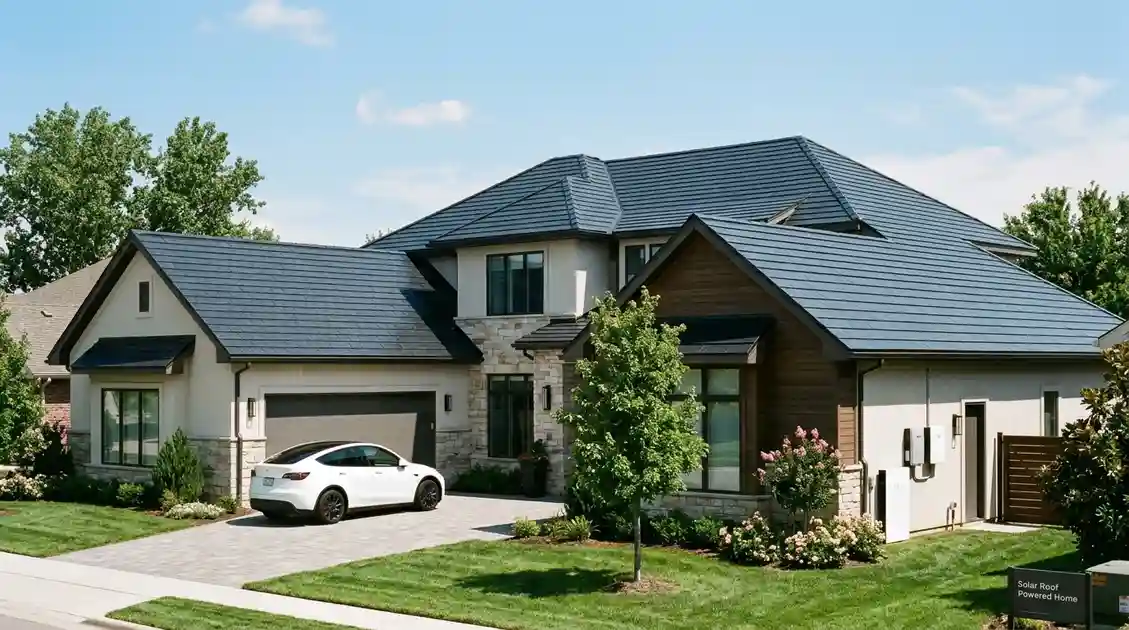
Tesla and Solar Roof are often searched together because Tesla acquired the original solar roof technology through its 2016 purchase of SolarCity, then spent several years refining the tile design and installation process. If you already have standard rooftop panels and are simply comparing them to a Tesla Solar Roof, know that a conventional system from a brand like Tesla solar panels (its rack-mounted panel line) costs far less per watt than the tile-based Solar Roof product.
12. Roofing and Solar Companies: Who Installs Both?
Roofing and solar used to be two separate trades hired separately — a roofer for the shingles, then a solar company for the panels. That’s changed. A growing number of companies now handle both under one roof (pun intended), which can simplify warranty claims and scheduling for the reroofing scenario covered in Section 8.
Citadel Roofing and Solar, for example, is one of several California-based companies built specifically around this combined roofing-and-solar model, handling both the roof replacement and the panel installation as one project instead of coordinating two separate contractors. If you’re in a market where solar roofing companies like this operate, bundling the two jobs can save a round of scheduling and reduce finger-pointing if a leak shows up later. Our directories of solar installers near me and solar installation companies can help you compare combined roofing-and-solar contractors against standalone solar installers in your area.
13. Does Homeowners Insurance Cover a Solar Roof?
Usually yes, but the details vary by insurer. Rooftop solar panels are often automatically included under your existing dwelling coverage, since they’re treated as part of the home’s structure. Solar shingles, because they replace the roofing material itself, sometimes need to be specifically added or confirmed with your insurer, and a few companies charge a higher premium or offer only partial replacement coverage for them.
Before installing either option, call your insurance company and ask for written confirmation of coverage, including what happens after storm damage and whether the solar system changes your premium.
14. The Real Cons of Solar Panels on Your Roof
Most sites only list benefits. Here are the honest cons of a solar roof installation:
- Future roof work gets more complicated. Any repair under the array means paying to remove and reinstall panels (Section 8).
- A small risk of improperly sealed penetrations, which can lead to slow leaks years later if the original installer used low-quality flashing.
- Wildlife nesting under the panel gap can chew wiring if left unaddressed.
- Weight and wind load need real engineering, especially on older roofs or in high-wind/heavy-snow regions.
- Panels reduce roof access for future maintenance, chimney sweeps, or gutter work in that area.
- Aesthetic and glare concerns, especially with complex roof layouts or close neighbors.
- Insurance paperwork can take extra time, particularly for solar shingle systems (see Section 13).
None of these are reasons to avoid solar — they’re reasons to hire a properly licensed, insured installer and ask the right questions before signing. If you’re still deciding whether solar makes sense for your home at all, our are solar panels worth it guide walks through the full cost-versus-savings picture.
15. Mounting Solar Panels on Vehicles: A Different Project
If you searched for solar panel mounts for an RV, van, truck, or boat, you’re looking at a genuinely different project than home rooftop solar. Vehicle and boat mounting usually uses Z-brackets (small aluminum L- or Z-shaped brackets) or VHB adhesive tape, not the rail systems used on houses. Panels are often flexible or lightweight rather than the rigid glass panels used on homes, since curved RV and van roofs need to flex with the surface. Our RV solar panels guide covers this mounting style and sizing in full detail.
This topic — battery sizing, charge controllers, flexible vs. rigid panels, and vehicle-specific mounting hardware — is different enough from home rooftop mounting that it deserves its own dedicated guide rather than a short summary here.
16. Solar on Commercial Roofs
Commercial solar roofs often use flat-roof ballasted systems rather than the pitched-roof rail systems covered in this guide, along with different structural codes, larger scale hardware, and different depreciation rules. Business owners considering this should see our dedicated guide on commercial solar ROI rather than treat it as a bigger version of home rooftop mounting — the math and mounting approach are genuinely different.
17. Frequently Asked Questions
What is the downside of having solar panels on your roof?
The main downsides are a more complicated future roof repair (panels need removing first), a small risk of leaks if the original install was done poorly, potential wildlife nesting in the gap under panels, and reduced roof access for other maintenance. None of these are reasons to avoid solar — they’re reasons to choose a properly licensed installer.
What happens when you need a new roof but have solar panels?
Your solar installer removes the panels, racking, and wiring first. Your roofer then completes the repair or replacement. Once the roof work is done, the solar company reinstalls everything and reconnects the system. This typically adds $1,500 to $6,000 to the cost of a standard roof replacement, and the whole process usually takes about a week from removal to reinstallation.
Do solar panels damage roof shingles?
Not when installed correctly. Panels are attached using flashed mounting points that keep water out, and the panels themselves can actually shield the shingles underneath from sun and hail damage.
How many solar panels fit on an average roof?
Most U.S. homes have room for well more than they need — the limiting factor is usually your electricity usage, not roof space. A typical home uses 15-22 panels out of the 40+ that could physically fit on an average-sized roof.
Is it better to mount solar panels on the roof or the ground?
Roof mounting is more common and doesn’t use up yard space. Ground mounting is better when your roof faces the wrong direction, is heavily shaded, or doesn’t have enough usable area — it also lets you angle panels for ideal sun exposure regardless of your roof’s pitch.
Is a solar roof (solar shingles) better than solar panels?
For most homeowners, no. Solar shingles cost 15% to 60% more than panels for the same power and are best reserved for homes that need a full roof replacement anyway or want a seamless look. Traditional panels remain the better financial choice for most roofs.
Does homeowners insurance cover a solar roof?
Usually yes, but coverage varies. Some insurers add solar panels or solar shingles to your existing dwelling policy automatically, while others require an added rider or charge a higher premium. Always confirm coverage in writing before installation.
Bottom Line
Solar roof compatibility comes down to one thing: quality of installation. Done right — with proper flashing, correct hardware for your roof type, and a pre-installation inspection — solar panels won’t damage your roof or void its warranty, and they can even protect the shingles underneath. Done poorly, mounting mistakes are the real source of the leaks, damage, and warranty headaches you’ll read about online.
If you’re weighing traditional roof-mounted panels against an integrated solar roof product like solar shingles or a Tesla Solar Roof, the honest math still favors traditional panels for most homes — solar shingles earn their higher price mainly when a full roof replacement is already on your to-do list.
Before signing with any installer, ask three things: what mounting system they use for your specific roof type, whether they carry a workmanship warranty of at least 5-10 years, and how they’ll handle roof work if you need it 10 or 15 years down the road.