Solar Panel Installation: The Complete Step-by-Step Guide
How solar panel installation really works, what it costs in 2026, how long it takes, and answers to every question homeowners ask before they sign a contract.
Solar panel installation is the process of mounting solar panels on a roof or other suitable surface and connecting them to an inverter and your home’s electrical system. A typical residential installation includes a site assessment, system design, permits, mounting, wiring, electrical connection, inspection, and final activation. It combines engineering, permitting, and skilled electrical work — it is not just bolting panels to a roof. This guide walks through exactly how solar panel installation works, from the first site visit to the final utility approval. It also covers 2026 pricing, financing, roof types, batteries, and the questions homeowners ask most. If you’re still deciding whether solar makes sense for your home, see our guide to whether solar panels are worth it first.
Solar panel installation typically takes one to three days for the physical installation of a residential system, although the complete process can take several weeks because permits, utility approval, inspections, and scheduling happen before and after the installation. The installer first evaluates your roof and electricity use, designs the system, obtains permits, installs the mounting system and panels, connects the inverter and electrical equipment, and completes the required inspection and utility steps.
Solar panel installation is the complete process of adding a solar power system to a home or business — site assessment, system design, permitting, mounting, wiring, inspection, and utility interconnection. The physical mounting is only one part of a multi-week process.
What Is Solar Panel Installation?
Solar panel installation is the full process of putting a solar power system on a home or business. It includes checking the roof, designing the system, getting permits, mounting the panels, wiring everything, passing inspection, and getting approval from the power company. The physical mounting work is only one small part of the job.
Whether you’re planning a residential install, thinking about doing it yourself, or scoping out a commercial project, knowing the full process helps you set a realistic timeline, avoid costly mistakes, and know what to expect from your installer at every stage. For a broader look at panel options first, see our complete solar panels guide.
How Do Solar Panels Work?
Solar panels turn sunlight into electricity you can use in your home. Each panel is made of small solar cells. When sunlight hits a cell, it knocks electrons loose and creates a flow of direct current (DC) electricity. An inverter then changes that DC power into alternating current (AC) power, which is the type of electricity your lights, TV, and appliances use.
- Solar cells capture sunlight and make DC electricity.
- Wiring carries that electricity from the panels to the inverter.
- The inverter converts DC power into usable AC power.
- Your electrical panel sends that power to outlets and appliances.
- Extra power you don’t use can be sent to the grid, often earning you a bill credit through net metering (more on that below).
For a deeper walkthrough of the science behind this, see our guide to how solar panels work.
Benefits of Installing Solar Panels
The main benefits of solar panel installation are lower electric bills, protection from rising energy prices, a smaller carbon footprint, and a possible boost to home resale value.
Lower electric bills
Homeowners typically save tens of thousands of dollars over 25 years, since the panels replace power you would otherwise buy from the utility.
Price protection
Once your system is paid off, your main electricity cost is fixed, so you’re less exposed to rising utility rates.
Cleaner energy
Solar power produces electricity without burning fossil fuels, which lowers your household’s carbon footprint.
Backup power option
Pairing panels with a battery can keep key circuits running during a grid outage.
Installing Solar Panels: The 7-Step Process
How Does Solar Panel Installation Work?
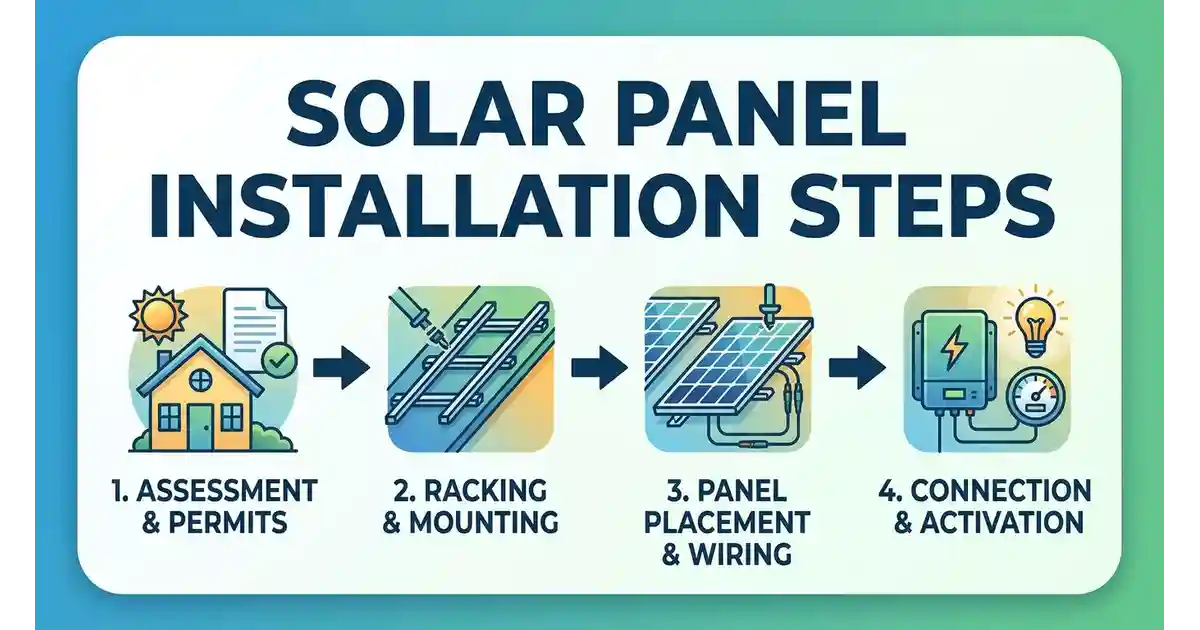
Solar panel installation works in stages: an installer assesses your roof and electricity use, designs a system around that data, secures permits and approvals, installs the mounting hardware and panels, connects the inverter and electrical equipment, and then has the work inspected and approved by the utility before the system can operate. Each stage is detailed step-by-step below.
Installing solar panels typically takes anywhere from a few weeks to a few months from signed contract to system activation — though the on-roof work itself is usually done in just one to three days.
-
Site Assessment and Roof Evaluation
Before anything goes on the roof, an installer checks your roof’s condition, direction, shading, and strength. This step decides whether your roof can hold the extra weight of a system, whether trees will block the sun, and which mounting method fits your roof. Roofs with unusual materials, like slate or corrugated Ondura panels, often need special flashing and mounting hardware, so this is also when an installer flags roof-specific issues.
-
System Design and Solar Panel Installation Angle Calculation
Using the roof assessment, the installer designs a layout that captures the most sun all year. Panel tilt matters here — a solar panel installation angle calculator usually factors in your latitude, roof pitch, and seasonal sun path to find the tilt that produces the most yearly energy. In most of the continental U.S., an angle close to your latitude, adjusted for local climate and roof limits, gives the best year-round output. The final design is documented in a solar panel installation diagram, which shows panel placement, wiring paths, and equipment locations, then submitted with the permit paperwork.
-
Permitting and HOA Approval
Nearly every area in the U.S. requires an electrical and building permit before work begins, and installers usually handle this paperwork for you. Rules vary by state — installing solar panels in Georgia involves different permitting timelines and grid-connection rules than installing panels on a roof in Billings, Montana, so local knowledge matters. If you belong to a homeowners association, you may also need HOA design approval, since many states protect a homeowner’s right to install solar but still let HOAs set reasonable style guidelines.
-
Equipment Delivery and Electrical Preparation
Once permits are approved, panels, inverters, racking, and wiring are delivered. The electrician confirms your home’s electrical panel can safely handle the new system, upgrading it first if needed.
-
Physical Installation
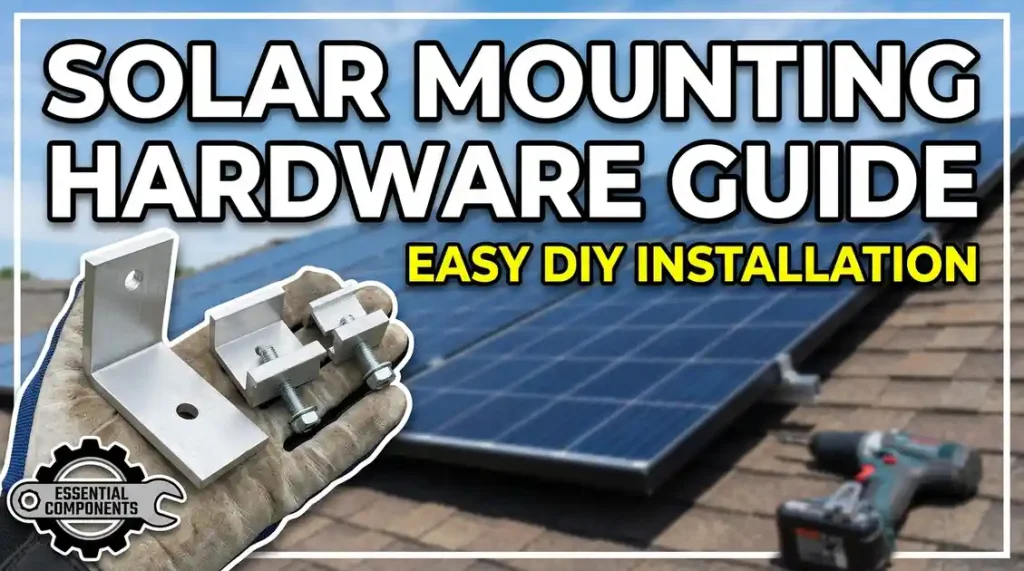
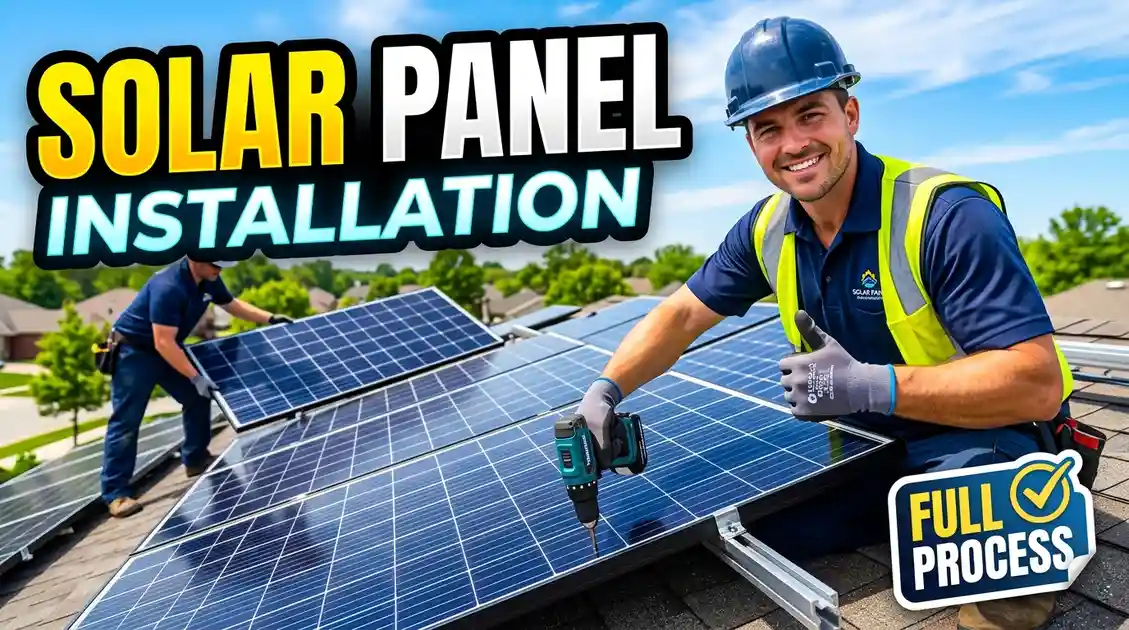
This is the hands-on phase: racking is bolted to the roof structure, panels are attached to the racking, and wiring is run to match the electrical diagram made during design. For a typical home system, this stage takes one to three days. Larger or more complex roofs — like slate roofs, which need careful hook-style flashing to avoid cracking tiles — can take longer.
-
Inspection
A local building or electrical inspector reviews the finished installation to confirm it meets code before it can connect to the grid.
-
Utility Interconnection and Activation
The final step is utility approval — your power company inspects the system, or reviews the paperwork, and installs a two-way meter if you’re on net metering. Once approved, the system is switched on. This last step often takes the longest, sometimes several weeks, simply because of utility processing queues rather than anything happening at your home. The U.S. Department of Energy’s interconnection resources outline how these utility approval standards generally work.
Do You Need a Permit to Install Solar Panels?
Usually, residential solar installations require permits and approvals, but the exact requirements depend on the local jurisdiction and system type. Permits may cover electrical work, structural mounting, or other aspects of the installation. Grid-connected systems may also require utility approval before operation.
Solar Panel Installation Tools
The exact toolkit varies by installer and roof type, but a typical crew works with:
- Monitoring tools: laptops or tablets to activate the inverter and connect the system to its app.
- Roof and mounting tools: drills, lag bolts, flashing kits, torque wrenches, and roof-specific mounts (hook-style for slate, corrugated clips for Ondura-type roofing).
- Racking and rail tools: rail cutters, mounting clamps, and levels for lining up panel rows.
- Electrical tools: wire strippers, crimping tools, conduit benders, multimeters, and MC4 connector crimpers.
- Safety gear: harnesses, roof anchors, and fall-protection gear, required by OSHA for most roof work.
How Long Does It Take to Install Solar Panels?
Commercial solar installations take much longer. Because commercial systems are bigger, involve more complex engineering (structural roof checks, higher-capacity wiring, sometimes three-phase power), and often need more permitting and utility coordination, a commercial project can take anywhere from a few months to over a year from design to activation.
What Happens After Solar Panels Are Installed?
After the panels and electrical equipment are installed, the system may need an inspection and utility approval before it can operate as a grid-connected system. Once approved and activated, the inverter converts the panels’ electricity into usable power for the home.
A monitoring system may also allow homeowners to track solar production and system performance, which is worth checking regularly in the first few weeks to confirm the system is producing as expected.
Solar Panel Installation Cost in 2026
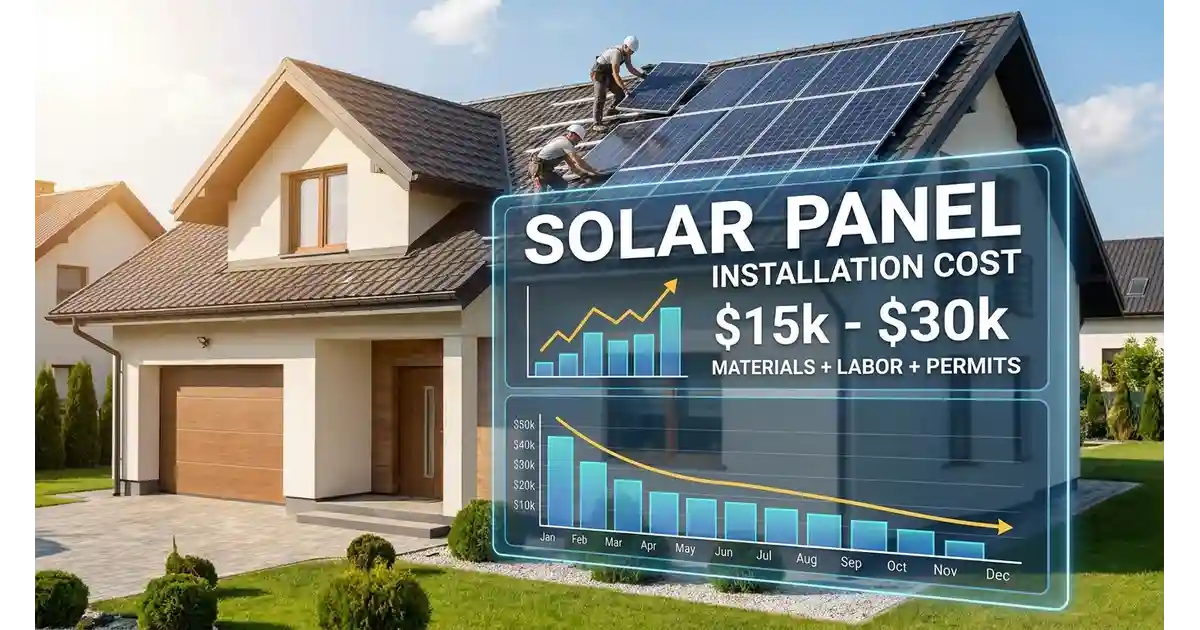
Most U.S. homeowners pay between about $15,000 and $30,000 before incentives for a residential solar system in 2026, which usually works out to roughly $2.40 to $3.50 per watt of installed capacity. A common 7–8 kW system for an average home often lands near $18,000–$22,000, while larger 11–12 kW systems can run closer to $30,000–$40,000. For a deeper state-by-state breakdown, see our solar panel installation cost guide.
How Much Does It Cost to Install Solar Panels? By System Size
| System size | Typical price range | Best fit |
|---|---|---|
| 4–6 kW (small) | $12,000–$21,000 | Smaller homes, partial bill offset |
| 7–8 kW (average) | $18,000–$22,000 | Most single-family homes |
| 11–12 kW (large) | $29,000–$42,000 | Larger homes, high usage, EV charging |
Tax credit update: The 30% federal residential solar tax credit that homeowners could claim directly ended for systems purchased outright as of December 31, 2025. Homeowners buying a system with cash or a loan in 2026 generally cannot claim that federal credit themselves. Some lease and power-purchase-agreement (PPA) arrangements can still pass through a related business tax credit as a lower monthly payment. State and local incentives still vary widely, so it’s worth checking what your state currently offers before you sign a contract.
Solar Panel Instal Cost: What Changes the Price
What changes the price: system size, local labor rates, roof complexity, equipment brand, and whether you add battery storage. Batteries typically add $7,000 to $18,000 to the total project cost. Panels themselves are only a fraction of the bill — most of the cost is “soft cost”: labor, permitting, design, and customer acquisition. Our solar panel calculator can help you sanity-check a quote against your own usage. According to the U.S. Energy Information Administration, residential electricity prices have continued to rise in many states, which is part of why more homeowners are weighing solar despite the upfront cost.
Solar Panel Financing Options
Homeowners typically pay for solar panels in one of four ways: cash, a solar loan, a lease, or a power-purchase agreement (PPA).
Cash
You own the system outright from day one and get the biggest long-term savings, but it needs the largest upfront payment.
Solar loan
You still own the system and can qualify for ownership-based incentives, but you pay interest, which raises the total cost over time.
Lease
A third party owns the panels and you pay a fixed monthly fee to use them; simple, but you typically don’t qualify for ownership tax benefits.
Power-purchase agreement (PPA)
A third party owns the system and you pay only for the electricity it produces, often at a lower rate than the utility.
Getting quotes from two or three local companies is still the most reliable way to compare pricing, warranty terms, and financing offers for your specific home.
Types of Solar Panels
The three main types of solar panels are monocrystalline, polycrystalline, and thin-film, and they differ mainly in efficiency, cost, and lifespan.
| Type | Efficiency | Typical lifespan | Notes |
|---|---|---|---|
| Monocrystalline | Highest | ~35–40 years | Made from a single crystal; costs more per watt but performs best in limited roof space. |
| Polycrystalline | Medium | ~25–30 years | Made from fragmented silicon crystals; lower cost, slightly lower efficiency. |
| Thin-film | Lowest | ~15–20 years | Lightweight and flexible; most affordable but least efficient and durable. |
For the full rundown, including where bifacial and PERC panels fit in, see our guide to types of solar panels.
Net Metering: How It Affects Your Installation
Net metering is the billing system that credits you for extra solar electricity your panels send back to the grid, which lowers what you owe your utility.
When your panels make more power than your home is using, the extra electricity flows out through your bidirectional meter and back onto the grid. Your utility tracks that exported power and applies it as a credit toward electricity you draw from the grid later, such as at night. Net metering rules vary a lot by state and even by utility, so it’s worth asking your installer what program applies in your area during the design step, since it can affect how big a system makes financial sense for your home.
Solar Panel Battery Installation
Adding battery storage to a solar panel installation is increasingly common for homeowners who want backup power during outages or who want to use more of their own solar energy instead of exporting it to the grid. Our solar batteries guide covers the main battery types and how to size a bank for your home.
Solar panel battery installation usually happens alongside the main electrical work (Step 4/5 above), but it adds its own layer of complexity:
- Timeline impact: a battery can add a few days to a couple of weeks to the permitting and inspection phase, since it’s reviewed as an extra system component.
- Placement: batteries are usually wall-mounted in a garage, utility room, or exterior wall, not on the roof, and must meet clearance and ventilation code rules.
- Extra permitting: battery systems often need a separate fire and electrical permit on top of the standard solar permit, since they involve stored energy and, sometimes, transfer switches for backup circuits.
- Integration: the installer configures the battery to work with your inverter (many batteries need a compatible hybrid inverter or a separate battery inverter) and sets which circuits stay powered during an outage.
DIY Solar Panel Installation: What’s Actually Legal
In most U.S. states, installing your own solar panels is legal, but the system must still pass the same permitting, electrical inspection, and utility approval as a professional install before it can connect to the grid.
Can You Install Solar Panels Yourself?
Some small solar projects can be suitable for DIY installation, but a residential grid-connected solar system is much more complex. Roof work, electrical connections, grounding, system commissioning, permits, inspections, and utility requirements can all be involved.
If you install a system yourself, check local building and electrical requirements first. For a permanent grid-connected home system, using a qualified solar installer can simplify permitting and help ensure the system is installed correctly. For a smaller off-grid, RV, or backup project, a pre-matched solar panel kit can be a simpler DIY starting point than sourcing every component separately.
Some states and cities require a licensed electrician to handle the final grid connection even on an otherwise DIY project, so check permission rules with your local building department before starting.
Do you need permission to install solar panels? Generally yes — even a simple home installation needs a permit, and skipping this step can lead to fines, forced removal, or a denied utility connection later.
The practical tradeoff with DIY installation is that it usually forfeits manufacturer and installer workmanship warranties. Mistakes in roof penetration or wiring can also create safety hazards or insurance issues, which is why most homeowners still hire a licensed installer despite the higher cost.
Professional Installer vs. DIY
| Factor | Professional Installation | DIY |
|---|---|---|
| Design | Installer handles system design | Homeowner handles design |
| Permits | Often handled by installer | Homeowner may handle them |
| Electrical work | Qualified professionals | Depends on local rules |
| Roof work | Professional crew | Homeowner |
| Utility approval | Often coordinated by installer | Homeowner may coordinate |
| Best for | Residential systems | Small/simple projects |
Installing on Different Roof Types
Roofing material significantly changes mounting hardware, labor time, and cost for a solar installation.
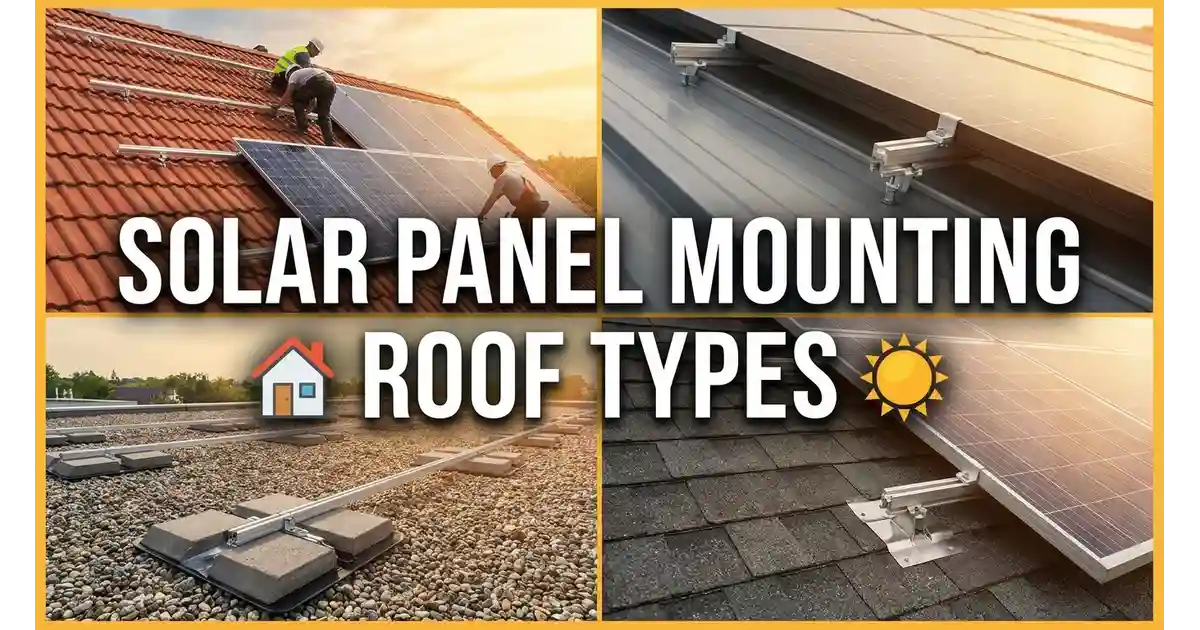
- Slate roofs: need specialized hook-style mounts that slide under slate tiles without drilling through them, since slate is brittle and prone to cracking with standard lag-bolt mounts.
- Ondura and corrugated roofing: need mounts designed for corrugated profiles, since standard flat-roof flashing won’t seal properly against the wave pattern.
- Asphalt shingle roofs: the most common and usually the simplest and cheapest roof type to install on, using standard flashed lag bolts.
If you’re unsure which category your roof falls into, a site assessment (Step 1 above) will confirm the right mounting approach before installation day.
Does Your Roof Need to Be Replaced Before Solar Installation?
Not necessarily. Solar panels can be installed on many roof types, but the roof should have enough remaining useful life to make installation worthwhile. If a roof needs major repairs or replacement soon, completing that work before installing solar can avoid the cost and disruption of removing and reinstalling the panels later.
What Makes a Roof Good for Solar Panels?
A good solar roof has sufficient usable space, receives strong sunlight, is structurally sound, and has enough remaining life to support the installation. Roof orientation, pitch, shading, vents, chimneys, and other obstructions can affect how many panels can be installed and how much electricity the system produces.
Bifacial Solar Panel Installation
Bifacial panels capture sunlight on both the front and back of the panel, using reflected light to boost total output.
- Mounting height matters more: bifacial panels do best with more clearance between the panel and the roof or ground, since the rear face needs exposure to reflected light.
- Racking choice: some installers pair bifacial panels with elevated ground-mount or carport-style racking to maximize rear-side gain; on a standard roof, the gain is smaller since the roof surface sits close to the panel.
- Surface reflectivity: light-colored roofing or ground surfaces, like white membrane roofs or light gravel, increase the bifacial gain, which is worth considering during design.
Can Solar Panels Be Installed on a Manufactured Home?
Yes, manufactured and mobile homes can have solar panels, but they need a few extra checks during the site assessment.
- Roof structure: many manufactured homes have thinner roof decking or different framing spacing than site-built homes, so the installer must confirm the roof can hold the extra weight and that mounts anchor into structural framing.
- Roof material: metal roofing is common on manufactured homes and needs standing-seam clamps rather than standard shingle flashing.
- Utility and permitting rules: some manufacturers and warranties have specific guidance on roof penetrations, and some jurisdictions treat manufactured homes differently for permitting, so confirm with your local building department and the home’s manufacturer first.
Installing Solar Panels on a Pergola
A pergola-mounted system lets homeowners add solar without roof penetrations, which works well when the roof has poor sun orientation or when you want a shaded patio with dual-purpose panels overhead.
- Permitting: ground-level or freestanding structures like pergolas can fall under different structural permitting rules than roof-mounted systems, confirmed during design and permitting.
- Structural requirements: the pergola frame usually needs to be engineered or reinforced to carry panel and racking weight, plus wind and snow loads, since standard pergola construction isn’t built for this.
- Wiring run: conduit needs to run from the pergola down to the main electrical panel, a separate design step from a roof-based wiring diagram.
Solar Panel Removal and Reinstallation
Solar panel removal and reinstallation is most often needed when a roof underneath an existing system needs replacing or repairing.
An installer detaches and safely stores the panels, roofers complete their work, then the panels are reinstalled and re-tested. Pricing and timelines vary by installer and local market. What can vary by state:
- Permitting requirements for the reinstall — some places treat it as a minor permit, others require a full fresh review.
- Installer availability and lead times, which shift with local demand and roofing season.
- Utility re-interconnection rules, since some utilities require notice or re-approval after a system is taken offline and reconnected.
Homeowners in any state should confirm these specifics with a local licensed installer, since removal/reinstall timelines depend more on local scheduling and code than on the technical process itself.
Wildlife Protection: Critter and Bird Guard Installation
Solar panel critter guard installation, also called bird guard installation, fits a mesh barrier around the edge of the array to stop birds and small animals from nesting underneath and damaging the wiring, while still allowing airflow for cooling.
This is typically a quick add-on to an existing system rather than a full installation project.
Special Cases
Solar Panels on a Motorhome or RV
Installing solar panels on a motorhome differs from a home install. It usually involves a smaller DC-based system, roof-mounted or portable panels, a charge controller, and a connection to the vehicle’s battery bank rather than grid interconnection, since most RV systems are designed for off-grid use. See our dedicated guides to RV solar panels and portable solar panels for setup specifics.
Solar Panel Installation for Schools
Institutional projects like schools typically involve larger system sizes, bulk buying, and grant or incentive programs specific to public institutions, which makes planning and financing more involved than a typical home install — closer in scale to a commercial solar panel installation than a residential one.
“Free” Solar Panel Installation Offers
Some programs marketed as “free” installation are actually leases or power-purchase agreements, where a third party owns the system and you pay for the electricity it produces rather than the hardware itself. Understand the ownership structure before agreeing to any no-upfront-cost offer, since it affects whether you qualify for tax credits and how much you save long-term.
NAICS Code for Solar Panel Installation
For business registration, licensing, or government contracting, solar panel installation typically falls under NAICS code 238220 (Plumbing, Heating, and Air-Conditioning Contractors), or in some systems is grouped under electrical contractors. Confirm the correct code with your state’s contractor licensing board, since classification can affect licensing and contract eligibility.
Does Installing Solar Panels Void Your Roof Warranty?
It can, depending on your roofing manufacturer and how the installation is done.
Roof penetrations from mounting hardware can void certain roof warranties if not installed correctly. This is why many professional installers use flashing methods designed to preserve warranty coverage, and why it’s worth confirming with both your roofer and solar installer before work begins. Separately, solar equipment usually comes with three layers of coverage worth understanding: a product warranty (covers defects), a performance warranty (covers power output over time), and a workmanship warranty from your installer (covers their labor). Most manufacturer and installer workmanship warranties don’t cover labor costs for repairs and offer little protection if the installer goes out of business, so ask about the length and transferability of each before signing.
Maintenance After Installation
Solar panels need very little upkeep, but a few simple habits protect your investment.
- Monitor performance: most systems come with a monitoring app that shows daily energy production, so you can spot a sudden drop that might signal a problem.
- Keep panels clear: occasional cleaning removes dust, pollen, and debris that can reduce output, especially in dry climates. See our solar panel cleaning guide for a full walkthrough.
- Trim overhanging branches: new shading from tree growth can lower production over time.
- Schedule a periodic inspection: a licensed technician can check wiring, connections, and mounting hardware every few years as part of routine solar panel maintenance.
Common Mistakes to Avoid
- Skipping multiple quotes: pricing, equipment, and warranty terms vary a lot between installers.
- Ignoring permit and HOA steps: skipping them can delay activation or force you to remove an installed system.
- Undersizing or oversizing the system: a system that doesn’t match your actual electricity use wastes money either way.
- Choosing an unlicensed installer to save money: it can void warranties and create safety or insurance problems.
- Not asking about roof warranty impact: confirm flashing methods before work begins, especially on older roofs.
Choosing a Solar Panel Installation Company
Since installation quality directly affects safety, performance, and warranty validity, most homeowners work with a licensed local installer rather than a fully DIY project.
When comparing solar panel installation companies, it’s worth asking:
- Are they licensed and insured in your state, and do they pull their own permits?
- Do they offer a workmanship warranty separate from the panel and inverter manufacturer warranties?
- Can they provide local references or examples of past installs on a similar roof type?
- How do they handle post-install issues — monitoring, maintenance, or removal/reinstall if you need a new roof later?
What Should You Ask a Solar Installer?
Before signing a solar installation contract, ask:
- What equipment will be installed?
- What size system are you proposing?
- How much electricity is the system expected to produce?
- What warranties cover the panels, inverter, labor, and roof penetrations?
- Who handles permits and inspections?
- Who handles utility interconnection?
- What happens if the roof needs repairs?
- What monitoring system is included?
- What is included in the quoted price?
- Are batteries included or optional?
You can compare local options directly through our solar installers near me directory.
Residential vs. Commercial Solar Panel Installation

| Residential | Commercial | |
|---|---|---|
| Typical system size | 4–12 kW | 50 kW–multiple MW |
| On-site installation time | 1–3 days | Weeks to months |
| Total project timeline | 6–12 weeks | Several months to 1+ year |
| Electrical complexity | Standard single-phase | Often three-phase, higher capacity |
| Common financing | Cash, loan, lease, PPA | PPA, direct ownership, lease, tax equity |
Commercial solar panel installation follows the same seven-step sequence as a home install, but with more engineering review, more complex permitting, and a much longer utility interconnection process.
How to Learn Solar Panel Installation
For people interested in the trade itself rather than getting panels installed, common paths include:
- NABCEP certification (North American Board of Certified Energy Practitioners), the industry-standard credential for solar installers in the U.S.
- Electrician apprenticeships, since a licensed electrician background is a common route into solar, especially for the interconnection work.
- Manufacturer training programs, offered by panel, inverter, and racking makers, covering product-specific installation methods.
- Community college and trade school programs, many of which now offer dedicated solar and renewable energy courses.
Glossary of Solar Terms
- Inverter
- The device that converts the DC electricity panels produce into the AC electricity your home uses.
- Net metering
- A utility billing system that credits you for extra solar power sent back to the grid.
- Interconnection
- The formal utility approval that lets your solar system connect to the public power grid.
- kW / kWh
- Kilowatt (kW) measures a system’s power output capacity; kilowatt-hour (kWh) measures energy used or produced over time.
- PPA
- Power-purchase agreement — a contract where a third party owns the panels and you pay only for the electricity produced.
- AHJ
- Authority Having Jurisdiction — the local building or electrical department that issues your solar permit.
- Bifacial panel
- A solar panel that captures sunlight on both its front and back sides.
Frequently Asked Questions
How long does it take to install solar panels?
The physical installation usually takes one to three days, but the full process including permitting and utility interconnection typically takes six to twelve weeks for a home system.
Is it legal to install your own solar panels?
Yes, in most states, but the system still needs a permit, an electrical inspection, and utility interconnection approval before it can be legally connected to the grid.
Can I install solar panels myself?
Some small solar projects can be suitable for DIY installation, but residential grid-connected systems involve roof work, electrical connections, permits, inspections, and utility requirements. Professional installation is often the simpler option for a home system.
Do I need permission to install solar panels?
Yes — a permit from your local building department is required in nearly every U.S. area, and HOA approval may also apply if you belong to one.
Does installing solar panels void a roof warranty?
It can, if mounting hardware is installed incorrectly. Proper flashing techniques for your specific roof type typically preserve the warranty.
How much does it cost to install solar panels in 2026?
Most homeowners pay between about $15,000 and $30,000 before incentives for a typical residential system, or roughly $2.40 to $3.50 per watt. The federal 30% tax credit for direct purchases ended December 31, 2025.
How long does it take to install commercial solar panels?
Commercial installations range from a few months to over a year from design through activation, depending on system size and site complexity.
Does solar panel installation include battery storage?
Not by default. Battery storage is typically a separate add-on that needs its own equipment, wiring, and often an extra permit, though many installers can bundle it into the same project.
Can bifacial solar panels be installed on any roof?
Yes, but their extra output benefit is smaller on a standard roof mount than on elevated racking, like carports or ground mounts, where more reflected light can reach the back of the panel.
Can you install solar panels on a manufactured or mobile home?
Generally yes, provided the roof structure and material are assessed for weight capacity and proper mounting hardware, which is confirmed during the site assessment step.
Can solar panels be mounted on a pergola instead of a roof?
Yes, though the pergola typically needs structural reinforcement or purpose-built engineering to safely support the panels and withstand wind and snow loads.
What is a solar installation panel?
A solar installation panel refers to the physical solar panel unit that’s mounted as part of a full solar panel installation system — including racking, wiring, and the inverter setup that connects it to your home.
What happens after solar panels are installed?
After installation, the system may need inspections and utility approval before a grid-connected system can operate. Once approved and activated, the inverter converts solar electricity into usable power for the home.
Does my roof need to be replaced before solar panels are installed?
Not necessarily. If the roof is structurally sound and has enough remaining life, solar panels can usually be installed without replacing it. If major roof work is needed soon, replacing the roof first may make more sense.
Every installation follows the same basic sequence — assessment, design, permitting, physical work, inspection, and interconnection — but roof type, system size, local permitting speed, and utility processing times all affect how smoothly and quickly it goes. Getting quotes from two or three licensed local installers is still the best way to get an accurate timeline and process breakdown for your specific roof and location.