
By Munir Ahmed — Solar Installer & Technician | Updated August 2026
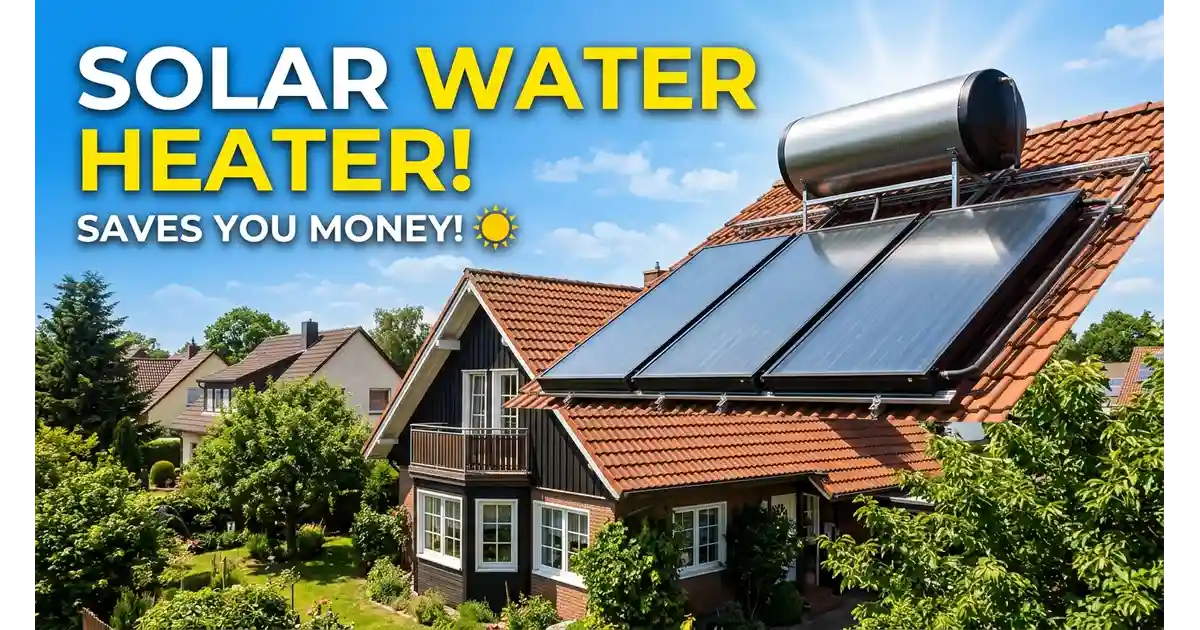
A solar water heater uses energy from the sun to heat water for homes, businesses, and other buildings. Instead of depending completely on electricity or gas, it captures solar heat and uses it to produce hot water.
You may also see terms such as solar hot water heater, solar water geyser, solar geyser water heater, and solar-powered hot water system used for similar products. The basic idea is the same: collect heat from sunlight, transfer that heat to water, and store the hot water until you need it.
For homeowners, the attraction is simple. Hot water is something we use every day, and using sunlight to produce some of that heat can reduce the amount of conventional energy needed.
This guide explains how solar water heaters work, the different types available, installation and cost, benefits and drawbacks, maintenance, common problems, and what to consider before buying one.
What Is a Solar Water Heater?
A solar water heater is a system that uses sunlight to heat water. A typical setup includes solar collectors, a storage tank, pipes, insulation, valves, and, depending on the design, pumps and controls.
The collector is the part that receives sunlight. It absorbs solar radiation and turns it into useful heat. That heat is then transferred to water or to a heat-transfer fluid before the hot water is stored in a tank.
It is worth making one distinction here: a solar water heater is not the same thing as a solar photovoltaic panel. PV panels generate electricity — you can read more about how solar panels convert sunlight into electricity. A solar thermal water heater, by contrast, captures the sun’s heat directly, without that extra conversion step. If you’re comparing technologies more broadly, this overview of different types of solar panels is a useful companion read.
The process is fairly simple:
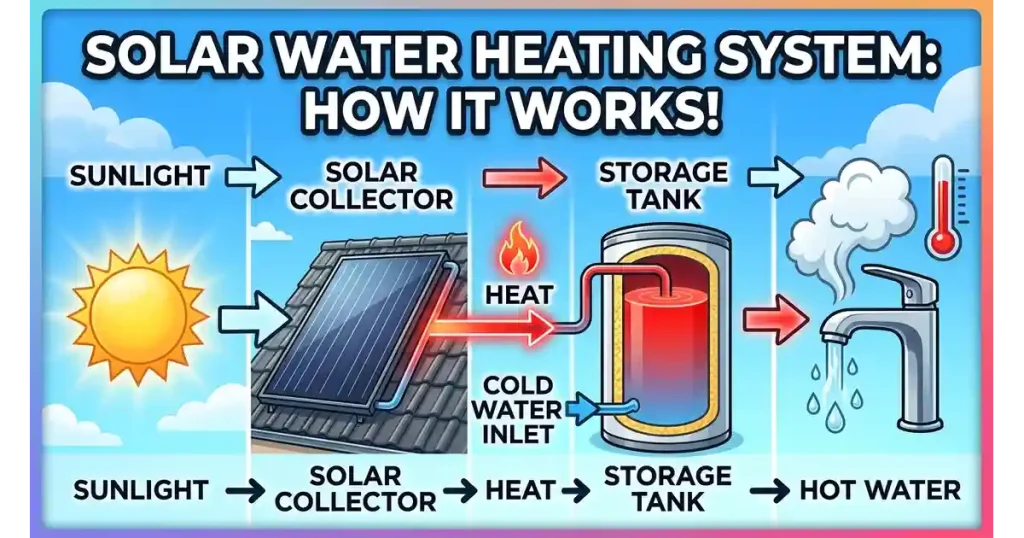
Sunlight → Solar collector → Heat → Hot water
That direct use of solar heat is what makes solar water heating different from using electricity generated by solar panels to run a conventional electric water heater.
How Does a Solar Water Heater Work?
The exact design varies, but the basic operation is easy to understand.
During the day, sunlight reaches the solar collector. The collector absorbs that energy and heats water or a heat-transfer fluid. The heated water then moves to the storage tank, where it remains available for showers, washing, cleaning, and other uses.
A typical cycle looks like this:
- Sunlight reaches the solar collector.
- The collector absorbs solar energy.
- Water or heat-transfer fluid picks up the heat.
- The heated water moves to the storage tank.
- Hot water is supplied when it is needed.
Some systems move water naturally through the system, while others use a circulation pump. The design you choose depends on climate, installation conditions, system size, and budget.
How Solar Power Water Heating Works
Solar power water heating uses sunlight as a source of thermal energy rather than first converting sunlight into electricity.
When sunlight hits the collector, the absorber becomes hot. Water or another heat-transfer fluid passing through the collector takes up that heat. The heated water can then be stored for later use.
This is one reason solar thermal systems can be efficient for hot water: the system is using the sun’s heat directly instead of taking an extra step through electricity generation.
Solar Water Heater System Components
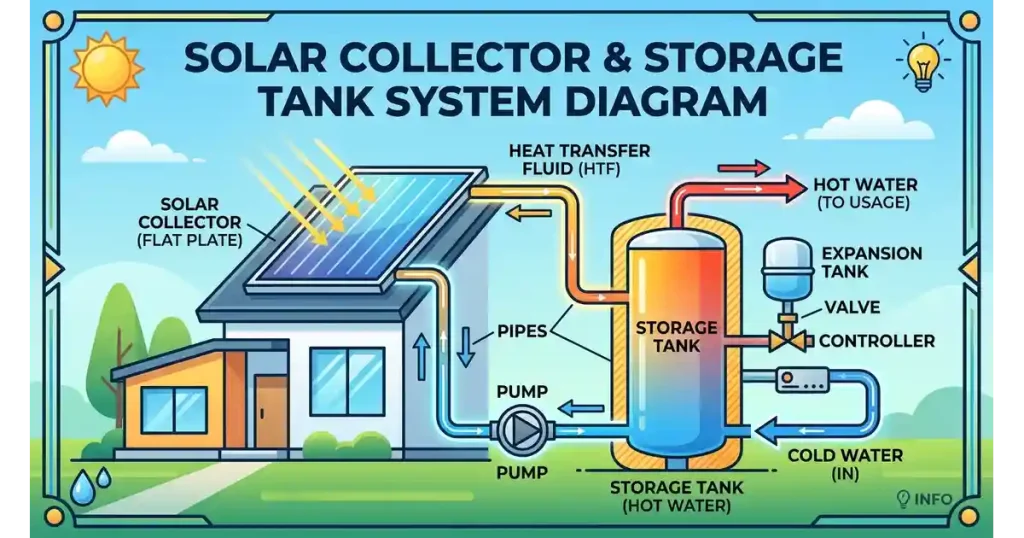
Although solar water heaters can look quite different from one another, most residential systems have the same basic components.
Solar Collector
The solar collector is the part that captures sunlight.
Two common collector designs are flat-plate collectors and evacuated tubes. Both are designed to absorb solar radiation and transfer the resulting heat to water or a heat-transfer fluid.
Storage Tank
The storage tank holds the hot water until you need it.
Good insulation matters here. If the tank loses too much heat, the system may have to work harder to provide the temperature you want.
Pipes and Insulation
Pipes carry water or heat-transfer fluid between the collector, storage tank, and building.
Insulating these pipes helps prevent heat from being lost along the way, particularly when the collector and tank are some distance apart.
Circulation Pump
Some systems use a circulation pump to move water or heat-transfer fluid through the collectors.
This is common in active solar water heating systems. Passive systems, on the other hand, can rely on natural circulation.
Controller and Sensors
Active systems may use temperature sensors and a controller to monitor the system and decide when the pump should operate.
These controls can help the system circulate fluid only when useful heat is available.
Backup Heater
Solar energy is not available at the same level every day. A backup heater can therefore be useful during cloudy weather, winter, or periods when the household needs more hot water than the solar system can provide.
Solar Hot Water Heater Systems
A solar hot water heater is designed to use solar energy to heat water for residential or commercial use.
Depending on the system, it may include flat-plate collectors, evacuated tubes, a storage tank, circulation equipment, and backup heating.
The main benefit is that sunlight supplies part of the heat that would otherwise come from electricity, gas, or another conventional energy source.
For a household that uses a lot of hot water and receives plenty of sunlight, this can make solar hot water a practical long-term option.
Solar Water Geyser: How It Works
A solar water geyser is another term commonly used for a solar water heating system.
The name may vary from one market to another, but the principle remains the same. Solar collectors absorb sunlight, the captured heat is transferred to water, and the hot water is stored until it is needed.
Many solar water geysers also include electric backup heating. This allows the household to have hot water even when the solar collectors cannot produce enough heat.
Solar Geyser Water Heater vs Conventional Water Heater
A solar geyser water heater gets much of its energy from sunlight, while a conventional water heater normally relies on electricity, gas, or another fuel.
A solar geyser does not necessarily eliminate conventional heating altogether. In many installations, backup heating is included so the system remains useful when solar production is low.
| Feature | Solar Geyser Water Heater | Conventional Water Heater |
|---|---|---|
| Main energy source | Sunlight | Electricity or fuel |
| Solar dependence | Yes | No |
| Backup heating | Often available | Usually primary heating |
| Energy savings potential | High in suitable conditions | Depends on energy source |
| Storage | Usually included | Usually included |
Solar Hot Water Systems for Home
A solar water heater for home use can supply hot water for showers, baths, dishwashing, laundry, and general cleaning.
The right size depends mainly on how much hot water the household actually uses. A two-person home does not normally have the same requirements as a large family. For a broader look at whole-home solar setups, see this guide to home solar panel systems.
Before installing a solar water heater for home use, look at the available sunlight, shading, roof or ground space, climate, water quality, and whether backup heating will be needed.
A properly sized system is usually a better investment than simply buying the largest system available.
Types of Solar Water Heaters
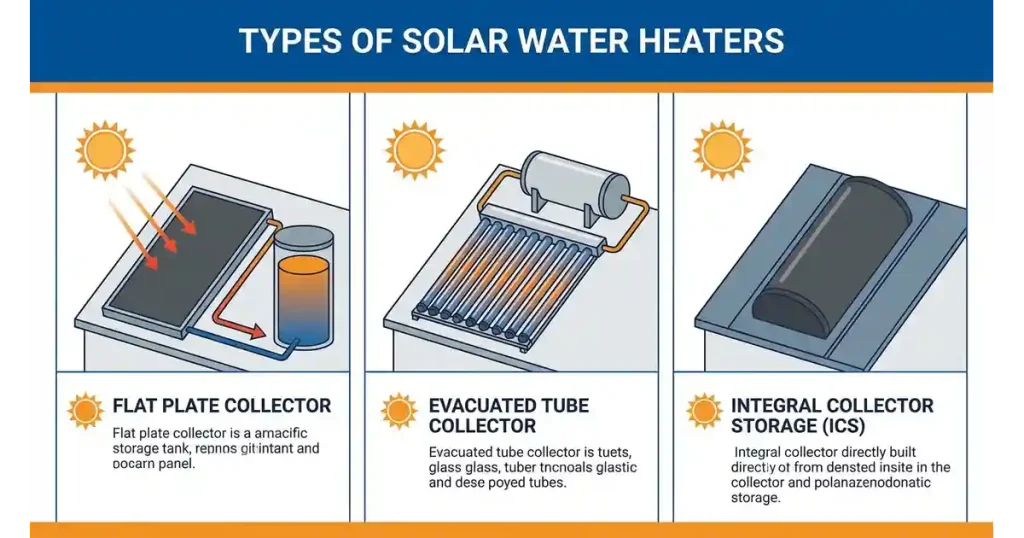
There is no single solar water heater that is ideal for every property. The most suitable design depends on climate, sunlight, household demand, installation space, maintenance requirements, and budget.
Flat-Plate Solar Water Heater
A flat-plate solar water heater uses a broad absorber surface to collect sunlight.
The absorber becomes hot when sunlight reaches it, and that heat is transferred to water or a heat-transfer fluid moving through the collector.
Flat-plate systems have a relatively simple design and are widely used for residential hot-water applications.
Evacuated Tube Solar Water Heater
An evacuated tube solar water heater uses a series of glass tubes designed to reduce heat loss.
The vacuum around the absorber helps limit heat escaping from the collector. This design can perform well in colder conditions, although the suitability of the system still depends on the local climate and installation.
Active Solar Water Heating
An active solar water heating system uses mechanical equipment, usually a circulation pump and controls, to move water or heat-transfer fluid through the system.
This type of system gives the installer more control over circulation and can be useful for larger or more complicated installations.
Passive Solar Water Heating
A passive solar water heating system does not depend on a mechanical circulation pump.
Instead, it uses natural movement caused by differences in water temperature and density.
Passive designs can be simpler because they have fewer mechanical components, but whether they are a good choice depends on the climate, building layout, and system design.
Solar Power Hot Water: How Solar Energy Heats Water
A solar power hot water system uses sunlight to produce heat that can be stored and used later.
The collector absorbs solar radiation and transfers the heat to water or another heat-transfer fluid. Once the water reaches the required temperature, it can be stored in an insulated tank.
How much hot water the system produces depends on factors such as collector size, sunlight, weather, collector efficiency, storage capacity, and daily household demand.
Heating Water With Solar Energy
Heating water solar technology is based on a straightforward principle: sunlight is captured and converted into thermal energy.
When sunlight reaches a solar collector, the absorber heats up. Water or heat-transfer fluid moving through the collector absorbs that heat and carries it to the storage system.
This means the system can use solar heat directly for hot water rather than generating electricity first and then using that electricity to heat water.
Solar Water Boiler: What Does It Mean?
The term solar water boiler is sometimes used when people are looking for equipment that uses solar energy to heat or store hot water.
The terminology can be confusing because a traditional boiler and a solar water heater are not necessarily the same technology. A typical solar water heating system uses solar collectors and a storage tank rather than a conventional fuel-fired boiler.
In everyday searches, however, terms such as solar boiler, solar geyser, solar water heater, and solar hot water system may all refer to equipment intended to provide solar-heated water.
When comparing products, look beyond the name. Collector type, storage capacity, efficiency, installation requirements, water quality, and backup heating are much more useful factors when deciding which system is right for you.
Solar Water Heater Installation and Cost
Installation has a major effect on how well a solar water heater performs.
Before installing a system, check:
- Available roof or ground space
- Direct sunlight
- Shading from trees and buildings
- Roof structure
- Household hot-water demand
- Local climate
- Water quality
- Collector orientation
- Collector tilt
- Pipe length
- Storage tank location
- Backup heating requirements
A high-quality collector will not perform as expected if it is placed in heavy shade or installed incorrectly. If you’re weighing overall project costs, this breakdown of solar panel installation costs can help you understand how labor, equipment, and site conditions affect the final price.
Solar Hot Water Installation Cost
The solar hot water installation cost can vary considerably from one property to another.
The final price may depend on:
- Collector type
- Number of collectors
- Storage tank capacity
- Mounting equipment
- Plumbing requirements
- Pumps and controllers
- Backup heater
- Labor
- Roof or ground installation
- Brand and component quality
It is better to compare the total installed system rather than looking only at the price of the collector. For a step-by-step look at what installation involves, see this guide to the solar panel installation process.
A low-cost system may look attractive initially, but poor-quality components or a difficult installation can lead to higher maintenance costs later.
How Many Solar Collectors Do You Need?
There is no universal number of collectors that works for every home.
The required collector area depends on:
- Number of people
- Daily hot-water consumption
- Local solar radiation
- Collector efficiency
- Desired water temperature
- Storage capacity
- Backup heating
The goal is to match the system to actual hot-water demand. Oversizing the system does not automatically mean better performance. You can get a rough sense of your numbers using this solar panel calculator.
Solar Water Heater Benefits
The biggest reason people consider solar water heating is the opportunity to use sunlight for a task they already pay to power: heating water.
Lower Conventional Energy Use
A solar water heater can provide part or much of the heat needed for hot water, reducing the amount of electricity or fuel required.
The actual reduction depends on sunlight, system design, household usage, and the amount of backup heating required.
Renewable Energy Source
Sunlight is a renewable source of energy.
A solar thermal system allows a property to use that naturally available energy for hot-water production instead of relying entirely on conventional fuels.
Potential Energy Savings
Using solar heat can reduce conventional energy consumption.
The amount saved varies from one property to another because electricity or fuel prices, sunlight, hot-water demand, and system efficiency are all different.
Long-Term Value
A properly designed and maintained system can provide hot water for many years.
The actual service life depends on the collectors, tank, plumbing, water quality, climate, installation quality, and maintenance.
Backup Heating
Backup heating makes the system more practical because solar energy is not equally available every day.
An electric or other conventional backup heater can provide additional hot water when the solar system cannot meet demand.
Disadvantages of Solar Water Heaters
Solar water heating has clear advantages, but it is not a perfect solution for every property.
Higher Upfront Cost
The initial investment can be higher than some conventional water heaters because you are paying for collectors, storage, mounting, plumbing, and installation.
Depends on Sunlight
A solar water heater works best when the collectors receive adequate sunlight.
Cloudy weather, shading, shorter winter days, and poor collector orientation can reduce heat production.
Requires Installation Space
The collectors need a suitable location with good solar exposure.
A property surrounded by tall buildings or trees may not have enough unobstructed sunlight for a solar thermal system to perform well.
Requires Maintenance
Solar water heaters are not completely maintenance-free.
Collectors, pipes, valves, pumps, storage tanks, insulation, and other components may need periodic inspection or servicing.
Solar Water Heater vs Electric Water Heater
Both systems can provide hot water, but the way they use energy is different.
| Feature | Solar Water Heater | Electric Water Heater |
|---|---|---|
| Main energy source | Sunlight | Electricity |
| Output | Heat | Heat |
| Sunlight required | Yes | No |
| Backup heating | Often useful | Usually integrated |
| Upfront cost | Often higher | Usually lower |
| Conventional energy use | Can be reduced | Required |
A solar water heater can be particularly attractive in areas with strong sunlight and regular hot-water demand.
An electric water heater, however, has the advantage of being able to heat water whenever electricity is available, regardless of the weather.
Solar Water Heater vs Solar PV
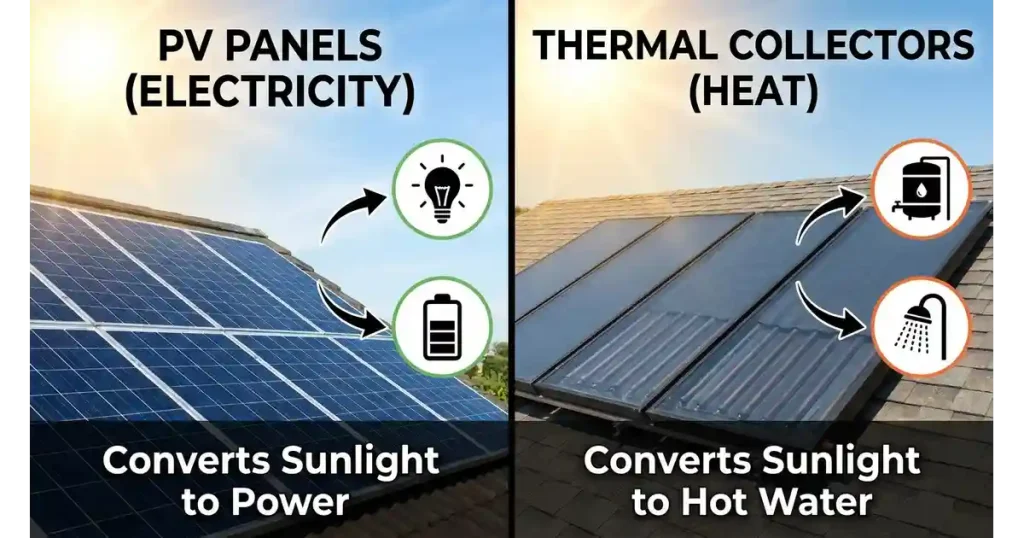
These technologies are often confused, but they perform different jobs.
Solar Water Heater
Sunlight → Solar thermal collector → Heat → Hot water
Solar PV
Sunlight → PV panel → Electricity → Electric water heater
A solar water heater captures solar heat directly.
A solar PV system generates electricity first. That electricity can then be used to operate an electric water heater or other appliances. If you’re deciding between the two, this explainer on how solar panels work is a good place to start.
Which option makes more sense depends on the property’s overall energy needs and the specific goal of the installation.
Can a Solar Water Heater Work on Cloudy Days?
Yes. A solar water heater can still collect some solar energy when the sky is cloudy.
The important point is that output is normally lower because less solar radiation reaches the collector.
If reliable hot water is important throughout the year, a backup heater can fill the gap when solar production drops.
Can a Solar Water Heater Work in Winter?
Yes, a solar water heater can operate in winter.
However, performance may fall because winter usually brings shorter daylight hours, lower solar radiation, and colder conditions.
In areas where temperatures can fall below freezing, system design becomes especially important. An indirect system with suitable freeze protection may be a better option.
Can a Solar Water Heater Work at Night?
The collector cannot collect new solar heat at night because there is no sunlight.
That does not mean you have no hot water after sunset. If the system produced and stored enough hot water during the day, that stored water can be used at night.
This is why storage capacity and good tank insulation matter.
How Much Hot Water Can a Solar Water Heater Produce?
The answer depends on the system and the conditions where it is installed.
Important factors include:
- Collector area
- Solar radiation
- Collector efficiency
- Storage capacity
- Incoming water temperature
- Desired water temperature
- Weather
- System design
For that reason, there is no single production figure that applies to every solar water heater. If you want to check whether your system is performing as expected, this guide on how to know if your solar panels are working covers useful diagnostic signs, many of which apply to solar thermal setups too.
Solar Water Heater for Pool Heating

A solar water heater for pool use is designed differently from a normal domestic hot-water system.
Solar pool heating usually circulates pool water or another heat-transfer medium through solar collectors to raise the pool temperature.
The amount of collector area required depends on the pool’s size, local climate, available sunlight, desired water temperature, and whether a pool cover is used.
For a swimming pool, a dedicated solar pool heating system may therefore be more suitable than a standard household solar water heater.
DIY Solar Water Heater
A DIY solar water heater can be an interesting project for learning how solar thermal energy works.
Simple experimental systems can demonstrate how dark surfaces absorb sunlight and how that heat can be transferred to water.
A permanent household system is a different matter. It involves pressurized plumbing, high-temperature water, structural loads, valves, storage tanks, and possible scalding hazards.
For residential use, proper design and professional installation are generally the safer approach. You can compare installers using this directory of solar installers near you.
Solar Water Heater Maintenance
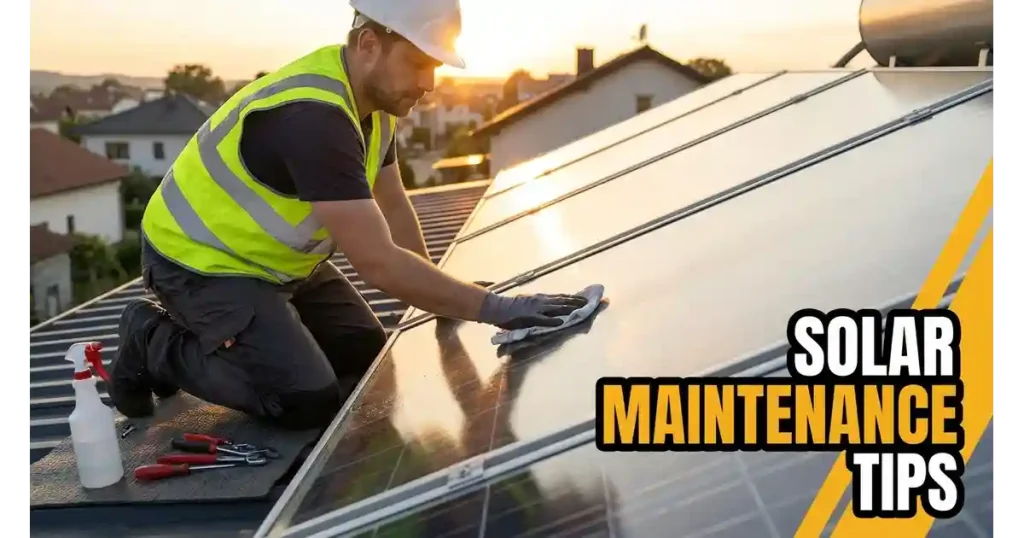
Regular maintenance can help keep a solar water heating system working properly.
Depending on the system, maintenance may include:
- Inspecting collectors
- Checking pipes and connections
- Checking insulation
- Inspecting valves
- Checking circulation pumps
- Monitoring water temperature
- Cleaning collectors when necessary
- Inspecting the storage tank
- Checking heat-transfer fluid where applicable
Water quality also deserves attention. Hard water can cause mineral buildup inside plumbing and heating components, which may affect performance over time. For general upkeep guidance, see these solar panel maintenance tips, and if collector cleaning is part of your routine, a professional solar panel cleaning service can help maintain performance.
Common Solar Water Heater Problems
Even a well-designed system can develop problems. The good news is that many issues have fairly straightforward causes.
Not Enough Hot Water
If the water is consistently too cool, possible causes include insufficient collector area, high household demand, shading, poor orientation, cloudy weather, poor insulation, circulation problems, or incorrect system sizing.
Water Is Not Getting Hot
Possible causes include a collector problem, poor circulation, plumbing issues, faulty sensors, controller problems, or inadequate sunlight.
Water Gets Cold Quickly
If water heats normally but becomes cold much sooner than expected, check for poor tank insulation, excessive heat loss, insufficient storage capacity, or plumbing problems.
Solar Water Heater Leaking
Leaks can develop around pipes, valves, connections, collectors, or the storage tank.
A significant leak should not be ignored. Having the system inspected by a qualified technician can help prevent further damage and safety problems.
Is a Solar Water Heater Worth It?
For many homes and buildings, a solar water heater can be a worthwhile investment, particularly when the property receives good sunlight and has consistent hot-water demand.
But the financial case is different for every property.
Consider:
- Installation cost
- Local electricity or fuel prices
- Solar resource
- Household water consumption
- System efficiency
- Maintenance requirements
- Expected lifespan
- Available incentives
- Backup heating requirements
Rather than asking only whether solar water heating is “cheap,” it is more useful to compare the total installed cost with the expected reduction in conventional water-heating energy use over time. For a broader ROI perspective, see are solar panels worth it.
Frequently Asked Questions About Solar Water Heaters
What is a solar water heater?
A solar water heater is a system that uses sunlight to heat water. It normally includes solar collectors, a storage tank, plumbing, and equipment for transferring and storing heat.
How does a solar water heater work?
A solar water heater absorbs sunlight through a solar collector. The collector converts solar radiation into heat and transfers that heat to water or a heat-transfer fluid, which can then be stored for later use.
What is a solar water geyser?
A solar water geyser is another common term for a solar water heating system. It uses solar energy to heat and store water for domestic or commercial use.
What does DHW solar mean?
DHW solar refers to solar heating for domestic hot water (DHW).
In simple terms, it means using solar thermal energy to heat the water used for showers, washing, cleaning, and other household purposes.
What are solar heaters?
Solar heaters are systems that use sunlight to provide useful heat.
When the term is used for hot water, solar heaters generally refer to solar thermal collectors and related equipment that heat water using solar energy.
Is a solar water boiler the same as a solar water heater?
Not necessarily.
The term solar water boiler is sometimes used to describe equipment that heats or stores hot water with solar energy, but a traditional boiler can use a completely different heating technology.
A typical solar water heater uses solar collectors and a storage tank. When comparing products, look at the actual technology and components rather than relying only on the product name.
How much does solar hot water installation cost?
The solar hot water installation cost depends on the collector type, system size, storage capacity, plumbing, mounting, labor, backup heating, and installation complexity.
The total installed price is more useful for comparison than the price of the collector alone.
Can I use a solar water heater for a pool?
Yes. A solar water heater for pool applications can use solar collectors to raise pool temperature.
The required system depends on pool size, climate, sunlight, desired temperature, and seasonal use.
Can I build a DIY solar water heater?
Yes, simple DIY solar water heater projects can be useful for experimentation and education.
However, a permanent household installation involves pressure, high-temperature water, plumbing, structural, and safety considerations. Professional installation is generally safer for a residential system.
Is a solar water heater good for a home?
Yes. A solar water heater for home use can provide hot water for bathing, cleaning, dishwashing, laundry, and other daily needs.
The system should be correctly sized according to household demand and available sunlight.
Do solar water heaters work on cloudy days?
Yes. They can still collect some solar energy during cloudy weather, although the amount of heat produced is usually lower than on a clear day.
Do solar water heaters work at night?
The collectors cannot produce new solar heat at night, but stored hot water can be used after sunset.
Can solar water heaters work in winter?
Yes. Solar water heaters can operate in winter, although performance may be lower because of shorter days and reduced solar radiation.
Cold climates may also require freeze protection and backup heating.
Which is better: flat plate or evacuated tube?
Neither is automatically better for every situation.
Flat-plate and evacuated-tube collectors have different characteristics, and the better choice depends on climate, sunlight, water quality, available space, budget, and the hot-water requirements of the property.
Final Thoughts
A solar water heater is a straightforward way to make use of the sun’s energy for one of the most common energy needs in a home: heating water.
The technology ranges from relatively simple passive systems to more advanced active systems with pumps and controllers. Collector options also vary, with flat-plate and evacuated-tube designs being two of the most common choices.
The best system is not necessarily the biggest or cheapest one. What matters is whether the collector area, storage tank, installation, and backup heating are properly matched to your actual hot-water demand.
If the property has good sunlight and regular hot-water use, solar water heating can reduce conventional energy consumption and make better use of a renewable energy source.
Before buying, compare the total installed cost, collector technology, storage capacity, installation quality, maintenance requirements, expected energy savings, and long-term value. That will give you a much clearer picture of whether a solar water heater is right for your property. Comparing installers is also worth doing — see this guide to solar installation companies before you commit.
About the Author
Munir Ahmed is a solar water heater installer and technician with hands-on field experience installing, sizing, and maintaining residential and commercial solar water heating systems. He has worked directly with flat-plate and evacuated-tube collectors, troubleshooting common issues like poor circulation, tank insulation failures, and undersized systems. Munir writes from practical installation experience, helping homeowners understand what actually affects performance — not just theory.
For this guide, Munir Ahmed drew on his field experience with solar collectors, storage tanks, active and passive systems, installation considerations, maintenance, and the most common solar water heater problems he encounters on the job.
Author: Munir Ahmed Expertise: Solar Water Heater Installation, Solar Thermal Systems, Solar Panels & Renewable Energy Content Focus: Practical, field-tested solar energy guides — installation, costs, comparisons, troubleshooting, and buying information Updated: August 2026