What Is Solar Power? A Complete Beginner’s Guide
Solar power turns sunlight into electricity you can use in your home. Here’s what it is, how it works, and why it’s the fastest-growing energy source in the U.S.
Every hour, the sun sends more energy to Earth than the entire world uses in a year. So what is solar power? In short, it’s how we capture a small piece of that energy and turn it into electricity for homes, businesses, and gadgets. It’s clean, it’s renewable, and it’s now the fastest-growing source of new electricity in the United States.
This guide answers the question “what is solar power” in plain language: what it is, how it works, whether it’s really renewable, and the real pros and cons. If you’re ready to go further, our guide on how solar panels work breaks down the full technical process step by step.
Key takeaways: what is solar power?
- Solar power is electricity made by capturing sunlight, most often with photovoltaic (PV) panels.
- It’s renewable because the sun’s energy doesn’t run out, unlike coal, oil, or gas.
- Solar power produces electricity with no direct emissions, making it one of the cleanest energy sources available.
- Solar made up more than half of all new U.S. electricity capacity added in 2023.
- The three main solar technologies are photovoltaics (PV), solar thermal, and concentrating solar power (CSP).
What is solar power?
If you’re asking “what is solar power,” the simplest answer is that it’s energy from the sun, converted into electricity or heat that people can actually use. It’s one of the oldest ideas in energy — people have used sunlight for heat for centuries — but turning it directly into electricity is a more modern technology, built on a discovery from the 1800s.
Most solar power today comes from solar panels made of photovoltaic (PV) cells. These cells are built from silicon, a material that releases electricity when sunlight hits it. Rooftop solar panels, solar farms, and solar-powered calculators all use this same basic idea.
How does solar power work?
Question: How does sunlight become electricity?
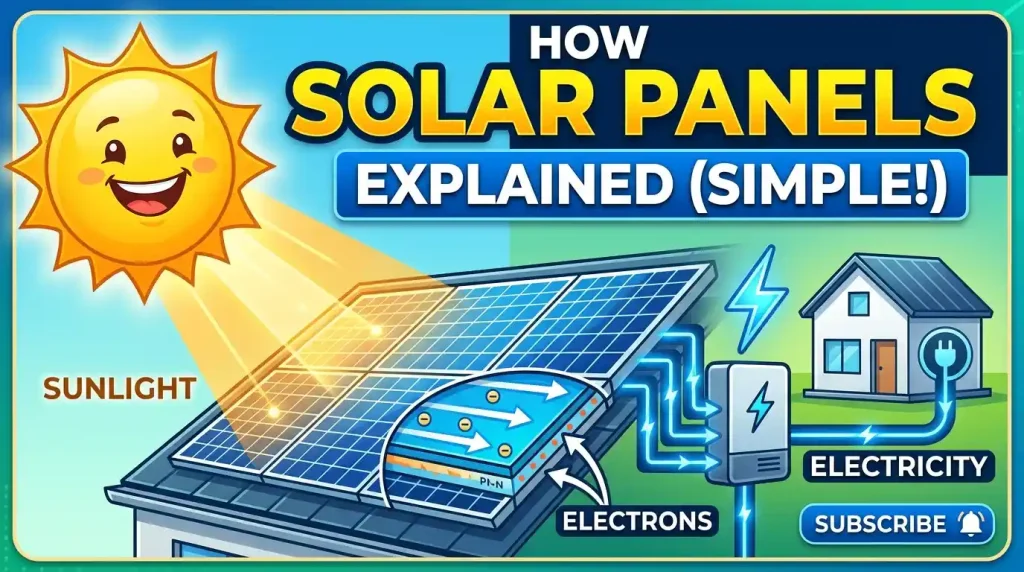
Answer: Solar panels are made of photovoltaic cells. When sunlight hits these cells, it knocks electrons loose inside the silicon, creating an electric current. An inverter then changes that current into the type of electricity your home uses.
Example: A single rooftop solar panel with 60 cells can produce around 300–400 watts of power on a sunny day — enough to run a laptop, several lights, and a phone charger at the same time.
This process is called the photovoltaic effect. It was first discovered in 1876, but the first working solar cell wasn’t built until 1954. For the full step-by-step breakdown of panels, inverters, and wiring, see our guide on how solar panels work.
Sunlight → Solar panel → DC electricity → Inverter → AC electricity → Home appliances → Extra power → Grid or battery
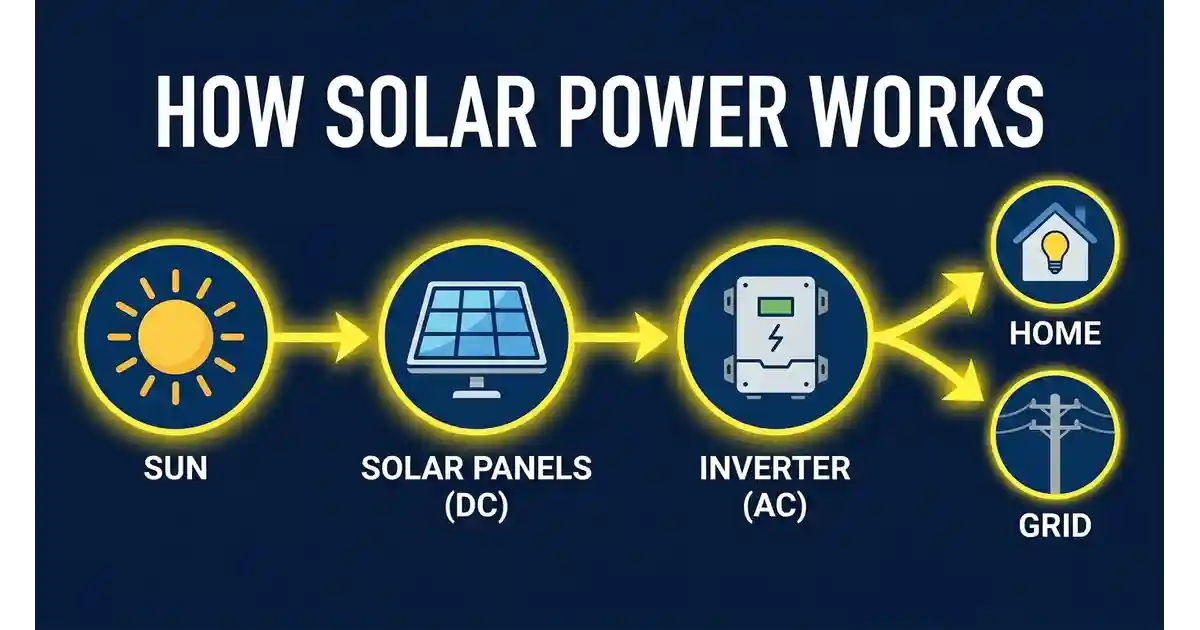
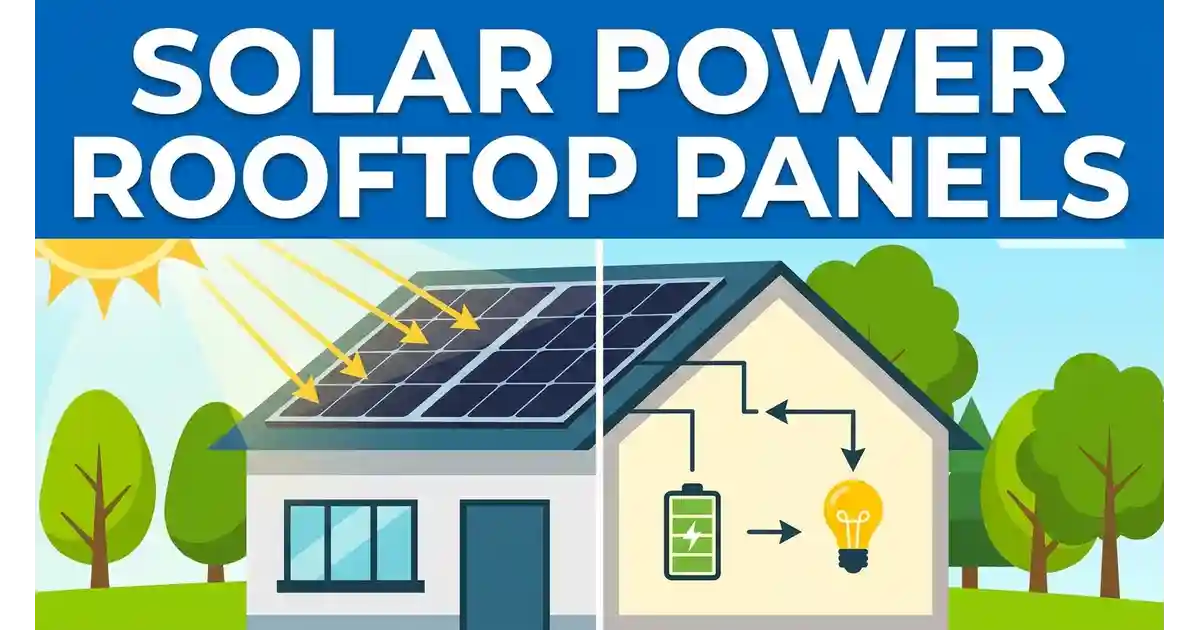
Each step has one job. The panel captures sunlight and makes DC (direct current) electricity. The inverter changes DC into AC (alternating current), the type your outlets and appliances use. Any power you don’t use right away either flows back to the grid for a bill credit or charges a home battery, depending on your setup.
Real-world uses of solar power
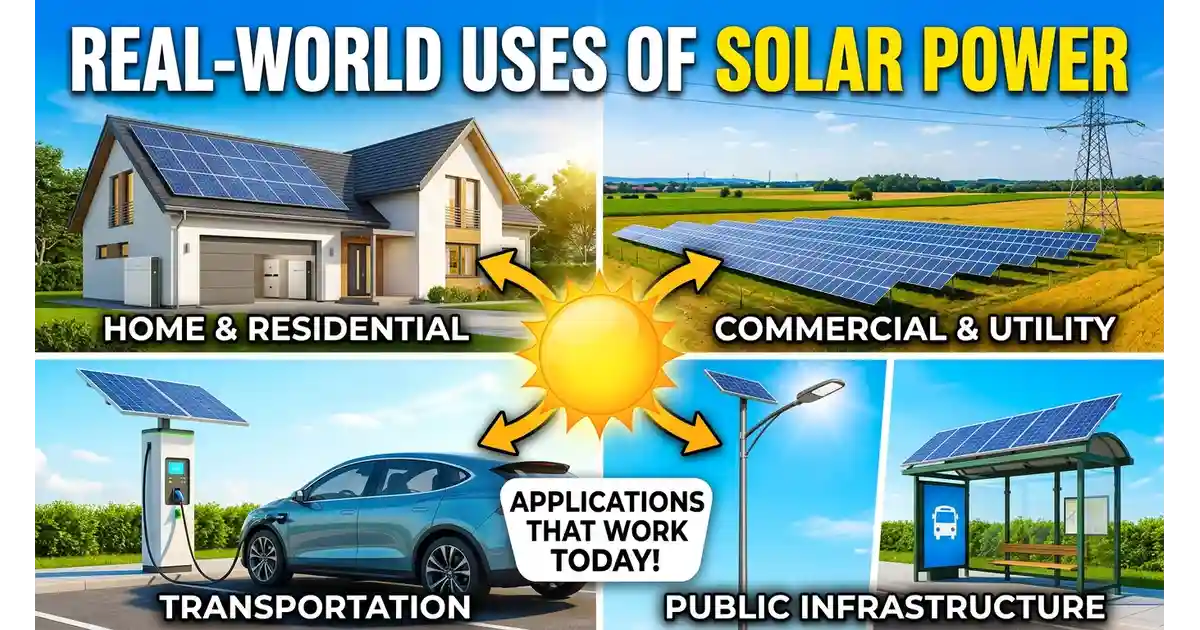
Once you understand what is solar power at its core, it’s easier to see how widely it’s used. Solar power shows up in far more places than home rooftops. Anywhere sunlight is available and running a power line would be expensive or impossible, solar is often the practical choice.
- Homes: Rooftop panels that cut or eliminate electric bills.
- Businesses and schools: Large rooftop or ground-mount arrays that offset commercial electricity costs.
- Hospitals: Backup and primary power, often paired with battery storage for reliability.
- Farms: Powering irrigation pumps and equipment in remote fields.
- Street lights: Self-contained solar lights that don’t need buried wiring.
- Satellites: Solar panels are the primary power source for most spacecraft.
- RVs and boats: Rooftop or portable panels for off-grid travel; see our RV solar panel guide.
- Portable generators: Battery power stations charged by folding solar panels; see our portable solar power generator guide.
Can solar power work without direct sun?
Question: Do solar panels stop working at night, in winter, or on cloudy days?
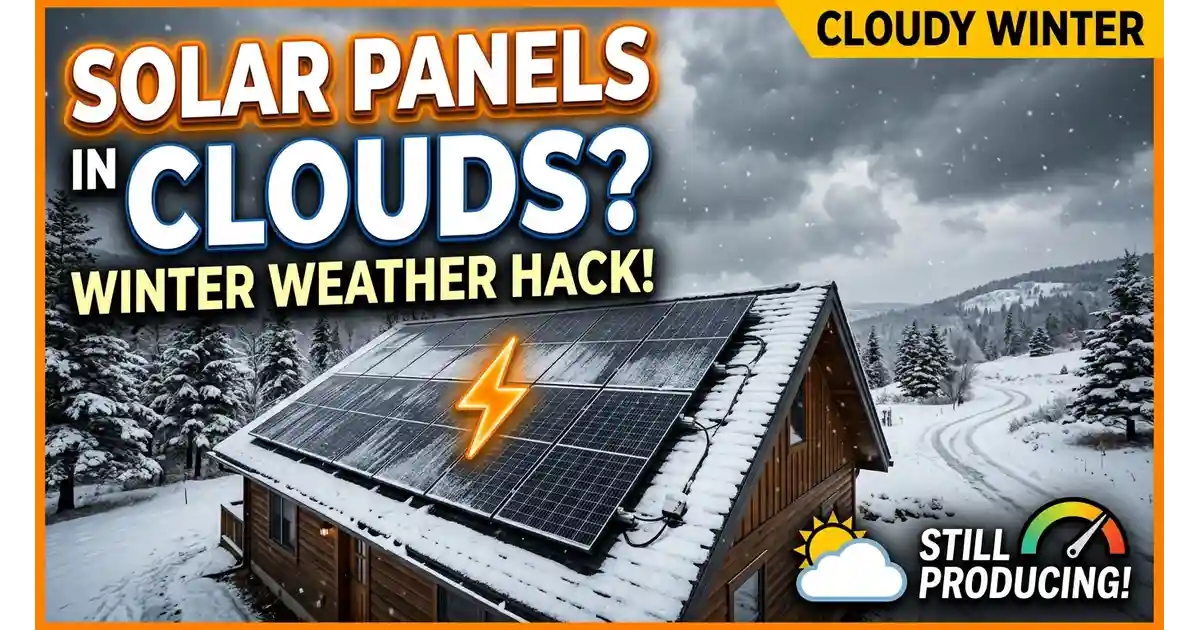
Answer: Panels need daylight, but not direct, unfiltered sunshine. They still produce power — just less of it — on cloudy days, and cold winter weather doesn’t hurt output as long as the sun is up and snow isn’t covering the panel. At night, panels produce nothing, which is why homes stay connected to the grid or add a battery.
Example: A panel might produce 10–25% of its normal output on a heavily overcast day, and cold, sunny winter days can actually be slightly more efficient than hot summer ones, since panels lose a little efficiency as they heat up.
| Condition | Effect on output |
|---|---|
| Night | No output — grid or battery takes over |
| Cloudy/overcast | Reduced, roughly 10–25% of clear-sky output |
| Rain | Reduced output, though rain also helps rinse panels clean |
| Snow covering panels | Little to no output until snow clears or slides off |
| Cold, sunny winter day | Can perform as well as or better than a hot summer day |
To check whether your own system is producing as expected across different weather, see our guide on how to know if your solar panels are working.
Types of solar power technology
Part of answering what is solar power means knowing there isn’t just one technology behind it. There are three main ways to capture solar power: photovoltaics (PV), solar thermal, and concentrating solar power (CSP). Home solar almost always means PV; the other two are mostly used for water heating and large power plants.
| Technology | What it produces | Common use |
|---|---|---|
| Photovoltaic (PV) | Electricity, directly from sunlight | Rooftop home panels, solar farms, portable panels |
| Solar thermal | Heat, from sunlight | Water heating, space heating |
| Concentrating solar power (CSP) | Electricity, via steam turbines | Large utility-scale power plants |
If you’re comparing panel options for your own roof, our types of solar panels guide breaks down monocrystalline, polycrystalline, and other PV panel styles in more detail.
Is solar power renewable?
Question: Is solar power a renewable energy source?
Answer: Yes. Solar power is renewable because sunlight will not run out. The sun has produced energy for billions of years and will keep doing so for billions more, unlike coal, oil, and natural gas, which take millions of years to form and are used up permanently once burned.
Example: Scientists estimate that about 173,000 terawatts of solar energy hit the Earth continuously — thousands of times more than the entire world uses in electricity each year.
Is solar power really clean energy?
Yes, solar power is considered clean energy because it produces no direct emissions while generating electricity. Making the panels themselves does create some emissions, but far less than burning fossil fuels for the same amount of power over the panel’s lifetime.
A typical home solar system offsets its own manufacturing emissions within the first few years of use, then produces clean electricity for the next 20-plus years.
- CO₂ reduction: An average residential system offsets several tons of carbon dioxide per year compared to grid electricity from fossil fuels.
- Air pollution: Solar produces no smog-forming or soot pollutants during operation, unlike coal or gas power plants.
- Water savings: Solar panels use very little water to generate electricity, while fossil fuel and nuclear plants use large amounts for cooling.
- Climate impact: Replacing fossil-fuel electricity with solar directly lowers greenhouse gas emissions tied to climate change.
- Recycling: Most of a solar panel’s materials — glass, aluminum, and some metals — can be recycled at the end of its 25-to-30-year life.
Solar power vs. solar energy: what’s the difference?
People often use “solar power” and “solar energy” to mean the same thing, and in everyday conversation, that’s fine. Technically, solar energy is the broader term for all energy from the sun, while solar power more specifically means that energy converted into usable electricity — an important distinction when explaining what is solar power to someone new to the topic.
A short history of solar power
Solar power isn’t as new as it feels. To fully answer what is solar power today, it helps to look at the milestones that turned sunlight into a real source of electricity.
- 1876: William Grylls Adams discovers that selenium produces electricity when exposed to light.
- 1954: Bell Labs researchers build the first practical silicon solar cell.
- 1970s: The energy crisis pushes the U.S. government to invest in solar research.
- 2000s–2010s: Panel manufacturing scales up worldwide, and prices drop sharply.
- 2023: Solar makes up more than half of all new electricity capacity added to the U.S. grid.
Solar power facts and statistics
Numbers help answer what is solar power’s real impact on the U.S. grid. Here are a few figures that put solar power’s scale into perspective.
| Metric | Typical value |
|---|---|
| Average panel lifespan | 25–30 years |
| Panel efficiency | 18–23% |
| Average payback period | 8–12 years |
| Solar energy hitting Earth continuously | ~173,000 terawatts |
| Share of new U.S. electricity capacity (2023) | Over 50% |
| Top U.S. solar-producing state | California |
- About 173,000 terawatts of solar energy hit the Earth continuously — far more than the world could ever use.
- Solar contributed more than half of all new electricity-generating capacity added to the U.S. grid in 2023.
- Most residential solar systems pay for themselves in 8 to 12 years through electricity savings.
- A typical rooftop solar panel lasts 25 years or longer before its output drops significantly.
- California generates more solar electricity than any other U.S. state, followed by Texas and Florida.
Figures sourced from the U.S. Department of Energy, SEIA, and NOAA solar radiation data. See sources below.
Pros, cons, and real limitations
Understanding what is solar power good for — and where it falls short — means weighing both sides. Solar power has clear benefits, but it isn’t the right fit for every home or budget.
| Pros | Cons |
|---|---|
| No fuel costs once installed | High upfront installation cost |
| Produces no direct emissions | Needs direct sunlight to work best |
| Reduces or eliminates electric bills | Requires enough roof space and the right angle |
| Increases home resale value in many markets | Panels don’t generate power at night without storage |
| Low maintenance once installed | Best savings take years to fully pay back the investment |
If you’re weighing whether the upfront cost makes sense for your situation, our guide on whether solar panels are worth it walks through the full financial picture.
Real limitations to check before you buy
- Shade: Even partial shade from trees or nearby buildings can significantly cut a panel’s output.
- Roof direction: South-facing roofs (in the Northern Hemisphere) generally produce the most power.
- HOA rules: Some homeowners associations restrict panel placement or visibility — check before you sign a contract.
- Battery costs: Adding home battery storage for nighttime power raises the total system cost substantially.
- Roof age: An old or failing roof may need replacing before panels go on, since removing panels later adds cost. Our solar roof guide covers integrated roofing options.
- Maintenance: Panels need occasional cleaning and inspection — see our solar panel maintenance guide.
Who should — and shouldn’t — use solar?
| Good fit | Not ideal fit |
|---|---|
| Homeowners with high electric bills | Renters or short-term residents |
| Sunny states like California, Texas, or Arizona | Heavily shaded properties |
| People planning to stay 8+ years | Very old roofs needing replacement soon |
| South-facing, unshaded roofs | Properties with strict HOA restrictions |
Homeowners in consistently sunny states get the fastest payback; see our California solar panel guide for a regional example.
Solar power vs. other energy sources
| Factor | Solar power | Wind power |
|---|---|---|
| Home-friendly | Yes — rooftop-sized systems are common | Rarely practical at home scale |
| Noise | Silent | Turbines produce audible noise |
| Best location | Sunny regions, unshaded roofs | Open, consistently windy areas |
| Factor | Solar power | Grid electricity (fossil fuel mix) |
|---|---|---|
| Ongoing fuel cost | Free once installed | Monthly bill, tied to fuel prices |
| Emissions | None during operation | Varies by local power plant mix |
| Price stability | Fixed after installation | Rises with utility rate changes |
Solar power glossary
These are the terms that come up most when people ask what is solar power and how it’s measured.
- PV (Photovoltaic): The technology that converts sunlight directly into electricity.
- Watt (W): A unit of power; describes how much electricity something uses or produces at a given moment.
- Kilowatt (kW): 1,000 watts. Solar systems are often sized in kW — see an example in our 400-watt solar panel breakdown.
- Kilowatt-hour (kWh): A unit of energy used over time; this is what your electric bill charges you for.
- Inverter: The device that converts DC electricity from panels into AC electricity for your home.
- Battery: Stores extra solar power for use at night or during an outage.
- Grid: The public electricity network your home connects to.
- Net metering: A billing arrangement where extra solar power sent to the grid earns you a credit.
Myth vs. fact
A lot of confusion about what is solar power comes from outdated myths. Here’s what’s actually true.
❌ Myth: Solar panels don’t work in winter.
✅ Fact: They work whenever daylight reaches them — cold, sunny days can even outperform hot summer ones.
❌ Myth: Solar is only for sunny states.
✅ Fact: Panels still produce meaningful power in cloudy climates, just at a lower output than in constant sun.
❌ Myth: Solar panels need constant cleaning.
✅ Fact: Rain rinses most dust naturally; most homes only need occasional cleaning.
❌ Myth: Going solar means going off-grid.
✅ Fact: Most home solar systems stay connected to the grid for nighttime power, unless you add a battery.
❌ Myth: Solar panels damage your roof.
✅ Fact: Properly installed mounting hardware doesn’t damage a roof in good condition; see our mounting hardware guide.
❌ Myth: Solar is too expensive to be worth it.
✅ Fact: Most systems pay for themselves in 8–12 years, then produce free electricity for over a decade more.
Common beginner mistakes
Most regrets about going solar trace back to a handful of avoidable mistakes.
- Not comparing multiple quotes. Pricing and equipment quality vary widely between installers.
- Ignoring roof condition. Installing panels on a roof that needs replacing soon adds removal and reinstallation costs later.
- Underestimating shade. Even a few hours of afternoon shade can meaningfully cut annual output.
- Skipping the math on system size. Buying a system too small (or too large) for actual electricity use wastes money either way — our solar panel calculator helps size it correctly.
- Forgetting to check HOA or permit rules before signing a contract.
Solar power for your home
Now that you know what is solar power and how it works, turning it into a real system for your house comes down to three questions: how much it costs, how many panels you need, and who installs it. Each of those has its own detailed answer on our site.
- Cost: See our solar panel installation cost guide for real U.S. pricing by system size.
- Sizing: Use our solar panel calculator to estimate how many panels your home needs.
- Panel type: Compare options in our home solar panel guide.
- Off-grid or portable needs: If you want backup power without a full rooftop system, see our portable solar power generator guide.
Frequently asked questions
What is solar power in simple terms?
Solar power is electricity made from sunlight, usually by solar panels made of photovoltaic cells that turn light into an electric current.
Is solar power renewable?
Yes. Solar power is renewable because sunlight doesn’t run out, unlike fossil fuels, which take millions of years to form and can’t be replaced once used.
What are some quick facts about solar power?
Solar power is the fastest-growing electricity source in the U.S., panels typically last 25 years or more, and enough sunlight hits the Earth every hour to power the world for a full year.
Is solar power clean energy?
Yes. Solar power produces no direct emissions while generating electricity, which is why it’s classified as a clean, renewable energy source.
What is the main disadvantage of solar power?
The biggest disadvantage is the upfront cost of buying and installing a system, though savings on electric bills typically pay that cost back within 8 to 12 years.
Can solar power run an entire house?
Yes, with a correctly sized system. Most homes need 20–25 standard panels to cover their full electricity use, though exact numbers depend on your home’s energy use and local sunlight.
Does solar power work at night?
No, panels need daylight to produce electricity. Homes without a battery draw power from the grid at night instead.
Can solar power run air conditioning?
Yes, as long as the system is sized to handle the AC unit’s running and startup power, which is often significant for central air conditioning.
Does hail damage solar panels?
Rarely. Most panels are tested to withstand 1-inch hail at around 50 mph, so typical hailstorms don’t cause damage.
Can I go completely off-grid with solar?
Yes, but it requires enough battery storage to cover nighttime and cloudy-day use, which adds significant cost compared to a grid-connected system.
How long do solar panels last?
Most panels are warrantied for 25 years and often keep producing meaningful power well beyond that, just at slightly reduced efficiency.
Is solar power worth it?
For most homeowners who plan to stay 8 or more years and have a sunny, unshaded roof, yes — see our full worth-it breakdown for the complete financial picture.
Do I need a battery with solar panels?
No, a battery is optional. Without one, your home simply draws from the grid at night; with one, you gain backup power during outages.
Can solar panels increase home value?
In many U.S. markets, yes. Homes with owned (not leased) solar systems often sell for a premium compared to similar homes without them.
Next steps
Ready to move from learning what is solar power to actually planning a system? Here’s where to go next.
- Calculate your system size: Use the solar panel calculator to estimate how many panels you need.
- Estimate installation costs: See real U.S. pricing in the installation cost guide.
- Compare panel types: Review your options in the types of solar panels guide.
- Check if it’s worth it for your home: Read the full solar worth-it analysis.
- Find an installer: Compare quotes using our solar installation companies guide.
How we researched this guide
This guide is built from published government and industry data, not hands-on lab testing. We used the U.S. Department of Energy’s solar energy resources, the Solar Energy Industries Association’s published solar data, and NOAA solar radiation estimates for the facts and figures cited throughout.