Solar Brand Guide · Updated for 2026
Maxeon Solar Panels Review 2026: Great Technology, Serious Company Risk
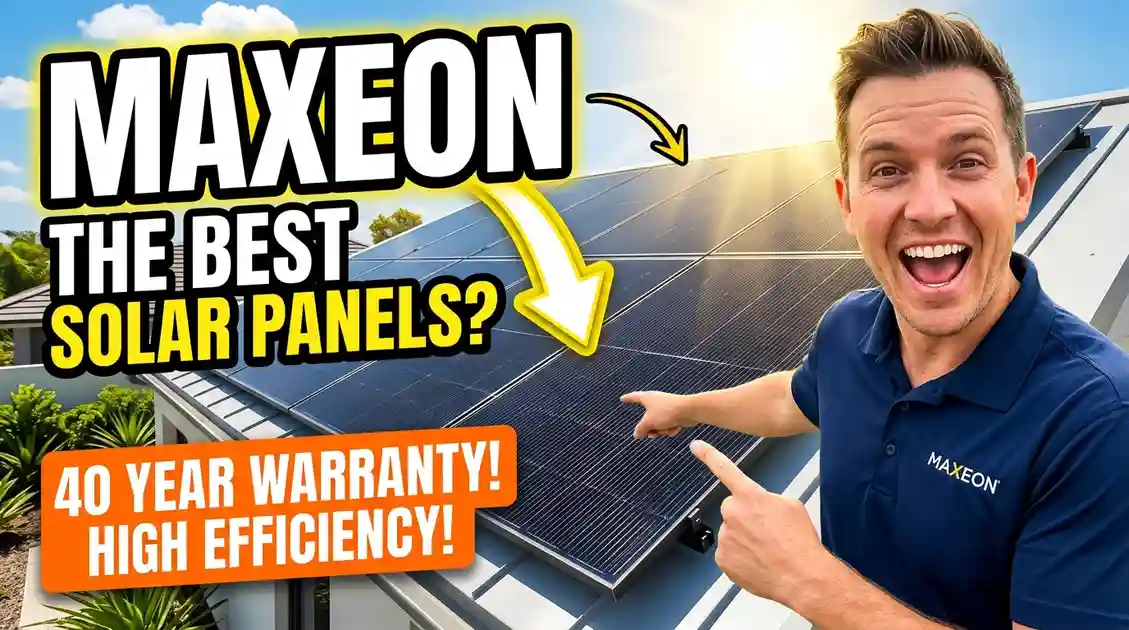
Maxeon solar panels are some of the best home solar panels ever made. Some models turn as much as 24.1% of sunlight into power, and they come with a rare 40-year warranty. But there is a big problem in 2026: Maxeon’s parent company, Maxeon Solar Technologies, is under court-ordered judicial management in Singapore after running out of money. The panels are excellent. The company backing the warranty is in serious trouble. Read this whole guide before you buy.
Buying solar panels used to be simple. Pick a brand, pick a wattage, done. Not anymore. Big solar names like SunPower, LG, and now Maxeon have gone through bankruptcy, shutdowns, or court-supervised restructuring in just a few years. This guide breaks down what Maxeon solar panels actually are, how good they really are, what has gone wrong with the company behind them, and which other brands are safer bets in 2026.
What’s in this guide
- What are Maxeon solar panels?
- Maxeon solar panel specs and reviews
- What is shingled solar panel technology?
- Maxeon pros and cons at a glance
- Is Maxeon Solar a Chinese company?
- Why is Maxeon Solar falling? 2026 timeline
- What happened to the SunPower name?
- Premium alternatives: REC, Panasonic, LG, Qcells
- Mainstream brands: Canadian Solar, VSUN, TOPCon
- European premium: Meyer Burger
- Different formats: First Solar and GAF Energy
- Portable and flexible panels
- Sunrun: installer, not manufacturer
- The biggest misconception in solar shopping
- Real costs and honest trade-offs
- Frequently asked questions
1. What Are Maxeon Solar Panels?
Maxeon is a solar panel maker based in Singapore. The technology actually goes back to 1985, when it started as part of SunPower, the well-known American solar company. In 2020, SunPower split into two businesses: SunPower kept the retail and installation side, and Maxeon Solar Technologies took over panel manufacturing and research.
Maxeon builds some of the highest-efficiency panels sold to homeowners using a design called IBC, short for interdigitated back contact, built on monocrystalline solar cells. In plain words, IBC panels move all their wiring to the back of the panel. That means no metal lines on the front, which is why Maxeon panels look like smooth black glass instead of a grid pattern. For a wider look at how this compares with other cell layouts, see our guide on how solar panels work.
Here is where it gets confusing for shoppers: SunPower Maxeon solar panels are the same product. SunPower was the name homeowners saw on their contract and warranty paperwork, while Maxeon made the actual panel underneath. So if you have an old SunPower quote and a new one says “Maxeon,” they trace back to the same core cell technology.
Maxeon’s product lineup includes three panel families homeowners commonly compare:
- Maxeon 3: An older, still-available line, including the SunPower Maxeon 3 400 watt solar panel, running about 21.4% to 22.7% efficient.
- Maxeon 6: A mid-generation panel with a temperature coefficient near -0.29%/°C and roughly 0.25% yearly degradation, a small step below the newest flagship.
- Maxeon 7: The current flagship, reaching up to 24.1% efficiency, the highest in Maxeon’s lineup.
Are Maxeon Solar Panels Any Good?
Yes, the panels themselves are excellent. Maxeon solar panels offer very high efficiency, strong temperature performance, a back-contact cell design and a 40-year warranty. The bigger concern in 2026 is Maxeon Solar Technologies’ financial condition and whether the company can continue supporting that warranty long term.
Maxeon 7 Solar Panels
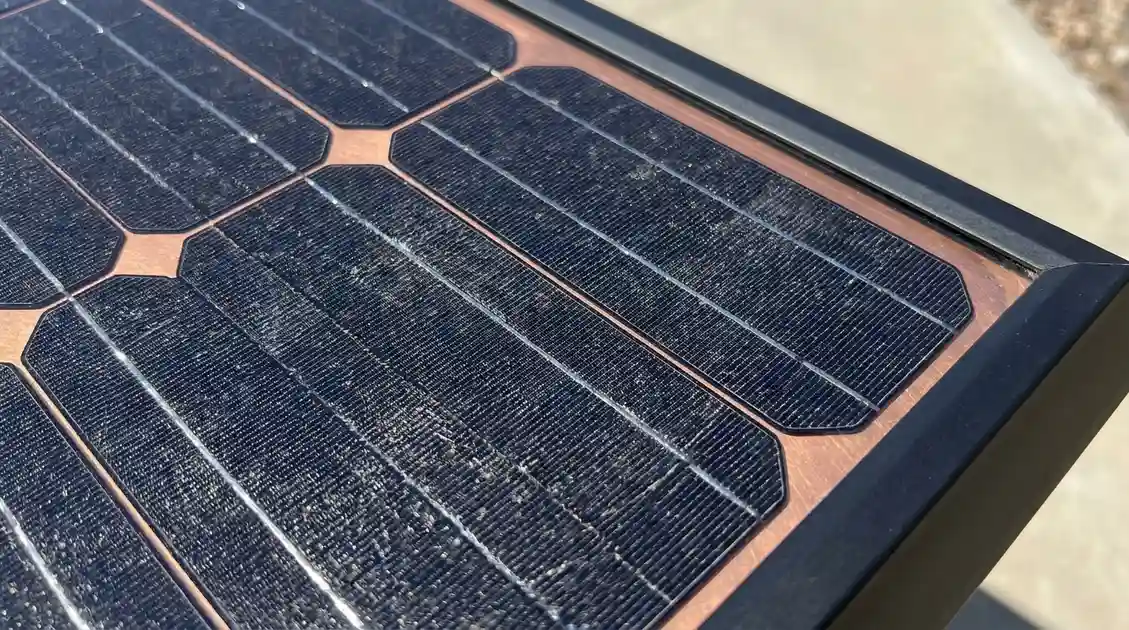
Maxeon 7 is Maxeon’s flagship panel and the highest-efficiency model the company sells, reaching 24.0% to 24.1%. It uses the same IBC back-contact design as older Maxeon panels but adds shingled cell layout, pushing wattage up to 440W–475W with a stronger 40-year warranty behind it.
Because Maxeon 7 sits at the top of the range, most retail quotes actually list an older Maxeon 3 or Maxeon 6 model unless the buyer asks for Maxeon 7 by name, so it’s worth confirming which generation is on your quote before comparing prices.
Maxeon 6 Solar Panels
Maxeon 6 is the mid-generation panel between the older Maxeon 3 and the flagship Maxeon 7, with a temperature coefficient near -0.29%/°C and about 0.25% yearly degradation. It still uses IBC back-contact cells and carries Maxeon’s standard long warranty, just without the shingled-cell upgrade that Maxeon 7 adds.
For most homeowners comparing quotes, Maxeon 6 offers nearly the same real-world performance as Maxeon 7 at a slightly lower cost, since the efficiency gap between the two generations is under one percentage point.
2. Maxeon Solar Panel Specs and Reviews
Maxeon solar panel reviews consistently point out the same strengths and the same one weakness. Across Maxeon’s full catalog of roughly 36 panel models, average efficiency sits around 21.4%, while the best model reaches 24.0% to 24.1%. That gap matters: marketing often quotes the top number, but most homeowners will not get the flagship spec unless they ask for it by name.
| Spec | Maxeon 7 (Flagship) | Industry Average (2026) |
|---|---|---|
| Efficiency | 24.0%–24.1% | 20%–22% |
| Wattage | 440W–475W | 400W–440W |
| Warranty | 40 years | 25 years |
| Guaranteed output at year 25 | 88%–90% | 80%–87% |
| Cell type | IBC (back contact) | PERC, TOPCon, HJT |
| Cost (panel only) | $1.05–$1.75/watt | $0.50–$1.20/watt |
How Efficient Are Maxeon Solar Panels?
Maxeon solar panels have efficiency ratings of roughly 21.4% to 24.1%, depending on the model. The Maxeon 7 reaches up to 24.1%, putting it among the highest-efficiency residential solar panels. Higher efficiency can be especially valuable when your roof has limited usable space.
One spec worth a closer look is the Maxeon solar panels temperature coefficient, which sits around -0.24%/°C to -0.29%/°C depending on the model. This number tells you how much power a panel loses for every degree above 77°F (25°C). A number closer to zero is better. Maxeon beats most standard panels, which usually sit closer to -0.34%/°C to -0.40%/°C. In plain terms, Maxeon panels hold onto more of their power on scorching roof days, which is a real plus in hot states like Arizona, Texas, or Florida. You can estimate your own system’s output with our solar panel calculator.
Maxeon is also widely classified as a Tier 1, bankable manufacturer, a label banks and solar lenders use for companies with a long, proven production history. That label reflects Maxeon’s manufacturing track record built up over decades, not its current finances, which are now in serious doubt.
The honest downside: reviewers consistently note that Maxeon solar panels cost 20% to 60% more per watt than mainstream brands like REC or Canadian Solar, while the efficiency gap between Maxeon and its closest rivals is often under 1 percentage point.
3. What Is Shingled Solar Panel Technology?
Shingled technology slices solar cells into thin strips and overlaps them like roof shingles, removing the metal connector strips used in standard panels. This can boost shade tolerance and give the panel a cleaner look.
In 2023, Maxeon acquired Solaria’s shingled-panel patents, adding this technology on top of its existing IBC design. Instead of connecting whole square cells with visible metal strips called busbars, shingled panels cut cells into narrow strips and layer them so each strip slightly overlaps the next, similar to shingles on a roof.
This has two practical benefits for homeowners:
- Better shade tolerance. Standard panels wired in a series can lose a lot of power if even one cell is shaded. Shingled panels wired in parallel keep producing power from the unshaded sections.
- Fewer weak points. Without busbars, there are fewer solder joints that can crack or degrade over the panel’s decades-long life, which supports Maxeon’s long warranty claims.
For a broader rundown of how shingled, PERC, and TOPCon designs compare, see our types of solar panels guide.
4. Maxeon Pros and Cons at a Glance
Weighing Maxeon solar panels against a mainstream brand comes down to a short list of trade-offs. Here’s the honest breakdown, side by side.
✅ Pros
- Up to 24.1% efficiency, among the highest sold to homeowners
- Industry-leading 40-year warranty
- Strong temperature coefficient for hot climates
- Shingled cell design improves shade tolerance
- Sleek, all-black look with no visible grid lines
- Decades-long Tier 1 manufacturing track record
❌ Cons
- 20%–60% more expensive per watt than mainstream brands
- Parent company under court-ordered judicial management
- Stock delisted from Nasdaq in 2026
- Warranty registration process can be slow
- Shrinking installer network compared to past years
- Efficiency edge over rivals is often under 1 percentage point
5. Is Maxeon Solar a Chinese Company? Why Is Maxeon Solar Falling?
These two questions come up constantly in 2026, so here are direct answers.
Is Maxeon Solar a Chinese company? Not originally. Maxeon is headquartered in Singapore and was spun off from the American company SunPower. However, Maxeon’s largest shareholder is TCL Zhonghuan Renewable Energy Technology Co., Ltd., a major Chinese solar manufacturer. So while Maxeon was not founded as a Chinese company, it is now majority-linked to Chinese ownership.
6. Why Is Maxeon Solar Falling? The Full 2026 Timeline
In short: money problems, piling up one after another. Here is the timeline in order:
- Maxeon lost hundreds of millions of dollars in recent years and had already raised “going concern” warnings, a formal accounting term meaning auditors were not sure the company could keep operating.
- U.S. Customs and Border Protection detained shipments of several Maxeon panel models, cutting off product supply to its biggest market.
- Legal disputes over those detentions and other contract issues added up to more than $70 million in claimed damages.
- April 1, 2026: Maxeon filed to be placed under judicial management in Singapore, a court-supervised process similar to Chapter 11 bankruptcy protection in the U.S.
- April 9, 2026: Singapore’s High Court granted interim judicial management, appointing Deloitte restructuring partners to oversee the company’s affairs.
- April 24–30, 2026: Nasdaq notified Maxeon of delisting; Maxeon requested a hearing to appeal the decision.
- May 29, 2026: The Singapore court moved Maxeon from interim to full judicial management.
- June 18, 2026: Noteholders declared the company in default on its debt and demanded immediate repayment, citing the judicial management orders as a trigger for automatic default.
Can Maxeon Still Honor Its 40-Year Warranty?
Maxeon’s 40-year warranty is still a major selling point, but the company’s financial problems create additional uncertainty around long-term warranty support. A warranty is only useful if the manufacturer or another responsible party remains able to honor it. Buyers should therefore ask the installer who will handle warranty claims if Maxeon’s financial situation changes.
None of this means Maxeon solar panels have stopped working or that already-installed systems are affected right away. But it is a serious flag for anyone counting on a 40-year warranty: a warranty is only as strong as the company standing behind it, and Maxeon’s near-term survival is a genuinely open question.
7. What Happened to the SunPower Name?
SunPower solar panels used to be the top name in premium residential solar in the U.S. The exclusive partnership under which SunPower branded and installed all Maxeon panels for homeowners ended in March 2024. A few months later, in August 2024, SunPower Corporation filed for Chapter 11 bankruptcy and shut down its retail and dealer network.
The important distinction: SunPower Corporation, the seller and installer, and Maxeon Solar Technologies, the panel maker, were already separate companies by the time SunPower went bankrupt. The premium panel technology did not disappear. It lives on under the Maxeon name. But the SunPower brand, warranty support desk, and installer network many homeowners relied on did shut down. If you have an existing SunPower system, warranty claims now generally route through Maxeon or a designated third party, not the original SunPower company.
8. Premium Alternatives: REC, Panasonic, LG, and Qcells
If Maxeon’s financial situation gives you pause, here are the main premium alternatives worth comparing.
REC solar panels are made by REC Group, a company founded in Norway in 1996 and now owned by Reliance Industries, one of India’s largest and most financially stable conglomerates. REC solar panel reviews consistently rank the brand near the top for efficiency, around 22.3% to 22.6%, with an even better temperature coefficient than Maxeon on top models (-0.24%/°C). So where are REC solar panels manufactured? All REC panels are built at one large, highly automated factory in Tuas, Singapore, the same country where Maxeon is based, but backed by a very different, multi-billion-dollar balance sheet.
Panasonic vs SunPower solar panels is a common comparison for shoppers weighing two well-known premium names. Panasonic panels use HJT (heterojunction) cell technology, hit around 22% to 23% efficiency, and carry a temperature coefficient similar to REC’s. Panasonic’s global electronics business gives it far deeper financial backing than Maxeon currently has, which matters if you care about who is still around to support a 25-year warranty.
Qcells, made by Hanwha Qcells, is another major premium name that regularly appears alongside Maxeon and REC in review roundups. Qcells panels typically reach 21% to 22.5% efficiency using Q.ANTUM cell technology, and the company has invested heavily in U.S.-based manufacturing, which appeals to buyers who want domestic supply chains and easier warranty support.
SunPower vs LG solar panels is another frequent comparison, though it comes with an asterisk: LG exited the solar panel manufacturing business entirely in 2022. LG panels reached up to 22.3% efficiency using back-contact technology similar to Maxeon’s, and the company has publicly committed to honoring existing warranties. But no new LG panels are being made, so this comparison mostly applies to homeowners evaluating older quotes or resale inventory.
If you are specifically asking about the cost of LG solar panels, expect $0.30 to $0.50 per watt for the panel itself now that supply is limited, noticeably higher than when LG was in full production, since remaining inventory keeps shrinking. An honest LG solar panels review in 2026 comes down to this: excellent engineering and a company that says it will honor its warranty, but zero ongoing production and shrinking parts availability going forward.
| Brand | Efficiency (Top Model) | Temp. Coefficient | Warranty | Financial Stability (2026) |
|---|---|---|---|---|
| Maxeon | 24.0%–24.1% | -0.24 to -0.29%/°C | 40 years | Weak — under judicial management |
| REC | 22.3%–22.6% | -0.24%/°C | 25 years | Strong — owned by Reliance Industries |
| Panasonic | 22%–23% | -0.26 to -0.29%/°C | 25 years | Strong — large diversified parent |
| Qcells | 21%–22.5% | -0.30 to -0.33%/°C | 25 years | Strong — backed by Hanwha Group |
| LG | Up to 22.3% | -0.26%/°C | 25 years | Discontinued — no new production |
What Is the Best Alternative to Maxeon Solar Panels?
For homeowners who want premium performance without Maxeon’s current financial risk, REC, Panasonic and Qcells are strong alternatives. For a lower-cost option, a high-quality N-type TOPCon panel from a major manufacturer can provide much of Maxeon’s efficiency at a lower price.
9. Mainstream Volume Brands: Canadian Solar, VSUN, and TOPCon Technology
Not everyone needs the most efficient panel on the market. Most homeowners are better served by a reliable, well-priced mainstream brand.
Canadian Solar panels are one of the most widely installed brands in North America. Canadian Solar PV panel review roundups typically describe them as dependable and competitively priced, backed by a large manufacturing footprint, though with slightly faster degradation over time than premium brands like REC or Maxeon. A common product homeowners ask about is the Canadian Solar 530W bifacial solar panel; bifacial means the panel also catches light reflecting off the ground behind it, adding a small energy boost, especially on ground-mounted systems with a light-colored surface underneath.
VSUN solar panels are a budget-to-mid-tier option, with efficiency ranging from about 20% up to 23% on their best models. VSUN panels carry decent warranties, often 30 years on power output, but have less brand recognition and a smaller installer network than the bigger names.
You will also see the term TOPCon solar panel used a lot in 2026. TOPCon (Tunnel Oxide Passivated Contact) is a cell technology, not a brand, so think of it as an engine type rather than a car model. It sits between older PERC technology and premium HJT or IBC cells, typically hitting 22% to 23% efficiency at a friendlier price than Maxeon or REC. Many brands, including Canadian Solar and VSUN, now offer N-type TOPCon solar panels as their mainstream option, since N-type silicon degrades more slowly than the older P-type material used in most budget panels. For homeowners who don’t need Maxeon solar panels’ top-tier efficiency, a well-built TOPCon panel closes most of the performance gap at a fraction of the price.
| Feature | TOPCon | PERC (Older, Budget) | HJT / IBC (Premium) |
|---|---|---|---|
| Efficiency | 22%–23% | 19%–21% | 22%–24% |
| Relative cost | Mid | Low | High |
| Degradation rate | 0.4%–0.5%/year | 0.6%–0.8%/year | 0.25%–0.4%/year |
| Best for | Most homeowners | Tight budgets | Small roofs, hot climates |
10. European Premium: Meyer Burger Solar Panels
Meyer Burger solar panels are made by a Swiss company with a long history in solar manufacturing equipment; in fact, many solar factories around the world were built using machines Meyer Burger originally designed. Their own panels use HJT cell technology and reach 20.6% to 21.8% efficiency, with some models offering a 28-to-30-year performance warranty.
A Meyer Burger solar panels review in 2026 needs to flag the same kind of concern as Maxeon: Meyer Burger has faced its own well-documented financial struggles and reduced production capacity in recent years. The panel technology itself tests well in independent lab rankings, but buyers should factor in a smaller installer network and questions about long-term company stability before counting on a multi-decade warranty.
11. Different Formats: First Solar and GAF Energy Solar Panels
Two more brands come up often in searches but solve a different problem than a typical rooftop panel.
First Solar panels do not use silicon at all. They are built with a thin-film material called cadmium telluride (CdTe). This makes them cheaper to produce and gives them excellent heat and shade tolerance, but efficiency tops out around 17.5% to 20%, noticeably lower than silicon panels. First Solar panels are mostly used in huge utility-scale solar farms, not on home rooftops, so they are rarely what a homeowner actually buys.
GAF Energy solar panels are a completely different product: solar shingles, not panels that sit on racks. GAF’s Timberline Solar shingles nail directly into the roof deck like regular asphalt shingles, at about 45 to 57 watts per shingle. They are a strong fit for anyone doing a full roof replacement who wants solar built in, but they cost more per watt than standard panels, produce less power per square foot since they lie flat with no tilt or airflow behind them, and only make sense during a full roof job, not as an add-on to an existing roof. If you’re weighing shingles against a standard rack-mounted system, our solar roof guide covers that comparison in more depth.
12. Portable and Flexible Panels: A Different Buying Situation
A few related keywords point to a completely different use case: portable solar panels and flexible panels for camping, vans, and boats, not rooftop home solar. This deserves calling out clearly, since the buyer and the goal are different from everything above.
Solbian solar panels are lightweight, flexible marine panels built for boats, RVs, and other curved surfaces. Some Solbian models even use licensed Maxeon back-contact cells, reaching over 25% efficiency in a panel just a couple millimeters thick.
An Aureus solar panel falls into this same portable category, a compact panel meant for off-grid or mobile charging rather than a whole-home system. The ACOPOWER 100 watt monocrystalline SunPower foldable solar panel is another example: a fold-up, suitcase-style panel meant for road trips, camping, or emergency backup power, not a permanent rooftop install. For smaller setups like this, see our small solar panels guide.
If you are shopping for a home system, none of this section applies to you, so skip ahead to the cost breakdown below. If you are shopping for a van, boat, or off-grid setup, this is a genuinely separate buying decision with a different size, mounting, and budget.
13. Sunrun: Installer, Not Manufacturer
One more important distinction: “Sunrun solar panels” is a bit of a misleading phrase, because Sunrun does not manufacture its own panels. Sunrun is one of the largest solar installers and leasing companies in the U.S. It installs panels made by other manufacturers, commonly LG while supplies lasted, Panasonic, or other Tier 1 brands, bundled with its own financing, leasing, and monitoring services.
So if you are comparing “Sunrun solar panels” against a brand like REC or Canadian Solar, you are not really comparing two panel makers. You are comparing a panel brand against an installer-plus-financing package. That is a fair thing to compare, but it is a different kind of decision: one is about the hardware, and the other is about the company installing and servicing it. When you’re ready to get quotes, our directories of solar installers near me and solar installation companies can help you compare local options beyond Sunrun.
A quick note on scope: searches for local roof replacement services or a specific installer branch point to installation services and local business listings rather than panel technology or brand comparisons, and deserve their own local-service content rather than being squeezed into a brand comparison guide like this one.
14. The Biggest Misconception: “More Expensive Always Means Better”
The most common myth in solar panel shopping is that price tracks quality in a straight line, that Maxeon solar panels must be the best simply because they cost the most, or that a cheap panel must be poorly made.
Neither is fully true. Maxeon’s technology is genuinely excellent, but a homeowner buying a 40-year warranty from a company under judicial management is taking on real risk that a mainstream REC or Canadian Solar buyer is not. Meanwhile, budget brands like VSUN or standard TOPCon panels from Canadian Solar now hit 22%+ efficiency, numbers that would have been considered premium just five years ago.
The smarter question is not “which brand is most expensive.” It is “which company will most likely still exist to honor its warranty in 20 years, and how much am I paying for the last percentage point of efficiency?”
15. Real Costs and Honest Trade-Offs
| Brand | Panel-Only Cost per Watt | Efficiency Range | Financial Risk Level (2026) |
|---|---|---|---|
| Maxeon | $1.05–$1.75 | 21.4%–24.1% | High |
| REC | $0.80–$1.10 | 21.4%–22.6% | Low |
| Panasonic | $0.90–$1.20 | 21%–23% | Low |
| Qcells | $0.75–$1.05 | 21%–22.5% | Low |
| Meyer Burger | $0.85–$1.15 | 20.6%–21.8% | Medium-High |
| Canadian Solar | $0.40–$0.70 | 20%–23% | Low |
| VSUN | $0.35–$0.60 | 20%–23.1% | Low-Medium (smaller company) |
| LG (legacy stock) | $0.30–$0.50 | Up to 22.3% | N/A — discontinued |
Keep in mind the panel is only part of the bill. Once labor, an inverter, mounting hardware, and permits are added, a fully installed Maxeon system typically runs about $2.80 to $3.60 per watt, well above the panel-only price shown above. For a full breakdown of what drives that number, see our guide on solar panel installation cost, and our are solar panels worth it guide if you’re still weighing whether to buy at all.
Are Maxeon Solar Panels Worth the Extra Cost?
Maxeon panels can be worth the extra cost when roof space is limited and maximum efficiency is important. However, paying substantially more for a 40-year warranty is harder to justify while Maxeon’s financial future remains uncertain. For many homeowners, a lower-cost panel from a financially stronger manufacturer may offer a better overall value.
Before you decide, here are the trade-offs of buying Maxeon solar panels worth weighing honestly:
- Efficiency gains shrink fast at the top. The difference between a 22% panel and a 24% panel sounds big, but it is often only one or two extra panels’ worth of power on a typical roof.
- A longer warranty is worthless if the company cannot honor it. Maxeon’s 40-year warranty is the best on paper in the entire industry. Whether that promise survives the next few years is a genuinely open question in 2026.
- Bifacial panels rarely pay off on typical roofs. They cost 10% to 15% more but usually only add 5% to 10% more power on a standard rooftop, since there is no reflective surface behind them the way there is on a ground-mounted system.
- Local installer support matters as much as the panel brand. A great panel from a manufacturer with few certified installers in your area can mean longer wait times for repairs, maintenance, or replacement parts.
16. Frequently Asked Questions
Are Maxeon solar panels any good?
Yes, on pure performance. Maxeon solar panels have some of the highest efficiency and best temperature ratings sold to homeowners, and the back-contact technology has a strong multi-decade track record. The real concern is not the panels; it is whether Maxeon Solar Technologies stays financially stable enough to honor its 40-year warranty.
Why is Maxeon Solar falling?
Maxeon lost hundreds of millions of dollars, faced U.S. Customs shipment holds that cut off its biggest market, and was hit with lawsuits worth more than $70 million. In April 2026, it entered court-ordered judicial management in Singapore, Nasdaq moved to delist its stock, and in June 2026 noteholders declared the company in default.
Is Maxeon Solar a Chinese company?
Not by founding. Maxeon is based in Singapore and grew out of the American company SunPower. However, its largest shareholder is TCL Zhonghuan, a major Chinese solar manufacturer, so the company has significant Chinese ownership ties today.
How much do Maxeon solar panels cost?
The panel alone typically costs $1.05 to $1.75 per watt. Once you add labor, an inverter, and mounting, a fully installed Maxeon system usually runs about $2.80 to $3.60 per watt, noticeably higher than mainstream brands like Canadian Solar.
Is Maxeon a Tier 1 solar brand?
Yes, Maxeon has long been classified as a Tier 1, bankable manufacturer, a label banks and lenders use for solar companies with a strong production history. That classification reflects its manufacturing track record, not its current financial health, which is now in serious question.
What is shingled solar panel technology?
Shingled technology slices solar cells into thin strips and overlaps them like roof shingles, removing the metal connector strips used in standard panels. This can improve shade tolerance and give panels a cleaner look. Maxeon added this technology after acquiring Solaria’s shingled-panel patents in 2023.
What happened to SunPower?
SunPower Corporation, the company that sold and installed panels under the SunPower name, filed for Chapter 11 bankruptcy in August 2024 and shut down its retail network. The panel-making side of the business had already become the separate company Maxeon Solar Technologies back in 2020, and that technology lives on today.
What are the disadvantages of Maxeon solar panels?
The biggest disadvantages are their high price and the financial uncertainty surrounding Maxeon Solar Technologies in 2026. Their efficiency advantage over leading alternatives is relatively small, while their 40-year warranty may carry more long-term uncertainty than a shorter warranty from a financially stronger manufacturer.
What is the difference between Maxeon and SunPower solar panels?
Maxeon and SunPower were part of the same business before separating in 2020. Maxeon Solar Technologies became the panel manufacturer, while SunPower continued with residential solar sales and installation. The SunPower Corporation later filed for Chapter 11 in 2024, while Maxeon continued operating as the panel manufacturer.
Bottom Line
The solar brand landscape looks very different in 2026 than it did even three years ago. SunPower is gone as a retail brand. LG has stopped making panels entirely. And Maxeon, the company carrying the technology that made SunPower famous, is under court-supervised financial restructuring while you read this.
None of that means premium solar technology is a bad idea. It means the brand name on the panel matters less than the financial health of the company standing behind it. Before you sign anything, ask your installer directly: who backs this warranty, and what happens to it if the manufacturer does not survive the next decade? For most homeowners in 2026, a well-reviewed, financially stable mainstream brand, such as REC, Panasonic, Qcells, or a strong TOPCon panel from Canadian Solar, offers most of the performance at a fraction of the financial risk. If you’d rather have a solar installer handle the full solar panel installation for you, or if you’re building a system from parts yourself, browse our solar panel kit guide for what a complete kit includes.