Solar Panel Kit Guide 2026: Types, Costs, Sizing & What’s Actually Included
A solar panel kit is a package of equipment used to generate solar electricity, usually including solar panels, an inverter, wiring, and mounting hardware. Some kits also include batteries. The best solar panel kit depends on your power needs, installation type, budget, and whether you need battery backup.
Key Takeaways
- A solar panel kit is a packaged system — panels, inverter, wiring, and often a battery and charge controller, sold as one bundle.
- Grid-tied kits lower your bill while staying connected to the utility; off-grid kits replace the utility entirely.
- Monocrystalline panels are the most efficient (20–22%); polycrystalline and thin-film cost less but produce less power per square foot.
- An MPPT charge controller can pull up to 30% more usable energy from the same panels than an older PWM controller.
- Two kits at the same price can be very different deals once you check whether the inverter, battery, and mounting hardware are actually included.
What Is a Solar Panel Kit?
A solar panel kit bundles panels, inverter, wiring, and often a battery into one purchase, instead of sourcing each part separately. It’s a lower-cost entry point for homeowners, RV owners, and off-grid buyers alike. You’ll also see these sold as PV panel kits, since PV — short for photovoltaic — is simply the technical term for the solar cells inside each panel.
A solar panel kit is a packaged set of solar equipment designed to work together, instead of buying each part separately from different brands. According to the Solar Energy Industries Association, U.S. solar installations grew sharply in recent years, and kits have become a popular, lower-cost entry point for homeowners, RV owners, and off-grid buyers alike. To see how a packaged kit compares with hiring a company to design a system from scratch, see our guide to how solar panels work.
The confusing part: “solar panel kit” is used for wildly different products, from a full whole-home battery backup system down to a $20 children’s STEM toy. Knowing which category you actually need is the single most important step before you compare prices or brands.
7 Types of Solar Panel Kits
Solar panel kits range from small flex panels for a van to full off-grid systems for a cabin. Matching the category to your actual use case comes before comparing brands or price.
- Grid-tied solar panel kits for home — connect to the utility grid, no battery required
- Solar panel kits with battery and inverter — for partial backup power or evening use
- Complete solar power kits for homes with battery — a fully packaged system: panels, hybrid inverter, battery bank, charge controller, and mounting hardware in one purchase
- Off-grid solar panel kits with battery and inverter — designed for full independence from the utility grid
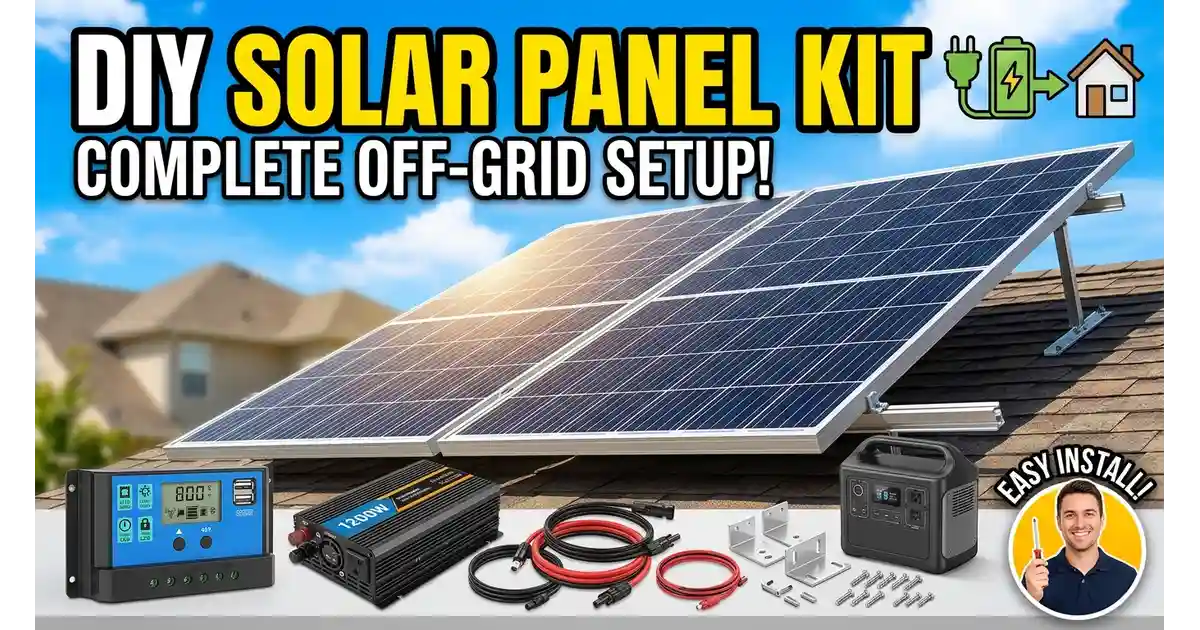
- DIY solar panel kits — simplified, homeowner-installable systems
- Flexible (flex) solar panel kits — lightweight, bendable panels for RVs, boats, and vans; see our roundup of portable solar panels for options built specifically for travel
- Solar panel kits for kids — small STEM education kits, unrelated to home power
Are Solar Panel Kits Grid-Tied or Off-Grid?
Solar panel kits can be designed for grid-tied, off-grid, or hybrid systems. A grid-tied kit works with the utility grid and normally does not provide power during an outage unless it has appropriate backup equipment. An off-grid kit needs enough solar generation and battery storage to operate without the utility grid. A hybrid system combines solar, battery storage, and grid power.
Before buying a kit, confirm which type of system it is designed to support.
RV Solar Panel Kit vs. Camper Solar Panel Kit: What’s the Difference?
An RV solar panel kit and a camper solar panel kit are usually the same product marketed to two audiences — travel trailers and truck campers.
In practice, the equipment is nearly identical: flexible or semi-rigid panels sized 100W–400W, a compact charge controller, and often a small battery bank designed to run lights, a fridge, and device charging without hookups. The main differences come down to mounting style — a full-size RV usually has flat roof space for rigid panels, while a smaller camper or truck bed often needs the flex, low-profile panels covered in our RV solar panels guide. If you’ll also want backup power beyond a weekend trip, look specifically for a listing labeled as a kit with battery and inverter rather than a panel-only kit.
DIY Solar Panel Kits: What’s Different About Self-Install Options
DIY solar panel kits are simplified for homeowner installation, but “DIY-friendly” doesn’t always mean “grid-tied and code-compliant” — check both before buying.
Most DIY solar panel kits are marketed around ease of assembly: pre-cut wiring, labeled connectors, and simplified mounting hardware. That’s genuinely useful for off-grid or portable setups. For a grid-tied home system, though, DIY still typically means you handle the physical install while a licensed electrician manages the utility interconnection and permitting — see our full walkthrough of the solar panel installation process to see where DIY realistically starts and stops.
Can You Install a Solar Panel Kit Yourself?
Some small solar panel kits are designed for DIY projects, but a residential grid-connected solar system is more complicated than simply mounting panels and plugging them in. Electrical connections, roof mounting, grounding, permits, utility requirements, and system commissioning may require qualified professionals.
If you are considering a DIY kit, check the local rules and the manufacturer’s installation requirements before starting. For a permanent home system, professional installation can reduce electrical and roof-related risks.
Solar Panel Kit vs. Complete Solar System
A solar panel kit is not always the same thing as a complete solar system. A kit usually bundles several components together, while a complete system is designed around your home’s electricity needs and may include the panels, inverter, mounting, wiring, batteries, permits, and professional installation.
For a DIY project, a kit can simplify equipment shopping. For a grid-connected home system, however, you also need to consider local electrical requirements, utility interconnection, permits, and proper installation.
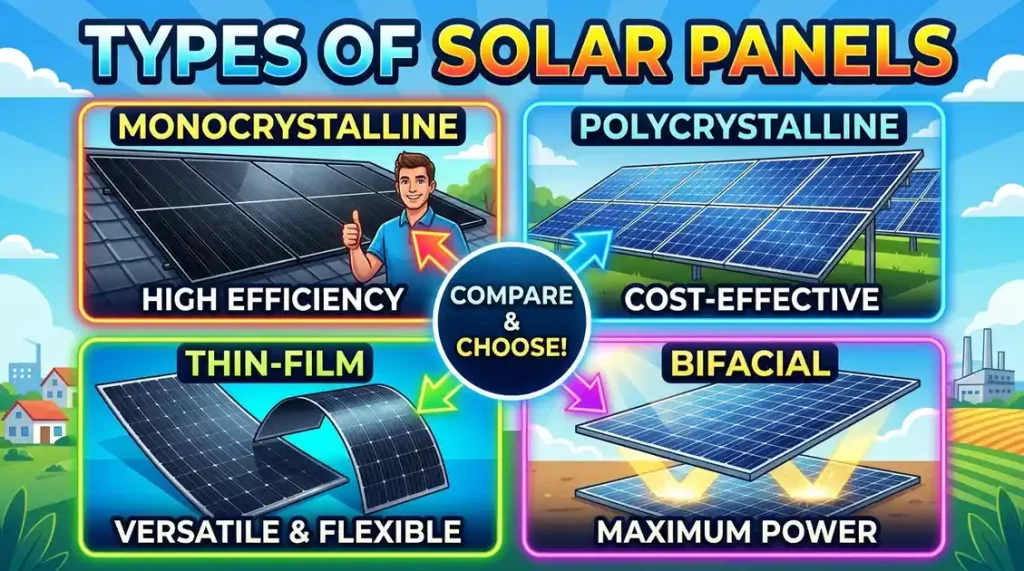
Monocrystalline vs. Polycrystalline vs. Thin-Film Panels
Monocrystalline panels are the most efficient (20–22%) and best for limited space; polycrystalline and thin-film trade some efficiency for a lower price.
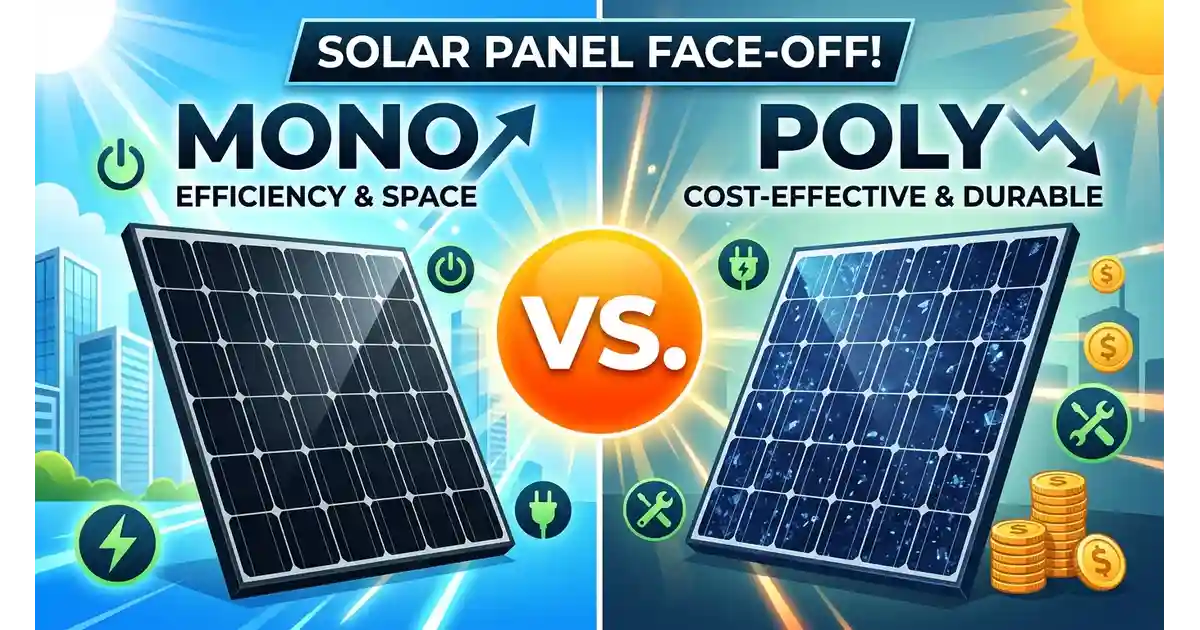
Almost every kit uses one of three panel types, and the difference matters more than most listings explain:
| Panel Type | Efficiency | Look | Best For |
|---|---|---|---|
| Monocrystalline | 20–22% | Solid black, uniform cells | Limited roof space, best long-term output |
| Polycrystalline | 15–18% | Blue, speckled cells | Budget home systems with more available space |
| Thin-film | 10–13% | Flexible, lightweight | RVs, boats, curved or non-load-bearing roofs |
Higher efficiency means more power from the same amount of roof space. If your roof, RV, or mounting area is limited, monocrystalline solar panels usually deliver the best return even at a higher upfront price — premium options like Maxeon solar panels push efficiency even further. For the full technical rundown of every panel category, see our guide to the types of solar panels.
What’s Included in a Solar Panel Kit
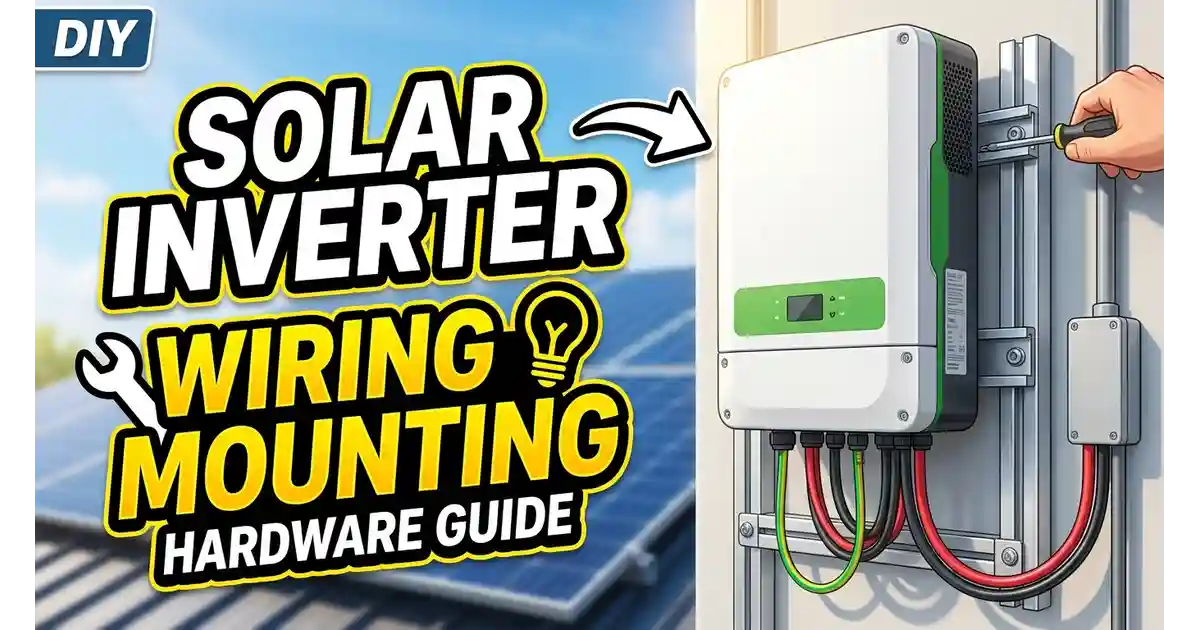
Panels, inverter, wiring, and mounting hardware are the core of any kit; a battery and charge controller are optional add-ons that define the kit’s category.
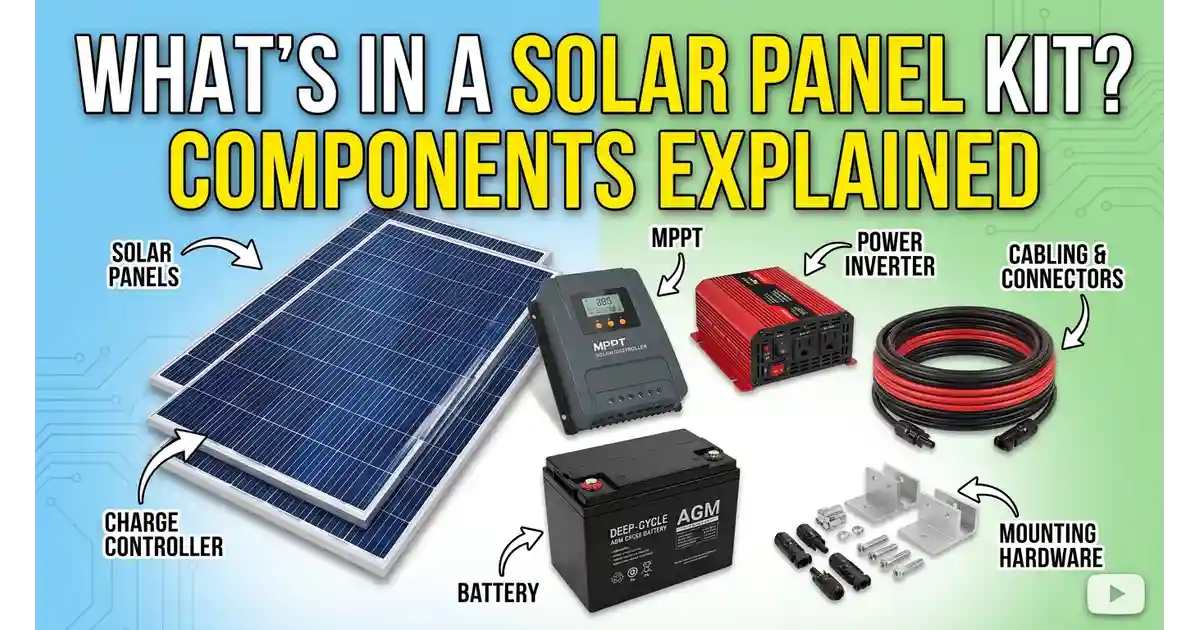
What Does a Solar Panel Kit Include?
A typical solar panel kit may include solar panels, an inverter, mounting hardware, solar cables, connectors, and monitoring equipment. Battery-based kits may also include one or more batteries — see our solar batteries guide for how these are sized — and the equipment needed to connect them to the system.
The exact contents vary by kit. Some packages are designed only for the solar array while others are sold as complete systems. Always check the product list before buying because a kit that includes panels and an inverter may still require additional mounting hardware, wiring, disconnects, or installation equipment.
What ships in the box varies a lot between brands. Use this checklist to compare listings fairly:
- Solar panels — listed by total wattage (400W, 800W, 6kW, etc.) and panel count; see our breakdown of a 400-watt solar panel for what one panel actually produces
- Inverter — converts DC power from panels into AC power your home actually uses; without one, panel output is unusable for most devices
- Battery (optional) — stores excess energy for night use or outages; this is what separates a basic grid-tied kit from a full backup system
- Charge controller — regulates voltage and current into the battery, protecting it from overcharging
- Mounting and solar panel fitting kit — rails, brackets, clamps, and hardware; check our guide to solar panel mounting hardware, since this is often sold separately and left off the advertised price
- Wiring, connectors, and combiner box — pre-cut cables, MC4 connectors, and (for larger systems) a combiner box
- Monitoring system — an app or display for tracking real-time production and battery status; see how to know if your solar panels are working for what healthy output actually looks like
What Makes a Solar Power Panel Kit Different From Buying Parts Separately
A solar power panel kit is pre-matched equipment sold as one SKU, so voltage, wattage, and connectors are already compatible — buying parts separately risks mismatched gear.
Example: pairing a 400W panel array with an undersized inverter rated for only 300W will bottleneck your system’s real-world output, even though each part is fine on its own. A kit avoids that by pre-matching panel wattage, inverter capacity, and charge controller rating as one tested package, which is the main reason kits are popular for buyers without an electrical background.
Inverter Types Explained
- String inverters — one inverter for the whole array; most common and affordable
- Microinverters — one per panel; better performance when part of the array is shaded
- Off-grid/hybrid inverters — required for battery-based and off-grid systems
Does a Solar Panel Kit Include a Battery?
Not always. Some solar panel kits include battery storage, but many kits contain only the solar panels and selected balance-of-system components. If you want backup power at night or during a grid outage, check whether the kit includes a battery and whether the inverter is compatible with battery storage. Our solar batteries guide covers the main battery types and how to size a bank for your usage.
A battery also adds cost and changes how the system should be sized, so a battery-ready kit is not automatically the same as a complete solar-plus-storage system.
MPPT vs. PWM Charge Controllers
MPPT controllers harvest up to 30% more energy than PWM controllers on the same panels, especially in low light — worth the extra cost on most systems.
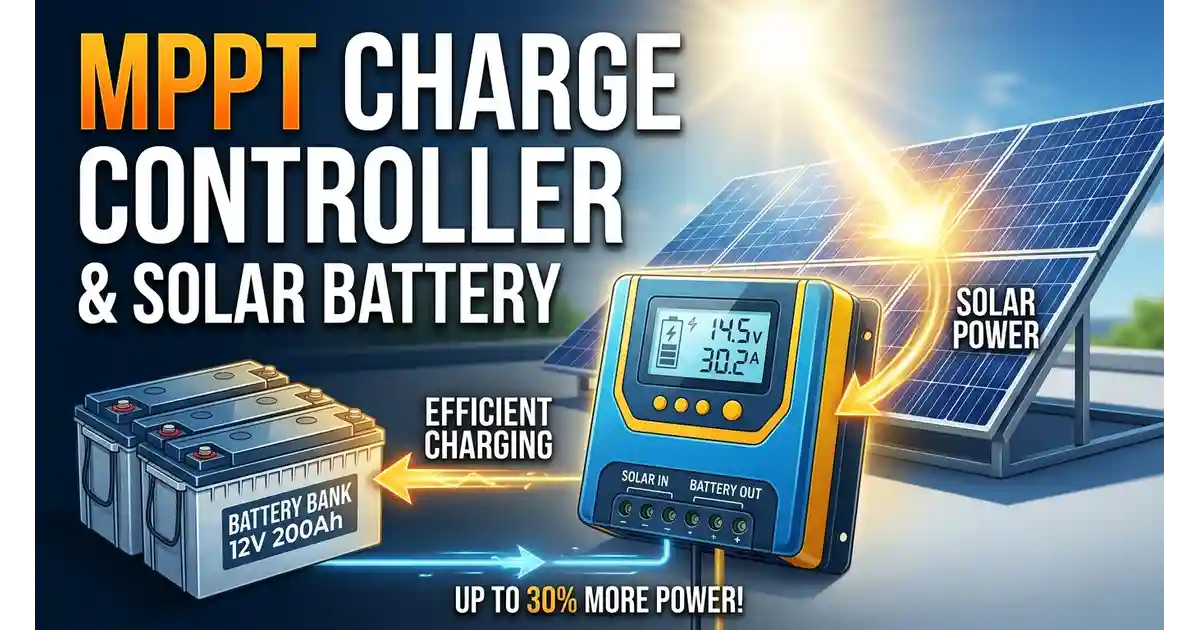
If your kit includes a battery, the type of charge controller matters as much as the panels themselves:
| Controller Type | Efficiency | Cost | Best For |
|---|---|---|---|
| MPPT (Maximum Power Point Tracking) | Up to 30% more energy harvested from the same panels, especially in low light or partial shade | Higher upfront cost | Most home and off-grid kits, larger systems |
| PWM (Pulse Width Modulation) | Lower, simpler regulation | Lower upfront cost | Small, budget systems with modest wattage |
For any kit above a small trickle-charge size, an MPPT controller typically pays for itself through better energy harvest, particularly on cloudy days or partially shaded roofs.
What Size Solar Panel Kits for Home Do You Need?
Add up daily kWh usage, then work backward to panel wattage and battery capacity, adjusted for your region’s average sun hours — most sellers offer a sizing calculator.
| System Size | Typical Use |
|---|---|
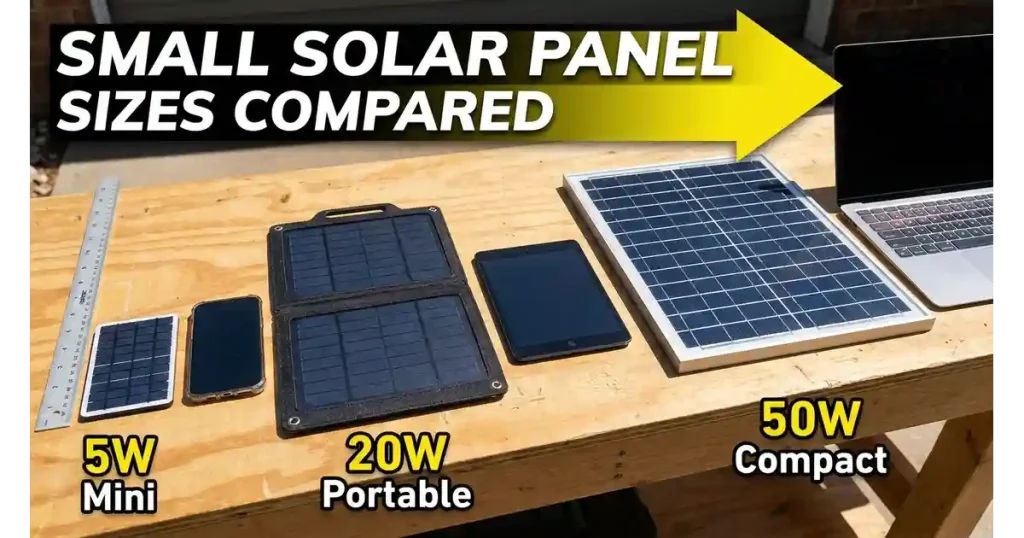
| Small (under 2kW) | Sheds, small cabins, a few essential appliances, RV or boat power — often built from small solar panels |
| Medium (2–6kW) | Partial home coverage, supplementing grid power, smaller households |
| Large (6–10kW) | Full average-home coverage in most U.S. regions |
| Extra-large (10kW+) | High-consumption homes, full off-grid living, small commercial use |
What Size Solar Panel Kit Do I Need?
The right solar panel kit size depends on your electricity use, available roof space, sunlight, and whether you want to offset all or only part of your electricity consumption. A small kit may work for basic backup or an RV, while a larger residential system may need several kilowatts of solar capacity.
The best approach is to start with your average electricity use and then size the solar array, inverter, and battery system around that demand rather than choosing a kit based only on the number of panels.
To size a kit correctly, add up the daily energy use (in kWh) of what you want the system to cover, then work backward to the panel wattage and battery capacity needed, accounting for average sun hours in your region. Our solar panel calculator can run these numbers for your specific home rather than a generic estimate — don’t guess.
How Much Does a Solar Panel Kit Cost?
Small portable kits start around $150; full home systems with battery typically run $8,000–$20,000, and off-grid kits run higher still.
| Kit Type | Typical Price Range |
|---|---|
| Small flex/portable kit (100–400W) | $150 – $600 |
| Grid-tied home kit, no battery (2–6kW) | $3,000 – $9,000 |
| Home kit with battery and inverter (4–10kW) | $8,000 – $20,000 |
| Off-grid kit with battery and inverter (6–12kW) | $12,000 – $30,000+ |
| DIY installation (any size, self-installed) | Often 30–50% less than professional installation |
DIY installation can meaningfully cut costs versus hiring a solar installation company, but larger grid-tied systems often still require a licensed electrician for the utility interconnection and permitting step, depending on your state. For the fuller cost picture, including professional installs, see what it typically costs to install solar panels, and whether solar panels are worth it for your situation.
Solar Panel Kit With Battery and Inverter: What It Actually Costs
A solar panel kit with battery and inverter typically runs $8,000–$20,000 for a home-sized system, versus $3,000–$9,000 for a grid-tied kit with no battery.
The battery and inverter are usually the biggest line items after the panels themselves. Example: a 6kW home kit with no battery might price around $5,000, while the same 6kW panel array bundled with a 10kWh battery and hybrid inverter can add $6,000–$10,000 to that total — the added cost buys backup power during an outage, not extra electricity output.
RV Solar Panel Kit With Battery and Inverter: Pricing and Fit
An RV solar panel kit with battery and inverter typically costs $600–$3,000, well below home-sized systems, since panel count and battery capacity are both much smaller.
Example: a 400W RV kit with a 100Ah battery and a compact inverter is enough to run lights, a fridge, and charge devices for a weekend trip without hookups, but it’s not sized for continuous home-style use — sizing up requires more panels and a larger battery bank, not just a bigger inverter.
Are Solar Panel Kits Worth It?
Solar panel kits can be worthwhile when you want to simplify equipment shopping or build a small off-grid, RV, backup, or DIY system. For a typical grid-connected home, however, the value depends on what the kit actually includes and how much additional equipment and installation will cost.
Compare the total system cost, not just the advertised kit price. A cheaper kit may require extra mounting equipment, wiring, batteries, permits, or professional labor.
How to Choose the Right Solar Panel Kit (6 Steps)
Define your goal, calculate wattage needs, verify what’s included, match mounting to your installation type, confirm grid requirements, and compare warranties.
Step 1: Define Your Goal
- Reduce your electric bill while staying grid-connected → grid-tied kit, battery optional
- Keep essentials running during outages → grid-tied kit with battery and inverter
- Live somewhere with no utility access → off-grid kit with battery and inverter
- Power an RV, van, or boat → flex solar panel kit
- Educational project for a child → kids’ STEM solar kit, not a power system
Step 2: Calculate Your Wattage Needs
Add up your daily energy usage in kWh, then work backward to the panel wattage and battery capacity needed to cover it, accounting for average sun hours in your region.
Step 3: Check What’s Actually Included
Before comparing prices, confirm the listing includes: inverter (and type), battery and its usable capacity, charge controller, full mounting/fitting kit, wiring and connectors, and a monitoring app or display. Two kits at very different prices often aren’t comparable once you check this list.
Step 4: Match the Kit to Your Installation Type
Roof-mounted, ground-mounted, pole-mounted, and RV installations all need different mounting hardware. If you’re mounting to a house rather than a vehicle, compare against our home solar panel guide to confirm the fitting kit included matches your actual mounting surface.
Solar Installation Kit vs. DIY Solar Panel Kit: What’s the Difference?
A solar installation kit usually refers to a full rooftop system meant to be set up by a licensed professional, including panels, an inverter, mounting hardware, and wiring already matched together — as opposed to a smaller, simplified DIY solar panel kit built for self-installation. If you’re planning a full home system rather than an off-grid or portable setup, a solar installation kit is typically paired with a professional installation service rather than a self-install process.
Step 5: Confirm Grid Requirements (If Applicable)
If staying grid-tied, check that the inverter is UL 1741 certified for interconnection in your state or utility area — a common oversight with budget DIY kits. Also ask whether your utility offers net metering, which credits you for excess power sent back to the grid; rules vary by state, so check specifics like net metering in California if that’s where you live. A local solar installer near you can confirm your utility’s exact requirements before you buy.
Step 6: Compare Warranties
Panels typically carry 20–25 year performance warranties; inverters and batteries usually carry shorter warranties of 5–12 years. A kit with a lower upfront price but a short battery warranty can cost more over the system’s lifetime.
What Should I Look for When Buying a Solar Panel Kit?
Before buying a solar panel kit, check:
- Solar panel wattage and efficiency
- Inverter type and capacity
- Battery compatibility, if storage is needed
- Mounting hardware and what surfaces it supports
- Cables and connectors included in the package
- Equipment warranties
- Whether installation equipment is included
- Whether the kit is grid-tied, off-grid, or hybrid
- Whether additional permits or electrical equipment are required
The cheapest kit is not necessarily the best value if important components still have to be purchased separately.
Solar Panel Kit Comparison at a Glance
| Kit Type | Battery Included | Grid Connection | Best For |
|---|---|---|---|
| Grid-tied home kit | No (optional add-on) | Yes | Lowering electric bills, staying grid-connected |
| Kit with battery and inverter | Yes | Yes | Backup power during outages |
| Complete home kit with battery | Yes (full system) | Optional | Homeowners wanting one full packaged system |
| Off-grid kit with battery and inverter | Yes (larger capacity) | No | Cabins, remote land, no utility access |
| DIY solar panel kit | Varies | Varies | Homeowners self-installing smaller systems |
| Flexible (flex) panel kit | Rarely | No | RVs, boats, vans, portable power |
| Kids’ solar kit | No | No | STEM education, not home power |
Common Buying Mistakes to Avoid
- Assuming a low price includes a battery, mounting hardware, or a certified inverter — always check the parts list
- Buying a flex panel kit for a permanent home roof — they’re built for mobile use, not long-term durability
- Skipping UL 1741 certification for a grid-tied inverter, which can block your utility interconnection approval
- Undersizing the battery for an off-grid system, leaving no buffer for cloudy days
- Ignoring the charge controller type — a PWM controller on a larger system leaves real energy unused
- Confusing a kids’ STEM solar kit with a home power system when shopping
- Forgetting ongoing care — even the best kit underperforms without basic solar panel maintenance
Frequently Asked Questions
What is a solar panel kit?
A solar panel kit is a package containing some or all of the main components needed to build a solar power system. Depending on the kit, it may include panels, an inverter, mounting hardware, cables, connectors, and batteries.
What does a solar panel kit include?
A solar panel kit may include solar panels, an inverter, mounting hardware, wiring, connectors, and monitoring equipment. Battery kits may also include batteries and battery-related equipment. The exact contents vary by manufacturer and kit type.
Do solar panel kits come with batteries?
Some do and some do not. Many kits include panels and selected system components without batteries. If you need backup power or want to store solar energy for nighttime use, choose a kit specifically designed for battery storage.
Do all solar panel kits include an inverter?
No. Many budget or panel-only kits sell the panels separately from the inverter. Always confirm whether “solar panel kit with inverter” is explicitly listed before assuming it’s included.
Can I install a solar panel kit myself?
DIY installation is possible for many home and off-grid kits, especially smaller systems. Larger grid-tied systems often still require a licensed electrician for the interconnection and permitting process, depending on your state and utility.
What size solar panel kit do I need for a home?
This depends on your household’s energy usage and local sun hours. Most sellers offer a sizing calculator, and a properly sized system is typically anywhere from 4kW to 10kW or more for an average U.S. home.
Are flexible solar panels as durable as rigid panels?
Generally no. Flex panels are more convenient for curved or lightweight applications but typically have a shorter usable lifespan than rigid glass panels, making them better suited to RVs and portable use than permanent home installations.
Is an off-grid kit more expensive than a grid-tied kit?
Usually yes, since off-grid kits need larger battery banks sized to cover multiple days without sun, plus a more robust charge controller and inverter, since there’s no utility grid to fall back on.
What’s the difference between MPPT and PWM charge controllers?
An MPPT controller can harvest up to 30% more usable energy from the same panels, especially in low light or partial shade, while a PWM controller is simpler and cheaper but less efficient. MPPT is worth the extra cost on most systems above a small trickle-charge size.
Is monocrystalline or polycrystalline better for a home solar kit?
Monocrystalline panels are more efficient (20–22% versus 15–18% for polycrystalline), so they produce more power per square foot. They cost more upfront but are usually the better choice when roof space is limited.